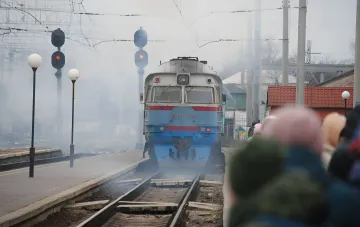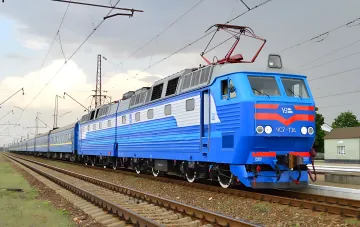
On 2 September 2026, Russian military forces struck passenger train No. 53/54, which was traveling on the Odesa – Dnipro route, with an unmanned aerial vehicle (UAV). The incident occurred at one of the stations of the Prydniprovska Railway: the enemy drone hit the area immediately next to the train. According to official data, critical consequences for people were avoided thanks to the prompt actions of civil services and the timely evacuation — at the moment of the strike, everyone was in a shelter or a safe zone.
Monitoring and timely evacuation
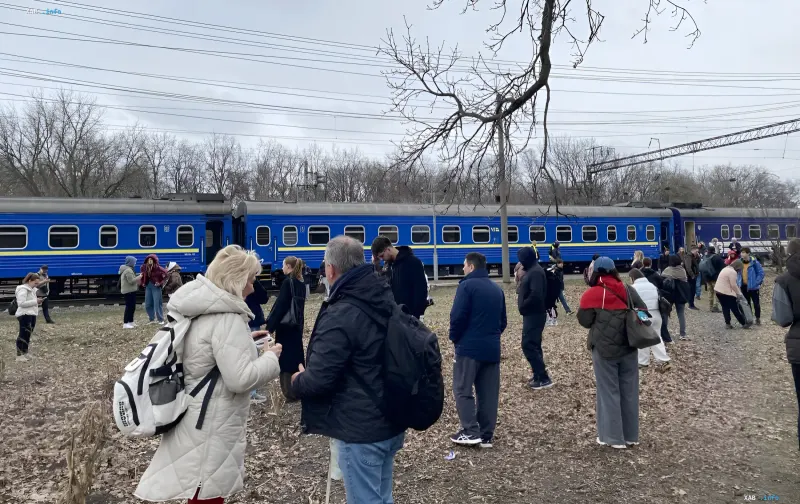
A key role in preventing casualties was played by the work of the railway workers' monitoring team, which detected the approaching threat in a timely manner. Even before the drone arrived, the passengers, as well as the train and locomotive crews, were moved to a safe distance. It was precisely this sequence of actions — detection, alert, and evacuation before the moment of impact — that saved people's lives: at the moment of the strike, no passengers or railway workers remained in the immediate vicinity of the train.
Transfer to buses and assistance from the Regional Military Administration
After the attack and an assessment of the situation, the passengers of train No. 53/54 were transferred to buses, with the assistance of the Dnipropetrovsk Regional Military Administration, which then headed toward the destination station. Thus, despite the strike on the railway facility, passenger transport was ensured by alternative means, and the train and locomotive crews were also moved to a safe zone before the moment of impact.
Systemic consequences for the UZ train schedule
The attack on the train became part of a broader picture of disruptions to railway transport operations. As of 2 September 2026, due to the consequences of shelling and related technical complications, delays of UZ (Ukrzaliznytsia) trains reached almost 11 hours. The greatest delay was recorded for the service traveling from Lozova to Lviv. This indicates that strikes on infrastructure and individual trains create cascading disruptions to the schedule on major routes.
Context: regular strikes on railway infrastructure
Russian forces regularly attack Ukrainian railway facilities and passenger transport. In particular, the previous night, on 1 September, Russia carried out a targeted strike with ballistic weapons on a UZ depot in Kyiv. As a result of that attack, according to available data, seven people were killed, six of whom were railway workers. The incident with the Odesa – Dnipro train continues this series of strikes on transport infrastructure; however, in this case, casualties were avoided thanks to the evacuation.
Contradictory data
In fact-checking, it is important to distinguish between two different events that may be conflated in some media. According to the basic data and confirmation from the RBC.ua source, the strike on train No. 53/54 Odesa – Dnipro on the Prydniprovska Railway did not result in any casualties — all people were evacuated before the explosion. At the same time, the pool of verified sources contains reports of a person killed in a drone attack, but these relate to a different incident — the strike on the Moscow – Simferopol train in Crimea. These two events differ in route, geography, and date, so the information about the fatality in Crimea does not pertain to the Odesa – Dnipro train and does not create a contradiction in the facts about the Dnipro incident, where, according to official data, there are no casualties.