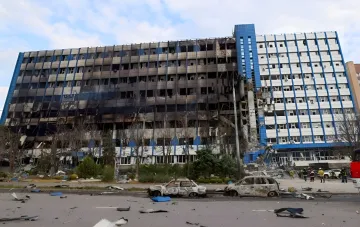
On the night of October 23, 2026, the temporarily occupied city of Luhansk experienced a massive strike by attack drones. According to preliminary data from monitoring channels and local sources, the strikes targeted communications and energy infrastructure, resulting in mobile network disruptions and power outages across several districts of the city.
Massive Raid and Urban Infrastructure Disruptions
Around four in morning, residents of Luhansk heard a series of powerful explosions, after which urban living conditions rapidly deteriorated. According to information released by the dedicated monitoring channel Exilenova+, the moment of a direct hit on an infrastructure facility located in the immediate vicinity of a city communication tower was recorded. Shortly thereafter, subscribers in a number of neighborhoods faced a complete loss of telephone communications and internet access, as well as voltage drops in power grids.
Context of Attacks on Telecommunication Hubs
The current nighttime attack continues a series of strikes on critical and information infrastructure in the occupied territories. Specifically, on the night of October 21, drones already attacked the building of the «Lugacom» telecom operator and the Telecommunication Services Center in Luhansk. A day earlier, on October 20, a large-scale data center of «Ugletelecom» in Donetsk suffered a similar strike, indicating systemic efforts to disrupt coordination and command.
Parallel Strikes on Military Objects
In addition to telecommunication nodes, during the same period the Defense Forces launched comprehensive strikes against other strategic enemy targets. In particular, control points near Luhansk and Kurakhove were hit, alongside logistical and material supply depots in the temporarily occupied Crimea and the Donetsk region.
Significance of the Strike Series and Future Prospects
Systematic damage to communication nodes, data centers, and command posts in the occupied territories significantly complicates logistics and operational management for enemy units. Disabling telecommunication infrastructure creates severe problems for both military structures and the administrative support of the occupation regime. Further developments will depend on the intensity of drone deployments and the effectiveness of air defense systems in the enemy's rear areas.