On the night of October 21, 2026, Ukraine's Defense Forces struck telecommunication infrastructure facilities in the temporarily occupied territories of the Donetsk and Luhansk regions. According to Ukrainian sources, a data center belonging to the "Ugletelecom" operator was hit in Donetsk on October 20, while drones attacked a building in Luhansk housing the "Lugacom" telecom operator (formerly "Ukrtelecom") and the Center for Telecommunication Services. Both facilities provide mobile communications, internet access, and data transmission for the population and occupation structures in Russian-controlled territories.
Targets of the Strike: Communication and Data Transmission Nodes
The choice of targets indicates a deliberate impact on infrastructure that supports both civilian services and command logistics in the occupied territories. Ugletelecom's data center in Donetsk and the Lugacom complex in Luhansk are among the key data processing and transmission nodes in the region. Their damage can disrupt mobile networks, internet channels, and data-dependent services, which in the context of the conflict is seen as a factor reducing the manageability of the occupation administration.
Photographic Evidence of Consequences
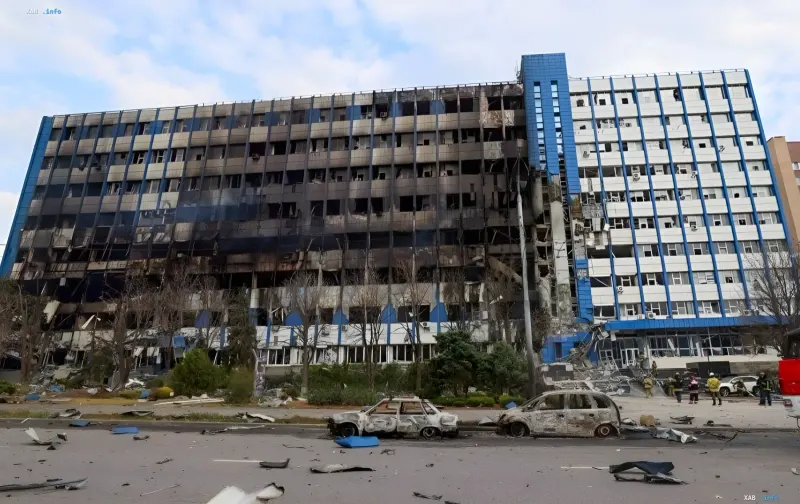
The aftermath of the strikes was captured in photos published by the Exilenova+ publication. The images show a multi-story building with extensive facade damage: burned-out window openings, charred ceilings, collapsed structural fragments, and smoke rising from the upper floors. Completely burned passenger cars, scattered debris, and deformed roofing elements were found in the surrounding area. Emergency service personnel are present in the frame, indicating ongoing operations to contain the consequences and assess the damage.
Series of Attacks on Data Centers
The attacks on Donetsk and Luhansk continued a growing series of strikes on telecommunication and computing infrastructure. On October 18, Ukrainian FP-1 drones struck the VKontakte data center in Russia's Leningrad Oblast. On the night of October 14, Sberbank's mega-data center in Balakovo, Saratov Oblast, was hit. On the night of October 11, drones halted the operation of Yandex's data center in Vladimir Oblast, after which dozens of services stopped functioning across the country; the company independently confirmed the facility's failure. On October 8, Yandex's largest data center in Ryazan Oblast was hit, causing a massive fire, and on the same day, the company removed its data centers in four regions of the Russian Federation from its maps.
Context: The Logic of Strikes on Telecom Infrastructure
The accumulation of attacks throughout October demonstrates a clear trend: strikes are being carried out not only against military targets but also against civil-commercial data processing and communication centers, including deep in the rear. According to the parties' logic, such targets serve a dual function—they support the daily communications of the population while simultaneously ensuring the operation of administrative, financial, and information systems. The repeated hits on data centers belonging to major Russian companies and telecom operators in the occupied territories indicate that telecom infrastructure has become an independent category of targets within air operations.