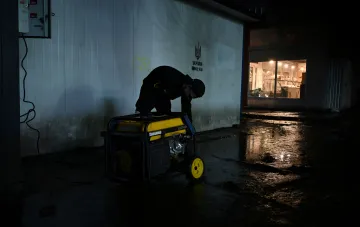
In the Ukrainian energy system, which has been operating under rolling blackout schedules in November 2026, consumers frequently face a paradoxical situation: power is restored according to the schedule, but disappears again just minutes later. Representatives from DTEK, one of the country's largest energy operators, provided a detailed explanation for this phenomenon and issued recommendations on how to behave in the first minutes after power is restored.
The mechanism of 'instant' disconnection
According to DTEK specialists, the reason lies in the physics of electrical load. After a prolonged outage—which can last several hours under current schedules—appliances like boilers, electric heaters, inverters, heating systems, and other power-hungry devices remain plugged into the network. As soon as voltage returns, all these devices start automatically and simultaneously. This 'background' load is instantly compounded by the actions of consumers themselves: washing machines and electric stoves are turned on, and portable power stations are plugged in to charge. 'And we also immediately turn on washing machines, electric stoves, and start charging stations, and it's understandable—you want to do everything while there is power,' DTEK states, emphasizing that while the motivation is clear, the consequences for the grid are critical.
Why thousands of devices at once means a blackout
When thousands of high-power devices start operating in a single neighborhood or district at the same second, the load on the distribution network spikes sharply. Transformers and cable lines, designed for peak but not instantaneously synchronous load, cannot cope with the sudden current surge. As a result, new emergency shutdowns or voltage fluctuations occur, which can damage electronics. This mechanism, according to energy experts, is exactly why power that was restored according to the schedule disappears again within minutes.
DTEK instructions: the '15-minute' rule
Energy experts urge consumers to follow a simple principle of gradual startup. High-power appliances should not be turned on immediately after power is restored. Boilers, electric stoves, washing machines, charging stations, and inverters should be connected to the grid with an interval: some appliances 15 minutes after power is back, and the rest even later. 'By doing this, you help reduce the load on the network and the risk of new accidents,' DTEK addresses the subscribers. Essentially, the goal is to break a single surge in consumption into several milder waves that the network can absorb without triggering safety mechanisms.
Context: blackout schedules for November 11 and the night attack
DTEK's recommendations come against a backdrop of tightened restrictions in the energy system. According to RBC-Ukraine, on November 11, 2026, power outages in Ukraine will be in effect throughout the day: rolling blackout schedules ranging from 1.5 to 4 tiers are applied to all categories of consumers. The overnight attack added further stress to the grid: Prime Minister Serhiy Koretskyi reported that on the night of November 10, the Russian Federation struck ten regions of Ukraine, targeting five major energy substations. Under these conditions, every extra load spike from household appliances becomes a factor capable of turning a planned outage into an unplanned emergency situation.
What consumers should do right now
The practical conclusion from DTEK's explanation comes down to a few steps. First, do not touch high-power appliances for at least 15 minutes after power is restored. Second, turn on appliances one by one, keeping a pause between launching each one. Third, if possible, disconnect inverters and charging stations if they are not critical for the current moment. Fourth, do not try to 'do everything in the allotted hour,' because this exact psychology of mass simultaneous starting creates the emergency peak. Experts emphasize: discipline in the first minutes after the lights come on directly affects whether the power will last until the end of the scheduled window or cut off again.