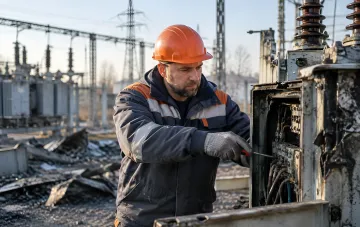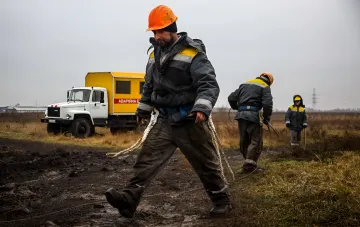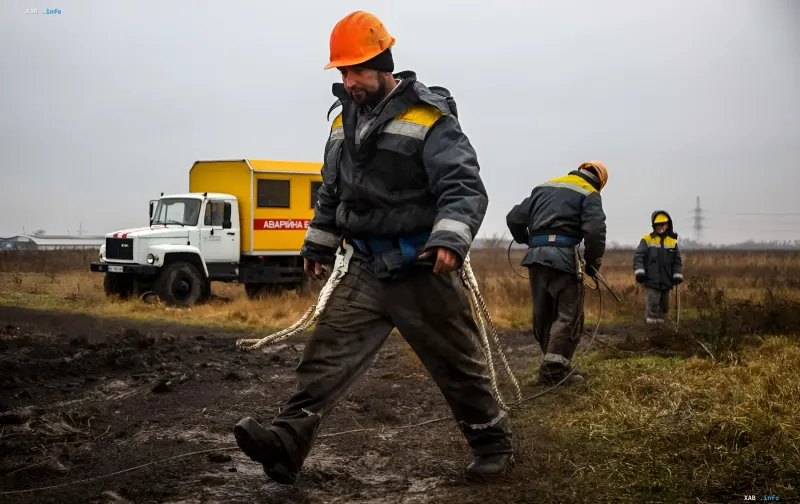
From November 9 to November 15, 2026, energy workers of DTEK restored power supply to more than 1.1 million households in four regions of Ukraine. According to the company, electricity was fully or partially restored during this week in over 1,400 settlements that had been left without power following Russian strikes on energy infrastructure. Restoration efforts were carried out amidst ongoing shelling and required constant coordination with military and emergency services.
Scale of work for the reporting week
As reported by DTEK, from November 9 to 15, energy workers carried out restoration work in four regions of the country. The result was the restoration of electricity to over 1,400 towns, villages, and cities, where large-scale damage to substations, transformer points, and power lines had previously been recorded. The company clarified that some settlements received full power restoration, while others had supply partially restored, depending on the extent of the damage and the availability of necessary components.
Second month in a row: over a million families per week
DTEK emphasized that due to the intensification of Russian attacks on energy infrastructure, energy workers have been returning light to over a million families every week for nearly two months now. This dynamic, according to the company, indicates the systemic nature of the damage: the volume of destruction per week is now comparable to what used to accumulate over several weeks. In October 2026, according to DTEK, electricity was restored to a total of over 6.7 million homes that had been blacked out due to Russian shelling.
Access to sites: the role of the UAF and SES
The company drew attention to the organizational aspect of the restoration work: energy workers begin repairs on damaged objects only after receiving official permission and actual access from the Armed Forces of Ukraine and the State Emergency Service. This means that in a number of settlements where there is a continued threat of repeated strikes or an unstable situation, work may be delayed until the military and rescue services confirm it is safe for crews to travel to the site.
Context: what is happening with the energy system
DTEK’s data for the November week fits into the general pattern of a months-long campaign of strikes on Ukraine's energy infrastructure. The weekly "blackout-restoration" cycle has become a new normal for the industry: crews work in a constant response mode, and the volume of damage that must be repaired in seven days remains at a level exceeding one million households. The company points out that the priority in resource allocation is given to life-support facilities — hospitals, boiler houses, water pumping stations, and residential areas with the highest number of consumers.