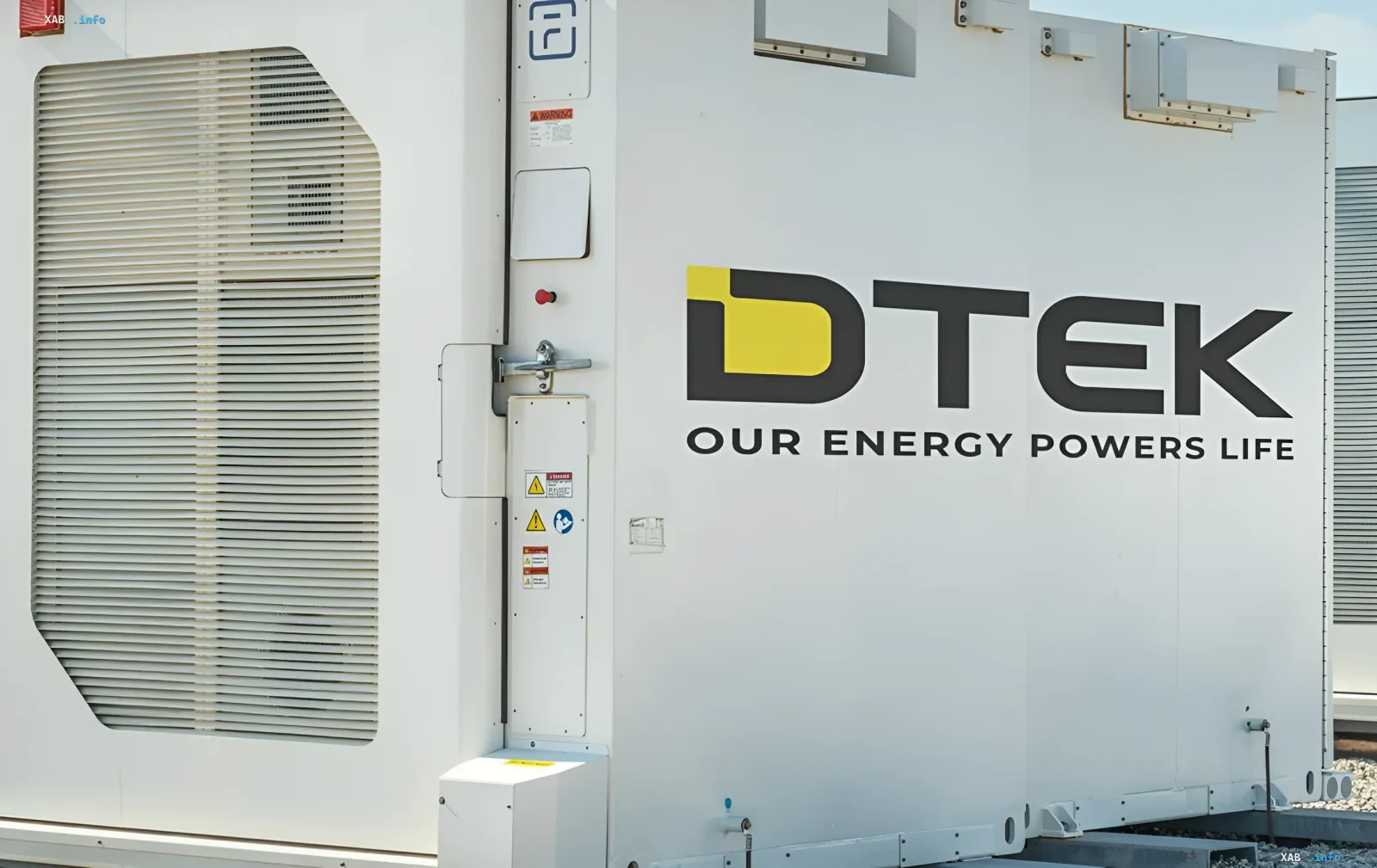
D.TRADING, part of the DTEK energy group, published a detailed commentary on how Ukrainian and European investors can generate revenue from battery energy storage systems (BESS). This was reported by RBC-Ukraine, citing an article in the industry publication ExPro. In the interview, heads of relevant business lines at D.TRADING — Yehor Zakharchenko and Stanislav Dudka — emphasized that flexibility and storage technologies are not created for a single specific market niche, but to earn from a combination of market situations, and that the maximum result is achieved precisely by a mix of operations across all available market segments.
Ukrainian market volatility as the main driver of profitability
According to Yehor Zakharchenko, head of the renewable energy, self-consumption, and distributed generation department at D.TRADING, the current volatility of the Ukrainian energy market creates significant opportunities for storage owners. A specific figure cited in the interview illustrates the scale: during periods of summer heat, the revenue from a single cycle for a two-hour battery can reach around 30,000 hryvnias per 1 MW of installed capacity. This means that with several cycles per day in peak months, the battery generates a substantial cash flow that, together with income from other market mechanisms (arbitrage, reserve capacity, balancing), forms a sustainable project economics.
Capital costs and payback horizon
D.TRADING estimates the payback period for a two-hour battery at approximately 3–4 years. To achieve this figure, capital investment should not exceed 300,000 euros per 1 MW of capacity, and the key condition is effective commercial management. Thus, the company emphasizes that the mere fact of installing a storage unit does not guarantee a return on investment — the decisive factor is the quality of the trading strategy and operational control throughout the equipment's lifecycle.
Cross-border integration: a battery competes not only with the neighboring battery
Stanislav Dudka, head of the European electricity trading division, drew attention to the fact that the development of storage capacity in Bulgaria, Romania, Greece and other EU countries, as well as cross-border flows and further integration of European markets, significantly expand trading opportunities beyond a single country. "A battery competes not only with the battery at the neighboring substation. In an increasingly integrated European market, storage in one country affects price opportunities in neighboring markets," Dudka explained. For a Ukrainian investor, this means that when modeling a project, one must consider not only the domestic market forecast but also the dynamics of storage and flexible capacity in neighboring states.
Commercial management takes center stage
D.TRADING emphasizes that the investment value of BESS is increasingly determined not only by the amount of capital invested, the battery's power and capacity, but also by the model for managing its revenue. "Building a battery is only the first part of the investment decision. The second is to determine who and under what model will manage its revenue over the coming years," the company summarized. This thesis effectively shifts the focus from the engineering-technical component of the project to financial-trading expertise, which changes the requirements for the investor's or the engaged operator's competencies.
Shift in order structure: storage displaces solar plants
The context for assessing the trend is previously published statistics from YASNO: about 65% of the energy equipment the company installs for business clients is precisely energy storage systems. Just a few years ago, solar power plants significantly dominated the order structure. The shift of two-thirds of the proportion in favor of BESS has been recorded against the backdrop of rising margins of storage schemes and falling unit cost of lithium-ion batteries, which makes them an attractive portfolio diversification tool for corporate consumers and investors.