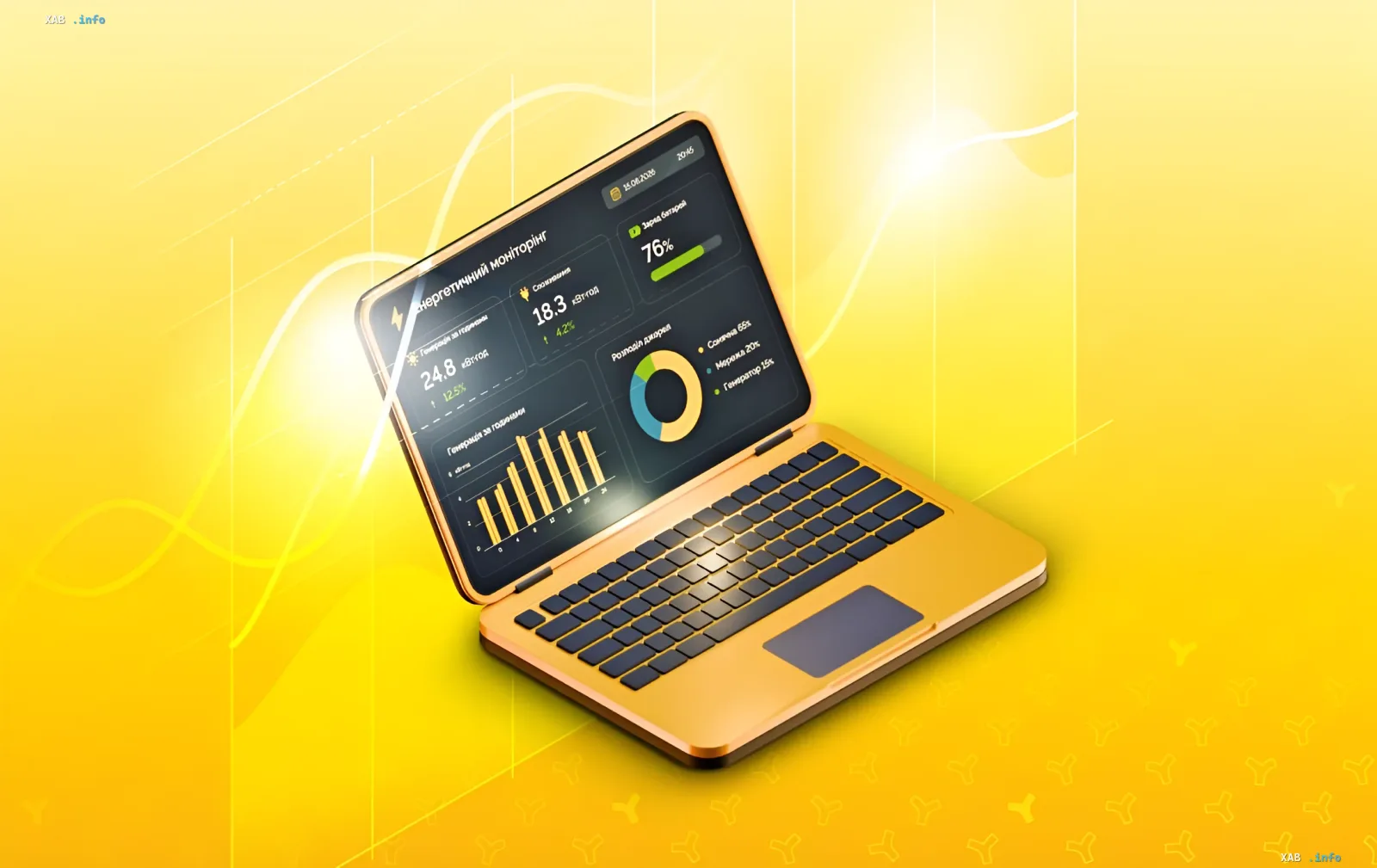
D.Solutions, operating under the YASNO brand as part of the DTEK Group, has expanded the functionality of the YASNO Power energy management system. The update is designed so that business clients can see not only the volumes of generation and consumption, but also the specific financial results from their own energy equipment. As the company notes, after installing a solar power plant or an energy storage system, it is important for a company to understand exactly how much money it has saved and earned.
Separate Tracking of Savings and Revenue
The system now separately calculates the savings a company gains by using its own generation instead of purchasing electricity from the grid, as well as the revenue from selling surplus power. If a solar power plant and a battery are operating simultaneously at a site, the client sees the results of each installation individually and their combined economic effect. This makes it possible to determine what share of the benefit was provided by self-generation, electricity sales, and battery management.
Battery Price Arbitrage
For the battery, the price arbitrage effect has become a separate metric: the equipment charges during hours of lower tariffs, while the stored electricity is used after its price rises. According to Serhiy Kovalenko, after installing a solar power plant or an energy storage system, it is important for businesses to see not only the volumes of generation and consumption, but also the specific financial result — how much electricity was avoided from being bought from the grid, how much revenue surplus sales brought in, and how profitably the battery performed.
Bill Comparison and Breakdown
One of the key tools in the new section compares the company's actual bill with the amount it would have paid without its own energy equipment and optimization of its operation. This allows assessing the impact of the solar power plant and battery on the business's overall electricity costs. The dashboard also features charts of consumption coverage sources, data on solar generation and battery operation, a charge/discharge cycle log, and a breakdown of results for various periods.
Context: State Support and Growing Connections
The update coincides with a period of active state support for renewable energy: in 2026, the state will finance new projects with a total capacity of up to 1 GW to increase the autonomy of Ukrainian regions. Against this backdrop, demand for distributed generation continues to grow — according to DTEK data, in the first quarter of 2026, 824 consumers connected their household solar power plants to the company's grids.