Ukrainian companies have been given the opportunity to install solar power plants, energy storage systems, and backup power supplies without having to finance the full cost of the project upfront. This was reported by RBC-Ukraine, citing a statement from D.Solutions — a structural unit of Rinat Akhmetov's DTEK Group. The company's CEO, Serhiy Kovalenko, emphasized that "the main challenge for many companies is not choosing an energy solution, but finding the funds to implement it," which is precisely why D.Solutions has developed a flexible lineup of four financing models, allowing businesses to pick a format that fits their budget and strategic goals.
Bank financing and ESCO contracts: two classic models
The first option is bank financing, under which the borrowing company immediately receives the solar power plant in ownership and repays the loan according to a schedule. The approximate payback period in this case is three to four years, and it shortens to two years when surplus electricity is sold to the grid. D.Solutions implements solar power plant and energy storage projects with a down payment starting from 20% of the total cost. The second option is an ESCO contract (energy service contract), under which the energy service company fully funds the investment in equipment, while the business gradually recovers the invested funds through real savings on energy consumption. Thus, the enterprise incurs no capital expenditure at the start, and the savings on electricity cover the obligations to the contractor.
"Sun Contract" and phased implementation: zero and distributed investments
The third model — the "Sun Contract" — involves no initial investment from the business. D.Solutions designs, builds, and maintains the solar power plant at its own expense, while the customer purchases the generated electricity at a price lower than when buying from the centralized grid. Upon expiration of the contract term, the plant transfers into the full ownership of the customer. The fourth approach is the phased implementation of energy solutions: first, the company installs backup power or an energy storage unit, then adds a solar power plant, and at the next stage integrates all equipment through the YASNO Power EMS management system. This allows financial obligations to be distributed over time and to obtain practical benefits from the installed equipment at each stage.
YASNO Power and the state context: 1 GW of new renewables in 2026
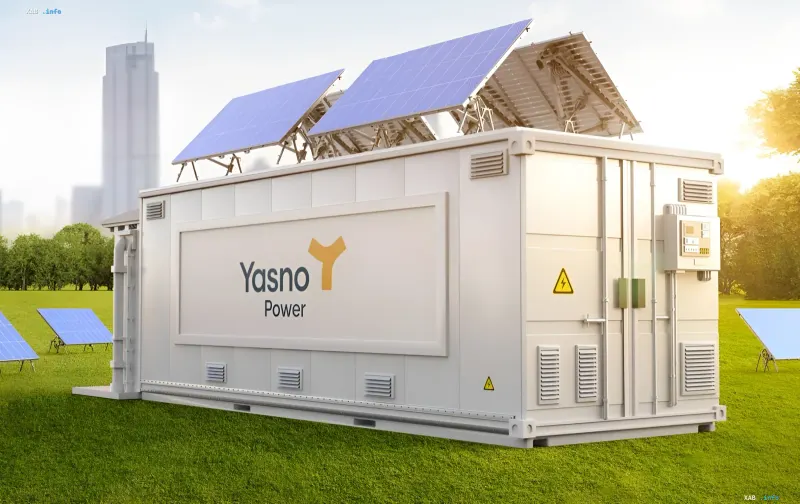
A key technological element of the D.Solutions ecosystem is the YASNO Power energy management system, whose functionality the company previously expanded to integrate solar generators, storage units, and backup sources into a single managed network. Against the backdrop of corporate initiatives, the state is also strengthening support for renewable energy: in 2026, the budget will finance new renewable energy projects with a total capacity of up to 1 GW, aimed at increasing the energy autonomy of Ukrainian regions. According to data for the first quarter of 2026, 824 household consumers have already connected their solar power plants to DTEK's power grids, indicating growing demand for decentralized generation at both the corporate and consumer levels.
Strategic significance: energy resilience as a competitive advantage
"Our task at YASNO is to help companies find the optimal financing model and achieve energy resilience already today," Serhiy Kovalenko summarized. In a situation where power supply remains one of the key factors of operational security for Ukrainian businesses, the shift from a "buy — build" model to a "select financing — get the result" model lowers the barrier to entry into solar energy and makes it accessible to small and medium-sized businesses, not just large industrial players.