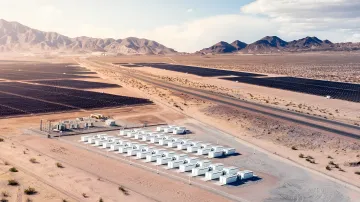
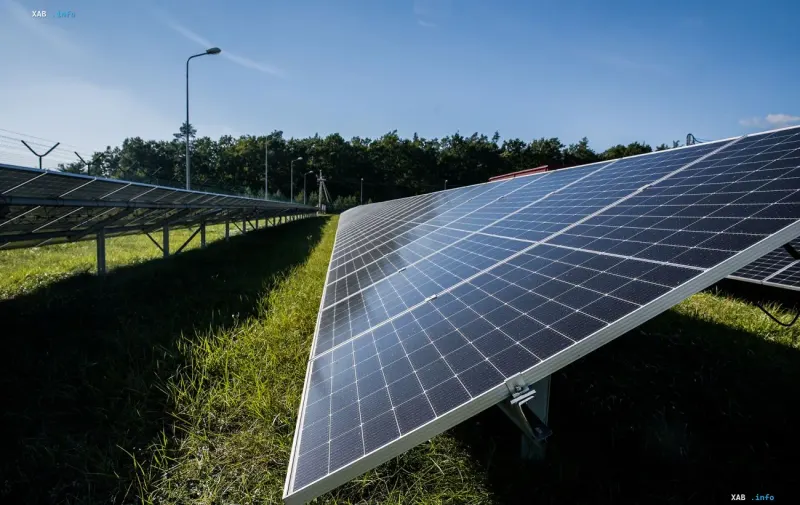
Ukrainian businesses can extract significantly greater economic benefit from their own solar power plants and energy storage systems if these assets are combined into a single managed system. This was stated by D.Solutions CEO Serhiy Kovalenko in a column for Delo.ua, as published by RBC-Ukraine. In his assessment, the mass installation of solar plants and storage units helped enterprises withstand blackouts, but the chaotic operation of these assets without a common management logic leads to daily losses of potential revenue.
The problem of fragmented management of energy assets
Kovalenko emphasizes that the separate operation of solar power plants and storage units does not always ensure maximum economic efficiency. As a specific example, he cites a situation in which a battery is charged from the grid before the peak of solar generation or, conversely, discharges energy during hours when this is economically unprofitable. As a result, the enterprise effectively overpays for electricity or misses the opportunity to earn on tariff differentials, even though the equipment for optimization has already been installed.
A unified energy portfolio as the solution
According to the CEO of D.Solutions, the solution to this problem is to combine solar power plants, storage units, energy management systems (EMS), and managed consumption into a single energy portfolio. “Integrating solar plants, batteries, and EMS systems into a single managed system allows not only to guarantee energy independence but also to turn resilience costs into a new tool for savings and additional profit,” Kovalenko wrote. This approach makes it possible to optimize electricity consumption and usage, as well as to leverage surplus generation and the opportunities of the energy market.
Military context and investment motivation
Ukrainian businesses began actively investing in their own generation and energy storage due to the threat of unstable power supply in wartime conditions. Kovalenko notes that this motivation remains key to this day. However, as the amount of installed equipment grows, the issue of not so much the volume of energy assets but their interaction comes to the fore. “What matters is not only how many energy assets an enterprise has, but also how they interact and how many tasks they can perform without compromising the main goal — the stable operation of the business,” the head of D.Solutions concluded.
Context: the development of the YASNO Power platform
It is worth recalling that D.Solutions previously expanded the functionality of its own energy management system, YASNO Power, which is precisely designed to coordinate the operation of an enterprise's various energy assets within a single management loop. Kovalenko's column effectively reveals the strategic logic behind the development of this platform: from simple monitoring to full-fledged management of the energy portfolio taking into account market conditions and tariff windows.