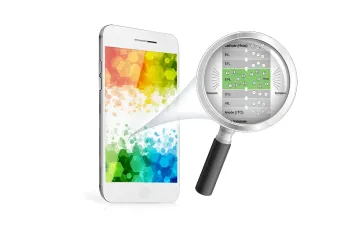
E Ink has introduced an updated version of its color electronic paper called Spectra 6 9-Color. The key change is an increase in the number of base color components from six to nine. In the original version of Spectra 6, the display formed images based on black, white, red, yellow, blue, and green. In the new modification, orange, cyan, and light green have been added to this set. According to the developers, expanding the palette allows for more accurate halftones, smoother color transitions, and makes the pixel grain of the image virtually invisible to the observer.
From Six Colors to Nine: What Changed in Display Physics
The Spectra 6 electronic paper technology works on the principle of reflecting light rather than emitting it, making it energy-efficient and comfortable for long-term viewing. However, color e-paper versions have historically lagged behind printed photography in color accuracy due to a limited number of base pigments. The transition from six to nine components means the display can now form smoother gradients between adjacent shades. This is especially important for reproducing human skin tones, natural landscapes, and fine textures — exactly the elements that previously looked most "plastic" or "grainy" on color e-paper. The developers emphasize that the goal of the update is to bring the quality of color images on electronic paper closer to the level of standard printed photographs.
First Device: 10-inch Aura Ink Digital Photo Frame
The first product to receive the new Spectra 6 9-Color display is the Aura Ink 10" digital photo frame. The device features a 10-inch screen with a resolution of 1600 × 1200 pixels and a density of 200 pixels per inch. To further improve color reproduction, Aura applies its own dithering algorithm—a spatial distribution of pixels of different base colors to simulate intermediate shades. Combined with the nine color components, this approach allows for more accurate reproduction of subtle skin tone variations, texture details, and smooth brightness transitions in an image. The photo frame runs on a built-in battery and, according to the manufacturer, can last up to three months on a single charge, assuming one photo is changed per day. The cost of the device when ordered from the manufacturer's website is $349.
Managing Nine Colors: The Role of SoC and TCON Controller
Expanding the color palette required complicating the display's electronic architecture. Unlike simpler monochrome or four-color solutions, Spectra 6 9-Color requires integration with a system-on-chip (SoC) and a specialized E Ink TCON (Timing Controller). It is the TCON that coordinates the sequence and duration of pulses required for the correct display of each of the nine color components in every pixel. Initially, the manufacturer plans to release new types of screens with a 10-inch diagonal, indicating a focus on the digital photo frame and desktop display segments.
Target Scenarios and Outlook
The Spectra 6 9-Color technology is primarily intended for devices that can replace traditional paper media in everyday life. Among the target scenarios, the developers list digital photo frames, advertising panels, information screens in public spaces, as well as digital paintings and art objects for interior decoration. In each of these scenarios, low power consumption, lack of flicker, and natural color reproduction are critical—properties that electronic paper provides by definition. Expanding the palette to nine colors makes these advantages accessible to color content as well, not just monochrome graphics. There are no reports on plans to increase screen sizes or move to higher resolutions at the time of publication.