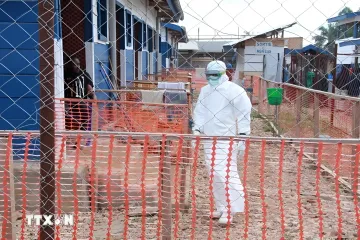
According to the latest data from the Ministry of Health of the Democratic Republic of the Congo, the country has recorded 5,021 cases of Ebola virus disease, of which 2,378 have been fatal. As the WHO notes, the current outbreak is spreading at an unprecedented rate — roughly three times faster than the largest epidemic in West Africa in 2014–2016, which claimed more than 11,000 lives. WHO Director-General Tedros Adhanom Ghebreyesus emphasized: “We must be honest with each other: the pandemic is not yet under control. The outbreak started a long time ago, and we are still trying to stop it.”
Unprecedented scale and the 17th outbreak in the country's history
This is already the 17th Ebola outbreak in DR Congo, but for the first time it has become the deadliest in the country's history, surpassing the grim record of the 2018–2020 period. The epidemic is raging mainly in remote areas, where the response is complicated by an unstable situation, mass evacuations and the constant movement of the population. The average case fatality rate from Ebola in the country has reached 47.4%, and in the most affected regions, such as North Kivu province, this figure rises to 70%.
The Bundibugyo strain and the delayed outbreak declaration
Experts cite the rare Bundibugyo strain of the virus, for which there is currently no officially approved vaccine or specific treatment, as the key reason for the critical situation. Genetic data show that the virus was spreading unnoticed from the mining town of Mongbwalu as early as February, long before the authorities officially declared the outbreak in mid-May. The late detection meant that most new cases went unnoticed, which overloaded the epidemiological surveillance system and deprived patients of timely medical care.
Contradictory data
There is a discrepancy in the figures on the number of deaths in open sources. The Ministry of Health of DR Congo and a number of international reports record 2,378 fatalities, while some regional media outlets (in particular, the Azerbaijani publication media.az) use the more rounded phrasing “more than 2,000 deaths.” The difference is explained both by the difference in the moment the data were recorded and by the use of rounded estimates in some publications. On the number of infected (over 5,000), the sources are in agreement.
Collapse of the health system and threats to medical workers
Medical personnel in the epidemic zone are becoming targets for rebel groups and victims of false rumors. Recently, in the Aru area of Ituri province, an extremist mob attacked a medical team, set fire to an ambulance and damaged several other vehicles. Enormous pressure and inadequate compensation have put the local health system on the brink of collapse: according to nurse Teresa Anya of Bunia, many workers have called a strike over unpaid wages, warning that “if management does not take this seriously, we will all eventually leave.”
Unconventional measures and hope for a vaccine
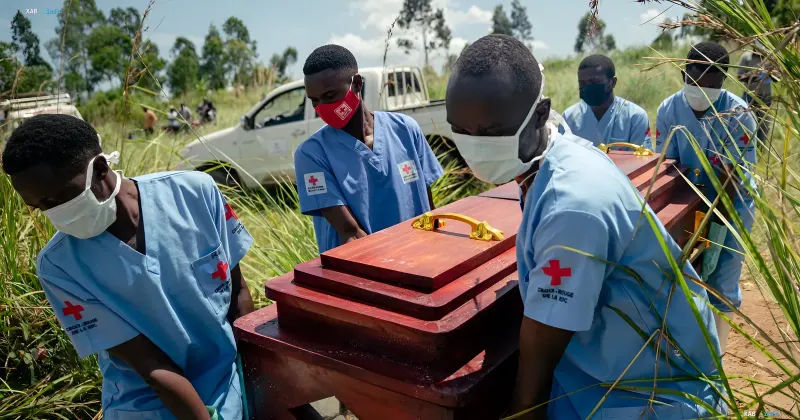
To break the chain of infection, the WHO is implementing a strategy of involving motorcycle taxi drivers in epidemiological surveillance, since they often transport the sick and the bodies of the dead. International experts insist on bringing response measures closer to the population of remote and mining regions and on raising awareness among local communities. The only “bright spot” against the backdrop of the crisis remains the trial of a vaccine developed by the University of Oxford (United Kingdom) specifically for the Bundibugyo strain: it has already been administered to the first volunteer in the UK, and hundreds of thousands of doses have been produced in India and are ready for use as soon as the clinical trials show promising results.