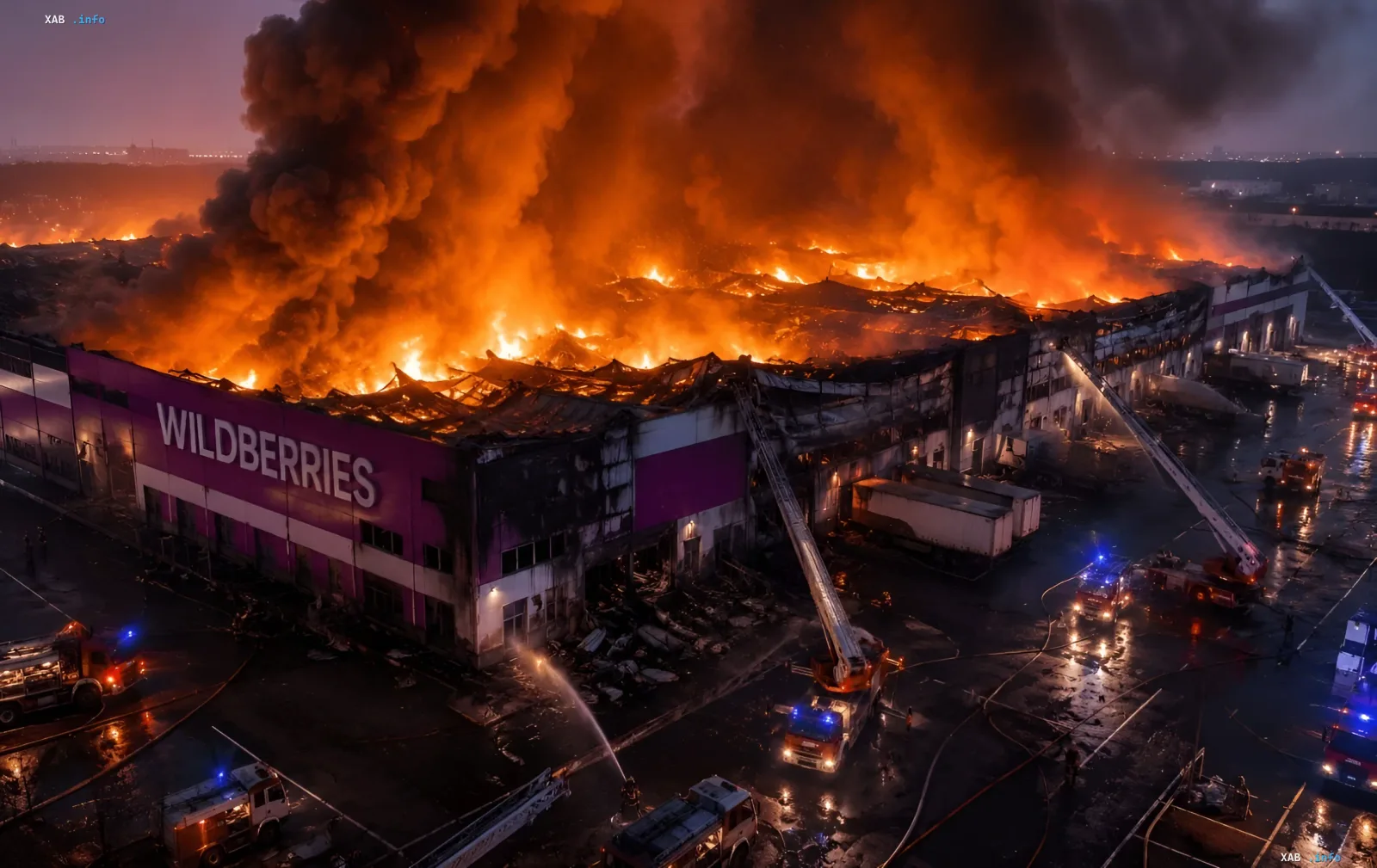
Catastrophic Blow to E-commerce Infrastructure
The situation surrounding Russia's largest marketplace, Wildberries, has escalated from a series of local incidents into a full-scale economic crisis. As of August 7, 2026, Ukrainian strikes on logistics centers have led to the destruction of over 1.18 million square meters of warehouse capacity. Fires have engulfed at least 20 hubs across the country, including facilities deep in the rear, such as in Yekaterinburg, located 1,700 km from the border. Visual reports document massive fires where rescue operations continue for days, but the damage is already irreparable.
The loss of inventory stored in these warehouses has shocked thousands of market participants. The company, which controls about half of Russia's e-commerce market, faces a recovery process that could take years. However, the main problem lies not in rebuilding buildings, but in the fate of hundreds of thousands of sellers whose businesses have been wiped out overnight.
Financial Despair and Threat of Bankruptcies
According to sources close to the Kremlin, the state simply lacks the financial resources to directly compensate sellers for their losses. The damage is estimated in the hundreds of billions of rubles. Given the budget deficit, which experts estimate can only be partially covered by funds for repairing the marketplace's infrastructure, direct payments to affected businesses are ruled out.
"No one has the money to support the sellers," sources state. This admission sets a precedent for a mass wave of bankruptcies. Since a significant portion of sellers are individual entrepreneurs (sole proprietors), they are liable for obligations with all their property. The loss of goods, often purchased on credit, means entrepreneurs could lose not only their business but also personal assets, including housing and cars, to pay off debts to banks and suppliers.
Government Response and Chamber of Commerce Proposals
In response to the growing crisis, the Russian Chamber of Commerce and Industry (CCI) has proposed changing the legislative framework. Specifically, they suggest simplifying the bankruptcy procedure for affected sellers to give them a chance to restructure debts without losing all their assets. However, as experts note, legislative changes take time, while creditors are demanding repayment now.
Russian authorities are discussing a support package that, however, does not include direct payments. The measures under consideration include credit holidays, preferential lending, and tax breaks. Nevertheless, the effectiveness of these measures remains questionable: credit holidays do not solve the problem of a lack of working capital, and tax breaks do not cover losses from destroyed goods. The speed of implementation of these measures is unknown, leaving businesses in a state of uncertainty.
Contradictory Data
There are discrepancies in assessing the scale of the consequences and the state's reaction. On the one hand, official sources and government representatives try to minimize panic, claiming that the support system is already working and businesses are adapting. On the other hand, independent economists and sources in the business community report a total collapse of logistics and the inability of sellers to retrieve remaining goods from other warehouses due to system overload and bureaucratic barriers. Furthermore, there are contradictions in damage estimates: while the company claims targeted losses, independent analysts estimate the marketplace's turnover has already dropped by a quarter, threatening the stability of the entire retail trade in the country.
Long-term Consequences for the Economy
The blow to Wildberries has far-reaching consequences for the entire Russian economy. Repairing the company's infrastructure could cost the state a quarter of the annual budget deficit if it decides to subsidize the recovery. However, even without direct aid, the outflow of sellers and a 25% reduction in turnover are already felt in the labor market and related industries. Logistics companies, manufacturers, and packaging suppliers are facing a sharp drop in demand.
The situation with attacks on warehouses deep in the rear, such as Yekaterinburg, demonstrates a change in military tactics and an expansion of the risk zone for economic infrastructure. This forces businesses to reconsider strategies for warehouse placement and investments, which in the long term could lead to a slowdown in the development of e-commerce in Russia and the relocation of some activities to other jurisdictions.