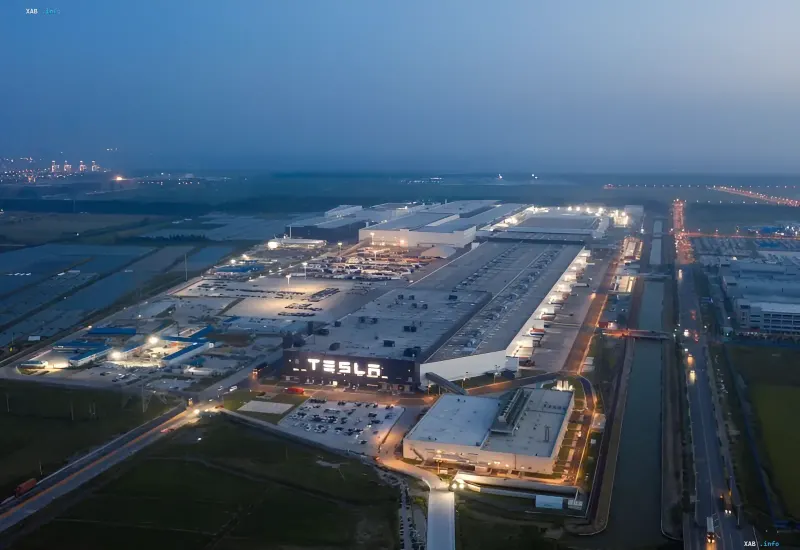
This week, a debate erupted in the information space regarding the future of Tesla's production in China. Sources citing The Wall Street Journal spread information that regulators might require the company to leave the Chinese market. At the center of this story is the Shanghai factory, a key asset for the electric vehicle manufacturer. However, Elon Musk himself categorically refuted these reports, calling them absurd fakes.
Reason for the rumors: hypothetical asset merger
The roots of the emerging information lie in Elon Musk's recent actions to consolidate his business. Experts began discussing the possibility of merging Tesla and SpaceX into a single structure. Since both companies are public, any merger must strictly comply with US legislative norms.
According to journalists, the presence of a major production asset in China could become an obstacle to this deal. It was assumed that consultants might have recommended Musk to separate the business in China, sell it, or even liquidate it to simplify the process of consolidating assets subject to US jurisdiction.
Founder's reaction and the role of SpaceX
Elon Musk reacted to the publication instantly. In his account on the social network X, he stated: "This was never even discussed. Absurd fake news."
Experts note that the close attention of US regulators to a possible merger of Tesla and SpaceX is quite justified. SpaceX is an important contractor for US government agencies, including defense orders. At the same time, the Shanghai Tesla factory is fully owned by the company and provides up to half of the brand's global electric vehicle production volumes.
Last week, Musk refused to publicly discuss the scenario of merging the two giants, but emphasized that the business processes of the companies are already closely intertwined.
Strategic importance of the Shanghai plant
The plant in Shanghai plays a critical role in Tesla's global logistics. It supplies cars not only to the domestic Chinese market but also exports them to Asian countries, Europe, and Canada.
This export has become particularly relevant for Canada, which recently reduced import duties on Chinese electric vehicles following a trade conflict with the US. This has allowed electric transport from China to penetrate the Canadian market in larger volumes.
Production capacity in China allows Tesla to assemble more than 950,000 vehicles annually. Despite fierce competition from local manufacturers, the Chinese market remains the company's second-largest sales volume after the US. In the second quarter, sales and exports of Chinese-assembled electric vehicles grew by 32.8% year-on-year. At the same time, in the production of Model 3 and Model Y in Shanghai, the company uses more than 95% of local components, making this asset strategically important and deeply integrated into the local economy.