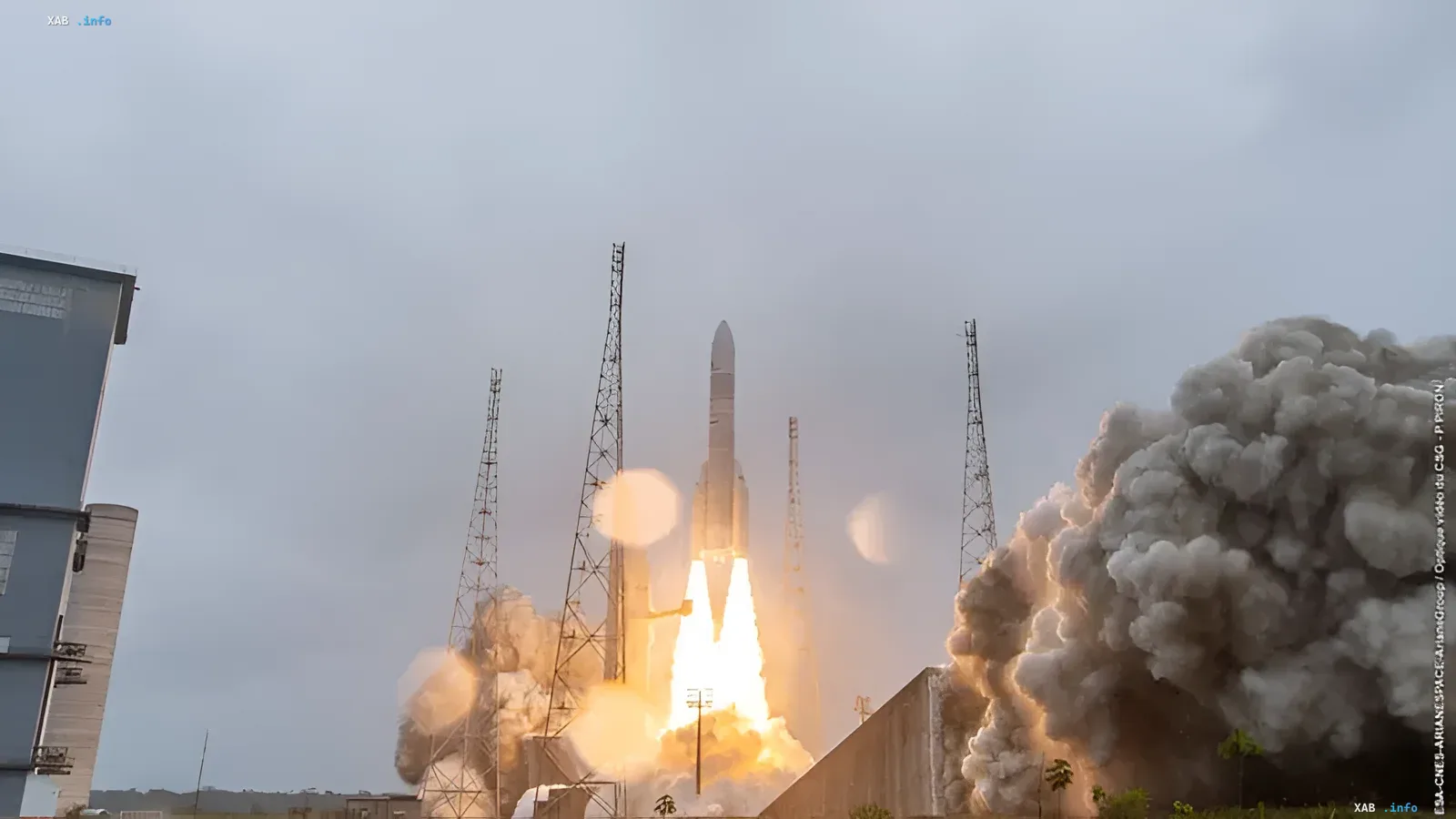
The European Space Agency (ESA) has abandoned a previously planned major upgrade of its newest Ariane 6 launch vehicle, including the prospective Block 3 version featuring a new lightweight upper stage. The agency explained that, at present, there is "no need or justification" for moving to the next generation of launch architecture. In essence, the decision amounts to Brussels continuing to subsidize Ariane 6 launches and not intending to incur additional large-scale costs to rework an already working design.
Scrap of Block 3 and the fate of the ICARUS project
The key element of the cancelled upgrade was the development of ICARUS (Innovative Carbon Ariane Upper Stage) — a new upper stage making extensive use of carbon-fiber composite materials. The project called for replacing traditional metal tanks and structural elements with lighter composite counterparts. This was to reduce the stage's dry mass, increase payload capacity, and, in the long term, lower launch costs. The technological foundation for ICARUS was the Phoebus demonstrator, designed to test large-scale composite tanks and structural load-bearing elements for rocket stages.
What this means for future missions
The Ariane 6 Block 3 variant was considered a way to expand the rocket's capabilities beyond the current design. It was assumed that the upgraded Ariane 64 version, with four P120C solid-fuel boosters and an improved upper stage, would gain additional capabilities for heavy cargo, including outer Solar System exploration projects. Following ESA's reassessment of priorities, European developers will be forced to adapt some future missions to the less powerful Block 2 rocket configuration. In particular, this will affect the upcoming European probe mission, which has been decided to be sent to Saturn's icy moon — Enceladus.
Economic context: subsidies and sustained demand
The decision to scrap the Ariane 6 upgrade reflects a broader problem in the European rocket program: the need to simultaneously make Ariane 6 more competitive and find a long-term replacement for expendable rockets. The start of Ariane 6 operations was a breakthrough for Europe, which had previously relied on Russian and American launch vehicles. At the same time, authorities are estimated to allocate up to 40 million euros per Ariane 6 launch. Although there is sustained demand for the rocket — Amazon, in particular, has a keen interest in it — each launch represents a significant cost for European taxpayers. Without the upgrade, the cancellation of subsidies is, by the authors' logic, unavoidable; however, the question of whether to take on additional debt is one that European ministers must decide later this year.
Contradictory data
It is important here to distinguish between two versions of the reason for the cancellation. ESA's official position is framed in technical and programmatic terms: the agency allegedly has "no need or justification" to move to the next generation of launch architecture, meaning the upgrade is not required to carry out current tasks. The alternative, economic interpretation points to a different motivation: the EU does not want to bear large additional costs, since it already subsidizes every Ariane 6 launch, and it was precisely the reluctance to increase the budgetary burden that became the decisive factor. Both versions coexist in the public sphere: the first is the agency's formulation, the second is an interpretation of the rocket's actual financial support mechanism. The difference between them does not remove the fact of the Block 3 cancellation, but it explains its cause in different ways.
The broader problem of the European rocket program
In the end, the decision on Ariane 6 is not simply a technical choice, but a symptom of a systemic dilemma: Europe needs to simultaneously make an expendable rocket competitive against commercial spaceflight and prepare a long-term replacement for expendable launch vehicles. Scrapping ICARUS and Block 3 saves money in the short term, but shifts payload limitations onto future scientific missions, including the probe to Enceladus, and postpones the decision on the fate of the subsidies. How exactly Brussels will balance these interests will become clear after the ministers' decision this year.