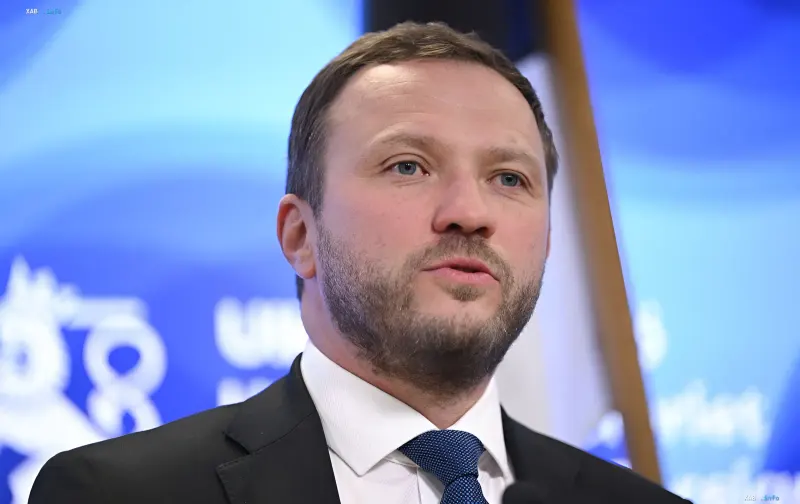
Estonia is closing all border checkpoints on its state border with the Russian Federation starting December 1, 2026. This was announced by Estonian Foreign Minister Margus Tsahkna on his official X account, as reported by RBC-Ukraine. According to the head of the foreign policy department, the decision was made against the backdrop of "hostile actions and sabotage plans by the Russian military intelligence GRU" and is a response to a specific threat rather than a rhetorical gesture.
Evidence of the GRU Sabotage Order
The Estonian Foreign Ministry emphasized that the decision to completely close the border was made after receiving "clear evidence" that the Russian GRU had ordered a sabotage attack on an Estonian defense industry enterprise. The ministry stated that "hostile actions, attempts to intimidate, destabilize, or undermine the country's security will not go unanswered" and urged Russia to "be aware of the consequences" of its actions. As noted in Tallinn, closing the border crossings will significantly narrow the channels through which Russia can conduct hostile activities on Estonian territory and will also strengthen control over the circumvention of international sanctions.
Background: The Milrem Robotics Factory Fire
The decision to close the border does not come out of nowhere. This is not the first time Estonia has faced subversive activities by Russian special services on its territory. In August 2026, a massive fire broke out in Tallinn at the Milrem Robotics plant, an enterprise manufacturing TheMIS ground robotic systems, including for the needs of the Armed Forces of Ukraine. Estonian authorities regarded this incident as arson organized on the orders of Russian special services. Reportedly, this chain of events became one of the key factors that pushed Tallinn toward the radical decision to completely close the border.
Regional Coordination and Baltic Position
Margus Tsahkna has already informed his counterparts from Finland, Latvia, and Lithuania about the decision, demonstrating an attempt to coordinate the response of the border states. Tallinn's tough line in the international arena is also confirmed by other statements from the country's leadership. In late October 2026, Estonian Prime Minister Kristen Michal, commenting on Pentagon calls regarding Russia, stated that "fawning over Russian dictator Vladimir Putin will bring only humiliation," and emphasized that the Baltic states "clearly realize the real threat from the Kremlin."
What This Means in Practice
The complete closure of all checkpoints means that starting December 1, 2026, all movement of people across the land border between Estonia and Russia will be halted. For citizens of both countries, this means the need to rebuild logistics routes, and for business, taking into account additional barriers in trade and transit. In the context of ongoing sanctions pressure on Moscow and mounting tension in the Baltics, Tallinn's step looks like an escalation aimed at physically restricting the capabilities of Russian intelligence and sabotage groups to operate on Estonian territory. Similar measures are expected to be discussed in neighboring Baltic countries, although no official announcements regarding border closures had been received from Latvia or Lithuania at the time of publication.