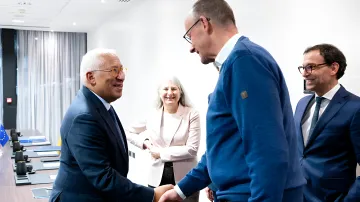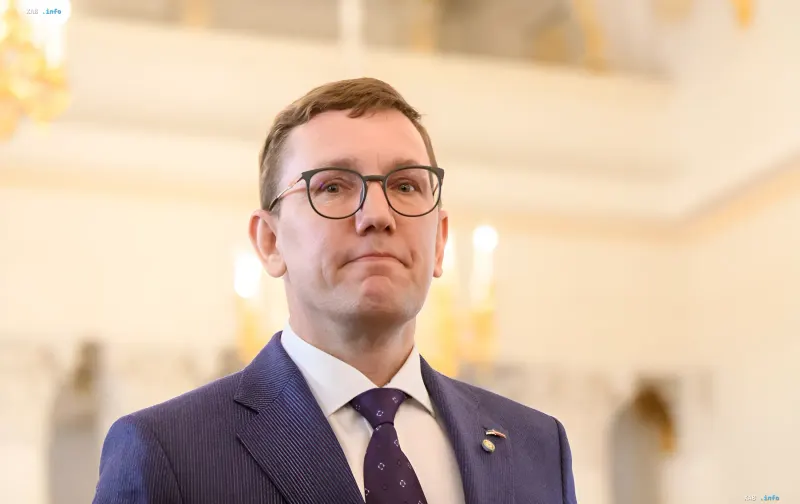
At the EU summit in Brussels, Estonian Prime Minister Kristen Michal called for linking negotiations on the bloc's multi-year budget to issues of funding for Ukraine. He stated that Kyiv needs to be sure that Europe is ready to "cover its back," especially given what Tallinn described as a "hellish" winter ahead for Ukraine. The statement came immediately after the Estonian Prime Minister's arrival at the summit and became one of the sharpest calls for strengthening support for Kyiv in the current political cycle.
Estonia sets a condition: EU budget in exchange for supporting Kyiv
Michal directly linked two key tracks of the European agenda: the agreement on the long-term EU budget and the mechanism for financing Ukraine. Tallinn's logic is simple: negotiations on how much member states will spend in the coming years should not be conducted in isolation from the question of how Kyiv will be resourced amidst the ongoing conflict. Thus, Estonia effectively proposes making support for Ukraine an "entry price" for an agreement on the bloc's multi-year financial perspective.
"Ukrainians are shedding blood": Tallinn's rhetoric and warnings on defense spending
In his speech, Michal used emotional language: "Ukraine is fighting for us. We are just counting euros, although there is nothing wrong with counting euros. Ukrainians are shedding blood. Therefore, we must do everything in our power." The Prime Minister also warned against any further cuts to defense spending, explaining that Russia is intensifying its hybrid warfare. Taken together, these statements position Estonia as one of the firmest supporters of expanding financial and military pressure on Russia through support for Ukraine.
The 45-billion package: what the European Commission proposes
The context for these statements is the European Commission's proposal from November 18 to provide Ukraine with a loan of up to 45 billion euros for 2027. Of this amount, 20 billion is earmarked for budget support and 25 billion for military needs. A key condition is that the principal amount of the debt should only be repaid by Kyiv after Russia pays reparations. It is this mechanism that is becoming a point of contention among heads of state, as it directly impacts the budgetary commitments of member countries.
Berlin exerts pressure, Bratislava resists: the landscape before the December summit
Pressure in favor of funding is also building from another angle: on November 9, German Chancellor Friedrich Merz threatened to block the next EU budget for 2028–2034 if bloc countries do not agree to provide financial support to Ukraine. However, there are opponents: on November 22, Slovak Prime Minister Robert Fico announced that Slovakia would not join the new loan, and according to Reuters, four countries are against the participation of all member states in the loan: Slovakia, the Czech Republic, Hungary, and Bulgaria. European leaders plan to agree on the funding decision at the summit on December 17–18, making the coming weeks decisive for the package's fate and the entire multi-year EU budget.