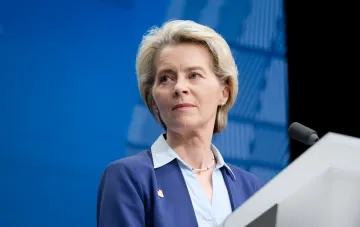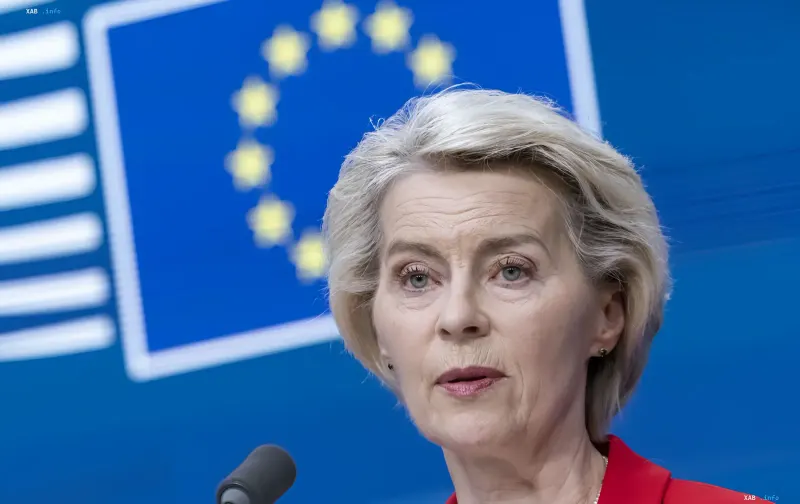
The European Commission has unveiled a new financial instrument to support Ukraine in 2027 — the "Ukraine Coordinated Support Instrument," which provides for a loan of up to €45 billion. This was announced by European Commission President Ursula von der Leyen at a press conference in Brussels, as reported by RBC-Ukraine. According to Commission estimates, Ukraine’s financing gap in 2027 will reach approximately €70 billion, and the proposed mechanism is designed to cover about two-thirds of this need.
Debt Repayment Tied to Reparations
A key condition of the new mechanism is the repayment structure for the principal amount. According to von der Leyen, Ukraine will only repay the principal after Russia pays reparations for the damage caused on Ukrainian territory. European Commissioner for Economy Valdis Dombrovskis clarified that the aid will be structured as a loan with limited recourse, meaning Kyiv's obligation to return the principal arises solely upon the receipt of reparations. The European Commission emphasizes that this approach is intended to strengthen Ukraine's position at the negotiating table.
Loan Structure: Budget and Defense
The €45 billion loan will consist of two parts. €20 billion is earmarked for budgetary support to ensure the functioning of critical civilian services, including schools and hospitals. Another €25 billion will be directed toward military needs to bolster self-defense. Of the €20 billion in budget assistance, half is planned to be distributed through a macro-financial support mechanism and the other half through the Ukraine Facility program. The budget funding will have specific conditions: its provision depends on the continuation of reforms in areas of the rule of law, anti-corruption, and public finance management.
Financing and Debt Service
According to Dombrovskis, the European Commission will raise funds on financial markets using available reserves in the EU budget. Ukraine is expected to pay the interest on the loan, although the EU may provide a subsidy to cover debt servicing costs. The Commission expects that the new mechanism will provide Kyiv with financial predictability, help maintain reforms, and facilitate the integration of Ukrainian and European defense industries.
Political Pressure and Country Positions
The proposal will be presented on Thursday in Berlin at a meeting of the Coalition of the Willing and then submitted for consideration at the next European Council meeting, which will take place in two weeks. The context of the discussion remains tense: on October 16, President Volodymyr Zelenskyy stated that Ukraine needs at least €70 billion from European partners next year. The following day, Slovak Prime Minister Robert Fico reported that his country would not participate in such a mechanism, and Hungarian Prime Minister Péter Magyar took a similar stance. On November 9, German Chancellor Friedrich Merz threatened to block the approval of the next seven-year EU budget for 2028–2034 if the bloc's countries do not agree on financial support for Ukraine.