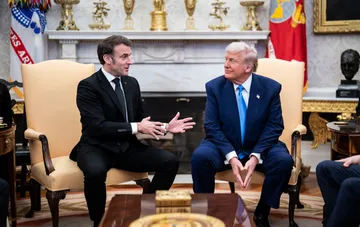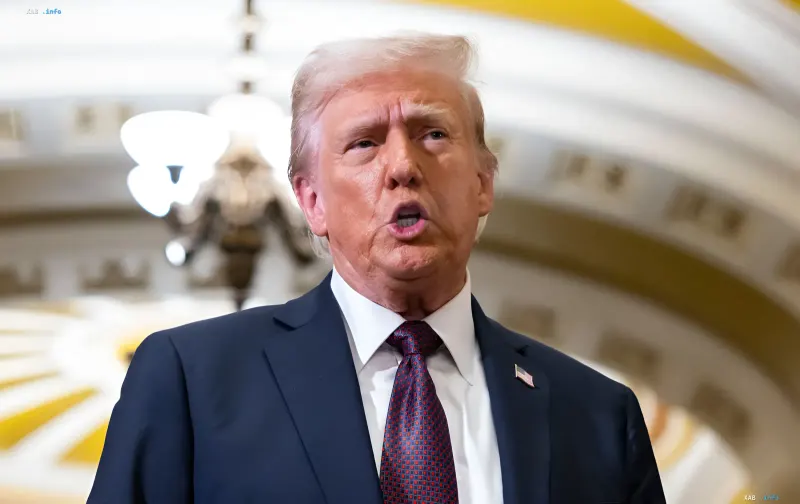
A new proposal by Donald Trump's administration regarding a pan-European security agreement involving Russia has sparked concern across European Union member states. According to Politico, cited by RBC-Ukraine, NATO allies were not informed in advance of Washington's plans, and a number of European diplomats expressed skepticism regarding the very concept. The reaction from Brussels and EU capitals arrived within hours after Trump, meeting with Vladimir Putin's envoy Kirill Dmitriev on November 5, announced a "big, beautiful agreement" which, he said, would affect not only Ukraine but the entirety of Europe.
"Putin has no veto power" — Kaja Kallas's reaction
Head of European diplomacy Kaja Kallas responded to the US initiative by emphasizing that Europe possesses its own security architecture, in which NATO and the European Union play respective roles. "We must ensure Ukraine's integration into this architecture. The problem remains that Russia continues to violate the underlying treaties... Putin has no veto power over European security," she stated. These remarks essentially served as Brussels' first public signal that Europe does not intend to accept terms formulated solely in a bilateral Washington-Moscow format.
Briefing for Ambassadors and Ursula von der Leyen's Position
According to two EU diplomats, Björn Seibert, the chief advisor to European Commission President Ursula von der Leyen, held a closed-door briefing on Friday for permanent representatives of member states following discussions among national security advisors. During the meeting, Seibert stated: "There is a desire to engage in Kyiv and the rest of Europe, although there is little trust in the Russians, but the EU is not blocking this." At the same time, he warned that Trump's entourage had "underestimated the importance of this conflict for Europe and how dangerous a bad outcome for Ukraine is for Europe." This phrase likely became the harshest assessment of the American initiative to come from an executive official of the EU.
The Baltic Vector: Nausėda Demands a Seat at the Table
Lithuanian President Gitanas Nausėda, speaking after a meeting of eight Northern and European Baltic countries, formulated a position seemingly shared by a significant portion of the EU's eastern flank: "Europe must have a seat at the table for peace talks in Ukraine and the future architecture of European security." The statement came as three NATO diplomats confirmed that allies were not notified of Washington's plans in advance. Many of them, they said, remain skeptical of the very idea of a pan-European agreement which, they fear, might be formulated without taking into account the interests of nations whose territories directly border the conflict zone.
The Shadow of the December Review and Jared Kushner's Role
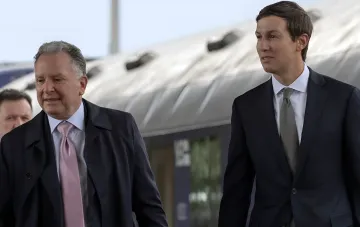
A separate source of anxiety among allies is the potential link between the new initiative and the upcoming December review of the US military presence in Europe. "That is the contentious issue. It is one thing to talk about European security architecture with the 'usual' US posture; another is to talk about it 'as things will be,' and nobody knows how things will be," an anonymous NATO diplomat stated. Trump's special envoy Jared Kushner, in turn, stated that the US seeks not only an end to hostilities in Ukraine but also the creation of a sustainable security architecture that will prevent a recurrence of the conflict. However, the uncertainty surrounding the specific parameters of this architecture and who will guarantee it remains the main subject of discussion in European capitals this week.