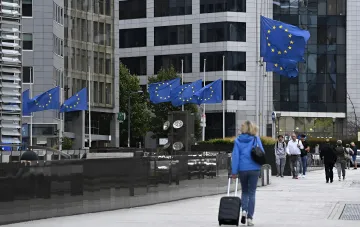
The long-standing political standoff within Brussels has come to an end. The Permanent Representatives of the European Union member states have reached an agreement on the 21st sanctions package against Russia. At this stage, the document is undergoing final technical coordination and will be officially approved shortly thereafter.
Information about the breakthrough in negotiations was confirmed by an EU official contacted by a Radio Liberty correspondent. According to the diplomat, the technical work on the text of the package is nearing completion. It is expected that the written procedure for approving the document will be launched later today.
Deadlock and Search for Compromise
The path to adopting new restrictions has proven difficult for the European Union. As recently as July 15, ambassadors of EU member states failed to reach a consensus, and negotiations hit a deadlock. However, over the past week, diplomats managed to resolve key contradictions.
It has become known what specifically caused resistance from several states. Greece opposed the introduction of a ban on the transportation of Russian liquefied natural gas. Austria, in turn, defended the interests of Raiffeisen Bank. Bulgaria, France, and Italy also attempted to block restrictions on specific individuals and former Russian military personnel.
Pressure on the "Shadow Fleet"
Alongside the preparation of the sanctions document, the European Union is increasing pressure on Russia's "shadow fleet." In the Mediterranean Sea, EU forces seized the oil tanker MV SOUTH STAR. The vessel is suspected of sailing under a false flag.
Furthermore, operations by EUNAVFOR ATALANTA have enabled European forces to inspect other vessels belonging to the "shadow fleet," indicating an expansion of tactics to combat sanctions evasion.