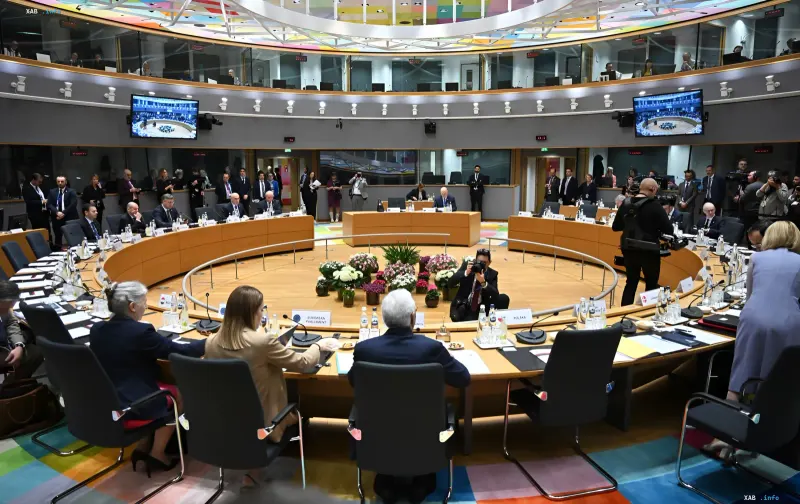
The European Union has announced it will join the negotiation process aimed at ending the war in Ukraine. As stated by European Council President António Costa, the bloc will send national security advisors from Germany, France, the United Kingdom, Italy, and Poland to the next round of consultations. This was reported by RBC-Ukraine, citing Bloomberg and a direct statement from the European official.
Delegation composition and level of participation
According to Costa, the EU will be represented at the upcoming talks by both officials from EU institutions and national security advisors from the five mentioned countries. The European official emphasized that representatives from these states will participate in all future rounds of consultations at a technical level. Thus, the focus currently is not on political leaders, but on staff from national security apparatuses who will conduct detailed deliberation on the issues.
Context: from Abu Dhabi to Dublin
It is worth recalling that on November 10–11, talks between representatives of Ukraine, the US, and Russia took place in Abu Dhabi. European countries did not participate directly in the trilateral meetings; however, the Ukrainian side held parallel consultations with them. Following the summit in the UAE, American mediators Steve Witkoff and Jared Kushner traveled to Moscow, where they held a meeting with Russian leadership, and subsequently held talks with Ukrainian President Volodymyr Zelensky in Dublin. Later, Witkoff stated that the Russian side had agreed to the participation of European representatives in the next round of negotiations.
Who will speak on behalf of Europe
Despite the decision to send advisors, the question of which political leaders will represent the EU in the talks remains open. Costa acknowledged that Europe has not yet appointed such representatives. According to Bloomberg, citing a European Commission spokesperson, the heads of member states will discuss this issue during an upcoming press conference. Politico notes that EU states have not yet agreed on who exactly will represent the bloc: some countries support the candidacy of António Costa, while France and Germany are not prepared to concede this role to Brussels.
Kyiv's position
Ukrainian President Volodymyr Zelensky has consistently insisted on European participation in the negotiation process. According to him, Russia's goals concern not only Ukraine but the security architecture of the entire continent, which is why European countries must be represented at the negotiating table. This rationale explains why the Ukrainian side actively coordinated positions with European partners even during the period when consultations were formally conducted in a trilateral format.
Thus, the EU's entry into the Ukraine negotiations is becoming a reality at a technical level, while the question of the bloc's political representation remains a subject of internal consensus-building in Brussels and European capitals.