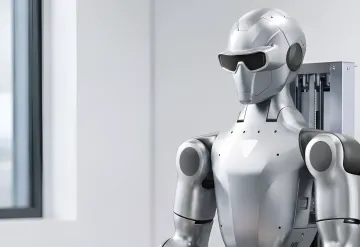
European companies are increasingly moving away from the established model in which the decision to hire a new employee was made in isolation from other strategic issues. According to data from the Gremi Personal analytics center, cited by RBC-Ukraine, digitalization and automation are becoming an integral part of the HR policies of European enterprises. This does not mean mass layoffs, but it significantly changes the logic of creating new jobs: before opening a vacancy, management assesses whether the corresponding function can be handed over to algorithms or digital tools.
A New Formula for Hiring Decisions
“When deciding to create a new position, companies increasingly assess not only the current operational need, but also the possibilities of automation, the use of digital tools, and the team's competencies. On the contrary, the value of qualifications that enable effective work in an environment where technology supports more and more processes is growing,” explained the Vice President of Gremi Personal. According to experts, workforce planning is now viewed not as a standalone HR process, but as an element of a broader business modernization strategy. The qualification of a worker who can interact with AI tools is becoming more valuable than a narrow specialization that is easy to automate.
Official Statistics: From Pilots to Integration
The trend described by Gremi Personal is confirmed by official data. According to the results of a survey of more than five thousand eurozone companies, published by the European Central Bank in June 2026, more than 70% of enterprises already use artificial intelligence in one form or another. However, only 7% of companies apply AI intensively — that is, they have integrated the technology into a significant part of their business processes. This means that the overwhelming majority of enterprises are at the stage of pilot projects or targeted implementation, rather than systemic transformation. Separately, Eurostat reports that in 2025, 20% of EU enterprises with 10 or more workers used AI technologies — 13.5 percentage points more than the year before. At the same time, more than half of such companies are large businesses.
Contradictory Data
There is a noticeable discrepancy between official sources on the scale of AI adoption. The European Central Bank, in June 2026, records that more than 70% of eurozone enterprises “already use” artificial intelligence. At the same time, Eurostat indicates only 20% of EU enterprises with 10 or more workers for 2025. The 50-percentage-point difference can be explained by several factors: differences in geographic coverage (eurozone versus the entire EU), the year of measurement (2025 versus 2026), survey methodology, and, probably, the very definition of “use.” The ECB, judging by the wording, records any, including minimal, use of AI, whereas Eurostat may account for a narrower criterion. Nevertheless, both sources agree on the main point: intensive integration of AI into business processes remains the exception, not the norm.
Industry Ahead of the Rest
The most notable changes recorded by Gremi Personal occur in industrial sectors, especially those critically dependent on export conditions and energy costs. It is industrial enterprises that are the first to actively implement robotics, automation of production lines, and digital solutions to boost productivity. As a result, hiring decisions at factories and in production companies increasingly depend not only on the volume of orders, but also on which functions can be handed over to automation and in which competencies the team will need in the future. For workers, this means that demand is shifting toward specialists who can work “in tandem” with technology, rather than compete with it.
A Broader Context: The Labor Market in Eastern Europe
Changes in hiring logic amid digitalization are taking place against the backdrop of a general redistribution of income in the region. According to data published in early 2026, in Poland the average salary in February 2026 was 9,966 zloty gross, while the median income — half of workers earned no more than 7,690 zloty. The highest incomes were recorded in the mining and digital sectors. At the same time, salaries are growing fastest in logistics and warehouse services: over the year, the income of workers in these areas increased by 8.1%, exceeding the averages in other industries. These data indirectly confirm that it is precisely the sectors where automation has not yet reached critical mass that maintain high demand for human workers and, accordingly, more dynamic wage growth.