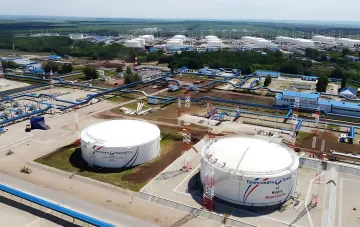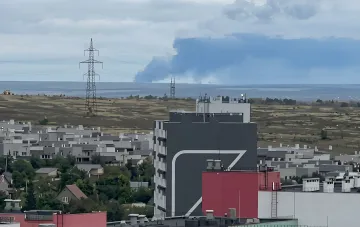
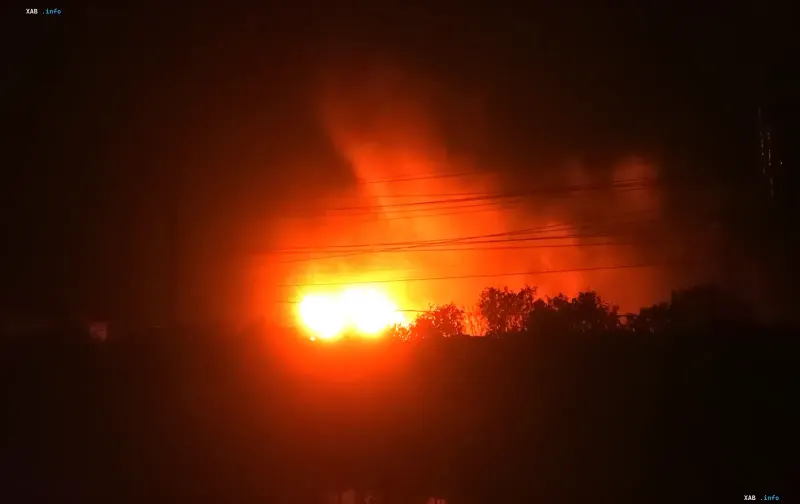
In the dead of night on October 2, 2026, powerful explosions rocked Samara, followed by a massive fire breaking out at Europe's largest tank farm and linear production and dispatch station (LPDS) 'Samara'. According to independent investigations and the Astra Telegram channel, which cite open-source data analysis and satellite imagery, a key infrastructure element of the Transneft company was hit. The facility spans over 216 hectares and houses 71 storage tanks with a total capacity exceeding 1.6 million cubic meters of oil.
Strategic Importance and Scale of the Facility
The uniqueness and critical importance of LPDS 'Samara' for the Russian oil industry stem from its geographical and transport hub position. Four major trunk oil pipelines converge at this junction: Almetyevsk — Kuybyshev, Kaltasinsky — Kuybyshev, Nizhnevartovsk — Kurgan — Kuybyshev, and Guryev — Kuybyshev. Crude oil flows here from Russia's richest production regions — Western Siberia, Tatarstan, the Orenburg region, as well as in transit from Kazakhstan. In addition to the storage tanks, the complex includes the Samara-1 and Samara-2 oil pumping stations and a specialized oil mixing station.
Official Reaction and Related Attacks in Volgograd
Local Russian authorities initially refrained from detailed comments regarding the fire at the oil depot. Samara Mayor Ivan Noskov first reported a temporary suspension of ground public transport and the conversion of the metro into a shelter due to a missile threat, but later announced that the threat had been canceled and transport resumed, although drone attack warnings remained in place. Simultaneously with the Samara incident, Volgograd faced a massive drone attack, with local residents reporting explosions and a strong glow in the areas of the oil refinery and the Kaustik chemical plant. Volgograd Oblast Governor Andrey Bocharov confirmed a strike on industrial infrastructure and a residential fire.
Contradictory Data
While independent sources and Telegram channels assert that LPDS 'Samara' was damaged as a result of a nighttime drone attack based on video analysis and preliminary satellite imagery, official Russian structures and regional authorities traditionally refrain from confirming direct hits on oil storage tanks. Officials limit their statements to general reports about air defense operations, repelling UAV attacks, and short-term transport safety measures, avoiding mention of the scale of destruction and the fire at Europe's largest logistical oil hub.
Implications for Russia's Energy Security
Experts note that regular strikes on critical nodes of Russia's Russian oil infrastructure — ranging from Samara and Tuapse to Perm and Volgograd — inflict severe damage on export potential and petroleum product logistics. Disabling or even temporarily halting giant distribution centers like LPDS 'Samara' disrupts established supply chains for raw materials to domestic refineries and export terminals, demonstrating the vulnerability of the fuel sector to modern precision strike weapons.