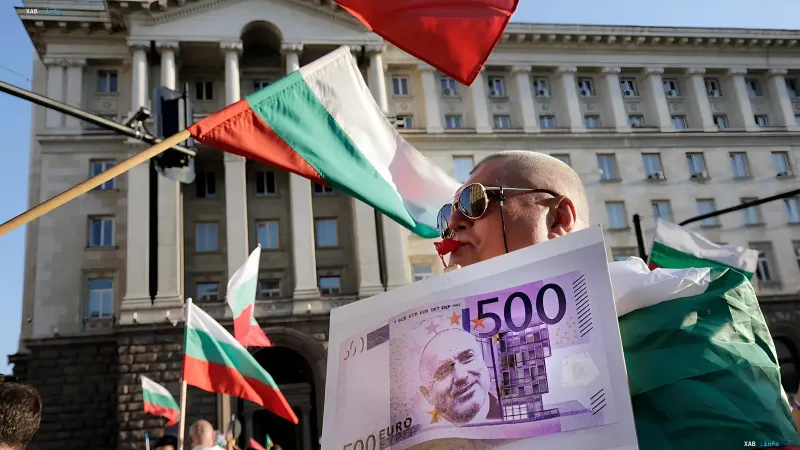
On November 6, 2026, the European statistical office Eurostat published data on the average annual adjusted salary for full-time work across European Union countries for 2025. The figure for the bloc as a whole stood at €41,464. To simplify wage comparisons, Eurostat converts part-time workers' earnings into full-time equivalents. The gap between countries proved significant: the average figure in Luxembourg was more than five times higher than in Bulgaria.
Leaders and laggards in euros
Across the 26 EU countries included in the Eurostat ranking, the average gross adjusted full-time salary ranged from €16,201 in Bulgaria to €85,609 in Luxembourg. Luxembourg's figure is followed by Denmark (€73,500), Ireland (€64,387), Belgium (€61,984), and Austria (€60,727) — all top-five countries exceed the €60,000 mark. Finland (€50,960) and Sweden (€49,622) also came in above the EU average. At the bottom of the list, alongside Bulgaria, were Greece (€18,772), Hungary (€20,138), Romania (€20,818), Slovakia (€21,661), and Latvia (€22,688).
The bloc's four largest economies
Among the EU's four largest economies, the highest average salary was recorded in Germany at €56,360. France finished slightly above the EU average at €44,734. Gross wages were notably lower in the bloc's third and fourth largest economies: €34,213 in Italy and €35,125 in Spain. Crucially, these figures represent gross salaries, and net earnings may differ due to variations in taxes and social contributions between countries.
Adjusting for purchasing power
Purchasing Power Standard (PPS) is an artificial currency unit that eliminates price level differences, meaning one PPS unit can buy the same basket of goods and services in any country. When salaries are adjusted for consumer prices, the gap narrows: the highest average salary in PPS terms is roughly triple the lowest, whereas in euros the difference is more than fivefold. Luxembourg retains first place (€65,106 PPS), Bulgaria rises to 24th place, and Greece drops to the bottom position (€21,486 PPS). The ranking shifts significantly: Slovenia rises above the EU average, while Sweden and France fall below it; Poland and Lithuania both gain three positions, Austria moves from fifth to second place, Denmark from second to fourth, and Ireland from third to sixth. Romania saw the largest rise (from 23rd to 18th place), while Estonia experienced the largest drop (from 16th to 21st).
Why salaries differ — expert views
According to specialists, the main reasons for the disparities are differing levels of economic development and productivity. Jaan Masso, associate professor of applied econometrics at the University of Tartu, noted that the primary cause is differing levels of economic development, productivity, and the output generated by workers. Štěpán Jurajda, a professor at the CERGE-EI institute in Prague, pointed to differences in physical and human capital endowment (education) and varying productivity, including institutions, effective regulation, and R&D policy. Masso also highlighted the role of labor market rules: minimum wages and collective agreements influence the degree of income equality, with earnings tending to be more uniform in Nordic countries. Jurajda added that price levels also tend to be higher in wealthier nations.