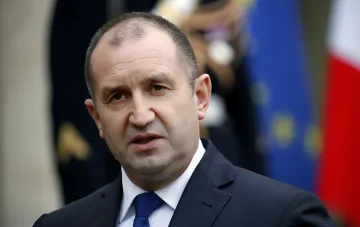
On Tuesday, November 24, the European Commission announced its intention to petition EU member state finance ministers to impose a fine on Bulgaria under the Excessive Deficit Procedure (EDP). At the same time, Brussels stated its desire to tighten measures against Hungary for the same reason. According to the European Commission's assessment, both countries have failed to take necessary measures to reduce their national budget deficits. As Reuters notes, if this step is approved by EU finance ministers, Bulgaria will become the first EU country to face a fine due to excessive spending.
Deficit Figures: How Bulgaria and Hungary Exceed the Limit
According to EU laws, member states' allowable government budget debt must not exceed 3% of their GDP. In Bulgaria, this figure, according to the European Commission, rose from 3% in 2024 to 4% in 2025, and this year, EC calculations estimate the government budget deficit will reach 5%. In Hungary, the trajectory is different: the deficit decreased from 5.1% in 2024 to 4.7% in 2025, but in 2026, according to the European Commission's forecast, it will reach 7.3%. Thus, both countries significantly exceed the established 3% threshold in Brussels' calculations.
EU Budget Rules Following the 2024 Reform
In April 2024, the European Parliament approved a reform of the European Union's budgetary rules. It is expected that these changes will grant member states with high debt levels greater flexibility in reducing debts and budget deficits. The new rules retained the requirement that total debt must not exceed 60% of GDP. At the same time, states with external debt exceeding 90% are required to reduce its ratio by 1 percentage point annually, while countries with a figure of 60–90% must reduce it by 0.5 percentage points.
Size of Sanctions: Fine for Bulgaria and Restrictions for Hungary
Under EU rules, Bulgaria could face a fine of 0.02% of the country's GDP from the previous year due to its budget deficit. This measure can be reimposed every six months until EU finance ministers determine that the country has taken effective steps to reduce the deficit. Since Hungary is not part of the eurozone, it does not face a direct monetary fine; instead, it could lose financial support, meaning access to EU funds.
Sofia's Position: Systemic Problems and Political Crisis
On November 24, the Bulgarian Ministry of Finance stated that the European Commission's conclusions and the risk of sanctions are caused by accumulated systemic problems and a long-term political crisis in which, according to the department, all parties are complicit. Thus, Sofia is challenging the very logic of responsibility underlying Brussels' assessment, although it does not formally dispute the calculated deficit values. Earlier, on November 13, Prime Minister Rosen Zhelyazkov — or rather, Prime Minister Rosen Zhelyazkov... wait, text says Rumen Radev — stated in Ireland, where an informal EU summit was taking place, that Sofia cannot currently participate in financial aid to Ukraine due to the difficult state of public finances.
Connection to the Issue of Aid to Ukraine
At the same time, Radev emphasized that Bulgaria does not intend to hinder other EU member states from providing financial assistance to Ukraine. According to him, the Bulgarian authorities are willing to discuss their participation only if the funds are directed toward humanitarian aid, energy supply, and medical needs, rather than arms procurement. The Bulgarian prime minister also stated that Sofia does not intend to transfer additional weapons and ammunition from its own army reserves to Ukraine. These statements link the country's budgetary problem with its position on European aid issues and demonstrate how fiscal constraints affect Sofia's foreign policy decisions.