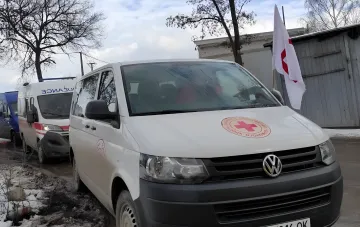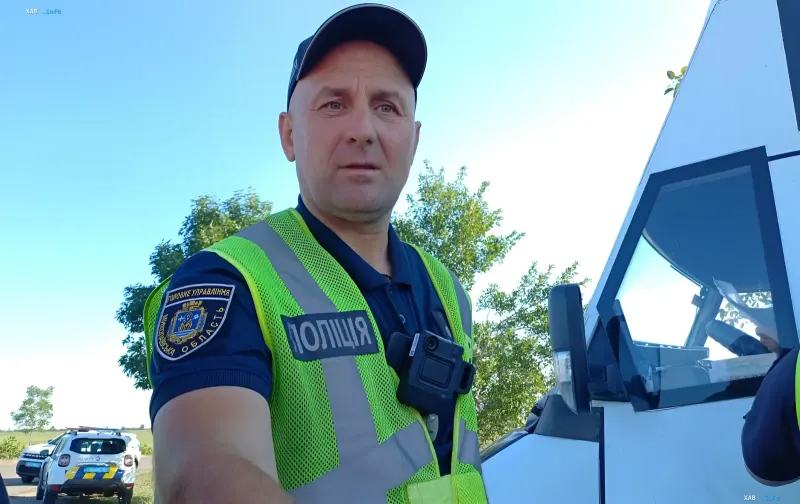
August 14, 2026: A resonant incident occurred in the Mykolaiv region, threatening the lives of hundreds of civilians awaiting evacuation from the frontline zone of Kherson. Police officers, together with representatives of the Territorial Recruitment Center (TCC), detained a driver from the Kherson Rapid Response Unit of the Ukrainian Red Cross. The incident took place at a checkpoint near the settlement of Shevchenkove, while the crew was evacuating vulnerable categories of citizens, including the elderly and children, from under shelling.
Incident details: people left at the checkpoint
According to a statement from the leadership of the Kherson Regional Rapid Response Unit, the incident occurred during a humanitarian mission. The evacuation vehicle carried two families, including seriously ill patients and a three-year-old child. According to the unit commander, law enforcement officers stopped the vehicle under the pretext of testing the driver for intoxication. Instead of conducting a standard check, the driver was taken to a TCC assembly point to undergo a military-medical commission (MMC).
The unit head stated that the passengers were effectively abandoned at the checkpoint. "Effectively, the man was kidnapped. The driver of the evacuation team was kidnapped. I only have 4 in my unit. Today minus one," the commander commented on the situation. Due to a critical shortage of personnel, the unit was forced to announce a temporary suspension of all evacuation trips from the city of Kherson.
Official police position: check and mobilization
The Main Directorate of the National Police in the Mykolaiv region confirmed the fact of a check on the "Odesa — Melitopol — Novoazovsk" highway. Law enforcement officers clarified that the check was carried out by a joint notification group involving TCC servicemen and an investigative-operational group (IOG). According to the police, the driver lacked mobilization deferment, which became the basis for his delivery to the TCC.
The department also refuted information that the evacuees were left without assistance. According to the police, another driver arrived at the scene and delivered the civilians to their destination. "The leadership of the Main Directorate of the National Police in the Mykolaiv region has initiated an internal investigation for a full and objective verification of all details of the incident, in particular, the lawfulness of the police officer's actions," the press service noted.
Contradictory data
At the moment, there are two diametrically opposite versions of events that require a thorough investigation. The Ukrainian Red Cross side claims that the people in the car were "simply abandoned," and qualifies the actions of law enforcement as the kidnapping of a key employee in the midst of a humanitarian operation. The police side insists on the legality of their actions, citing the driver's lack of documents exempting him from mobilization, and claims that assistance to the passengers was provided in time.
The key contradiction lies in the assessment of priorities: for the humanitarian organization, the priority is the lives of the people in the car and the continuity of evacuation, while for law enforcement agencies, the priority is fulfilling mobilization plans. The absence of a single version of events creates an information vacuum and increases the level of tension in society.
Consequences for humanitarian logistics
The suspension of the Red Cross unit's work has serious consequences for the residents of the Kherson region, which remains a zone of active hostilities and constant shelling. The expansion of the mandatory evacuation zone and the intensification of Russian drone attacks make the situation critical. The authorities previously developed a step-by-step evacuation instruction, but in practice, its implementation faces personnel and administrative barriers.
The detention of a driver without deferment raises the question of the need to revise legislative norms concerning the mobilization of humanitarian mission employees. In conditions where the lives of civilians depend on the speed and efficiency of such units, any failures in their activities can lead to tragic consequences.