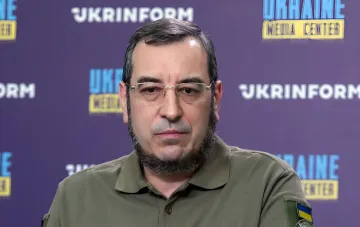
On the night of August 20, 2026, Russia carried out one of the largest strikes on Kyiv and the Kyiv region in recent times: according to Ukrainian authorities, the attack involved dozens of ballistic missiles, Kalibr cruise missiles, and strike drones. According to Kyiv Mayor Vitali Klitschko, at least 12 people were killed in the capital, and another 34 were injured. The highest number of casualties was recorded in the Solomianskyi district, where a multi-story residential building, a school, and a children's hospital were damaged.
The night the Foreign Ministry called "one of the most brutal"
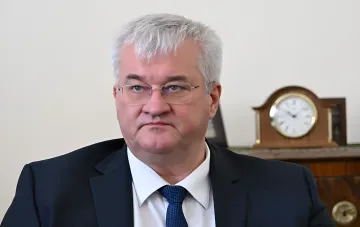
Ukrainian Foreign Minister Andrii Sibiga, in an interview with RBC-Ukraine, characterized the night attack as one of the most brutal Russian operations, emphasizing that ballistic missiles "flew at the capital one after another." In his words, such strikes are not simply military actions but a demonstration of "complete impunity" on which, according to Ukrainian diplomacy, Vladimir Putin is counting.
"Every interceptor missile is an act of humanity"
In his statement, the head of Ukraine's Foreign Ministry used a sharp rhetorical framework: "Every Russian ballistic missile is an act of barbarism. And every interceptor missile supplied to Ukraine is an act of humanity and saved human lives." Sibiga stated directly that Kyiv knows of partners capable of transferring interceptors and urged them to "act without delay," adding: "Every delay is measured in human lives."
Call for three critically important measures
The Ukrainian side formulated a package of three critically important measures for the protection of civilian lives before international partners, the central element of which was the urgent supply of air defense systems and interceptor missiles. The Foreign Ministry separately emphasized that this is not about long-term programs but about immediate actions, as the pace of Russian attacks leaves no time for bureaucratic procedures.
Appeal to the Ukrainian diaspora in world capitals
Separately, Sibiga addressed Ukrainians abroad. He called on the World Congress of Ukrainians, as well as Ukrainian organizations and societies in key world capitals, to "raise their voice" in support of Ukraine and publicly demand specific, not merely declaratory, actions from governments. Thus, Kyiv is attempting to turn the diaspora into a tool of diplomatic pressure on allies.
Contradictory data
A fact-check revealed a discrepancy in the chronology. The main text, as well as materials from RBC-Ukraine, Glavred, and DW, clearly tie Sibiga's appeal to the night strike of August 20, 2026. However, a publication on pravda.com.ua with a similar headline is archived with a date of July 2, 2026. This may indicate either an error in the source's date/URL or that a similar appeal by the minister had taken place earlier, in July. The XAB.info editorial team relies on the August 20 version, confirmed by three independent sources, but records the discrepancy for transparency.
Context: why the interceptor issue became acute
The massive use of ballistic missiles against Kyiv exposed a structural problem: Western-made air defense systems supplied earlier are designed primarily to intercept cruise missiles and drones, while ballistic trajectories require specialized interceptors. This is why Ukrainian diplomacy focuses specifically on this class of weapons rather than general "air defense systems." Pressure on allies is intensified by the fact that each new night of attacks increases the number of casualties among the civilian population, including damage to social facilities.