Against the backdrop of an acute shortage of interceptor missiles and Russia's steady ramp-up in ballistic missile production, Ukraine, according to The Economist, has two main directions of defense against strikes at its disposal. RBC-Ukraine reports this, citing the British publication. The situation is one in which traditional air defense is gradually hitting a ceiling, while the adversary continues to expand its arsenal of high-speed munitions, forcing the search for alternative, including offensive, ways of reducing the threat.
Interceptor Shortage and Rising Ballistic Production
The key problem highlighted by The Economist is the near-total depletion of Ukraine's stockpiles of PAC-3 interceptor missiles for the Patriot systems. At the same time, according to the publication, Russia has increased its ballistic missile production to roughly one hundred units per month. An additional factor of vulnerability is that the Freyja air defense system is not yet ready for combat use. Taken together, these circumstances create a gap between the rate at which the adversary produces ballistic missiles and Ukraine's ability to intercept every launch.
First Scenario: Shrinking the Arsenal by Striking Production
The first of the two directions identified by The Economist is of an offensive nature and aims to reduce the number of missiles available to Russia. The strategy involves striking the factories that produce ballistic missiles, as well as hitting launchers before a shot is fired. In other words, the goal is not to intercept the missile in the air, but to prevent it from launching at all by destroying either the production base or the carrier itself during launch preparation.
Second Scenario: Ukraine's Own Ballistic Missiles
The second direction is linked to Ukraine's hopes of replenishing its arsenal with its own ballistic missiles in the coming months. The main focus is on the 'Sapsan' missile, being developed by Yuzhmash, as well as on Fire Point's products — the FP-7 and the longer-range FP-9. According to The Economist, thanks to their high speed, these missiles will be able to strike the adversary's mobile launchers more effectively than drones, preventing them from firing and disappearing before the strike arrives.
The Complexity of the Task and Intelligence Warnings
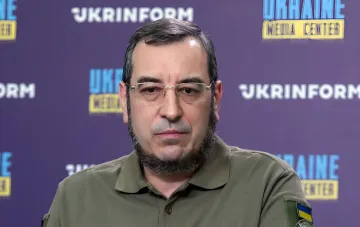
At the same time, The Economist emphasizes that implementing both scenarios is extremely difficult: even the United States, enjoying full air superiority over Iran, struggles to destroy the adversary's mobile launchers. The threat context is reinforced by intelligence statements. The Head of the Main Directorate of Intelligence, Oleksandr Ivashchenko, warned that this autumn and winter Russia will intensify combined strikes on Ukraine's energy and heat generation infrastructure, simultaneously employing ballistic missiles, cruise missiles, jet-powered 'Shaheds,' and new boron-containing munitions, which complicates the work of air defense. In addition, an HUR representative, Vadym Skybitskyi, stated that by the end of the year Russia plans to complete testing of a new type of ballistic missile with a range of up to eight hundred kilometers, and that during these tests the adversary may strike targets in western regions of Ukraine.
Thus, according to The Economist, Ukraine faces a choice between intensifying offensive strikes on the production and launch infrastructure of ballistic missiles and accelerating the creation of its own high-speed missile arsenal — with both paths being fraught with high technical and operational complexity.