The development of artificial intelligence is making facial recognition systems increasingly accurate and, as a result, increasingly suitable for everyday use. As recognition quality improves, biometrics is becoming a fast method of authentication that reduces the need to carry cash, bank cards, or a smartphone. In Japan, where demand for convenience, safety, and efficiency is high, this technology has already moved beyond experiments and is forming a coherent ecosystem — from transportation and shopping to entertainment and the social sector.
Wallet-Free Payments in Retail
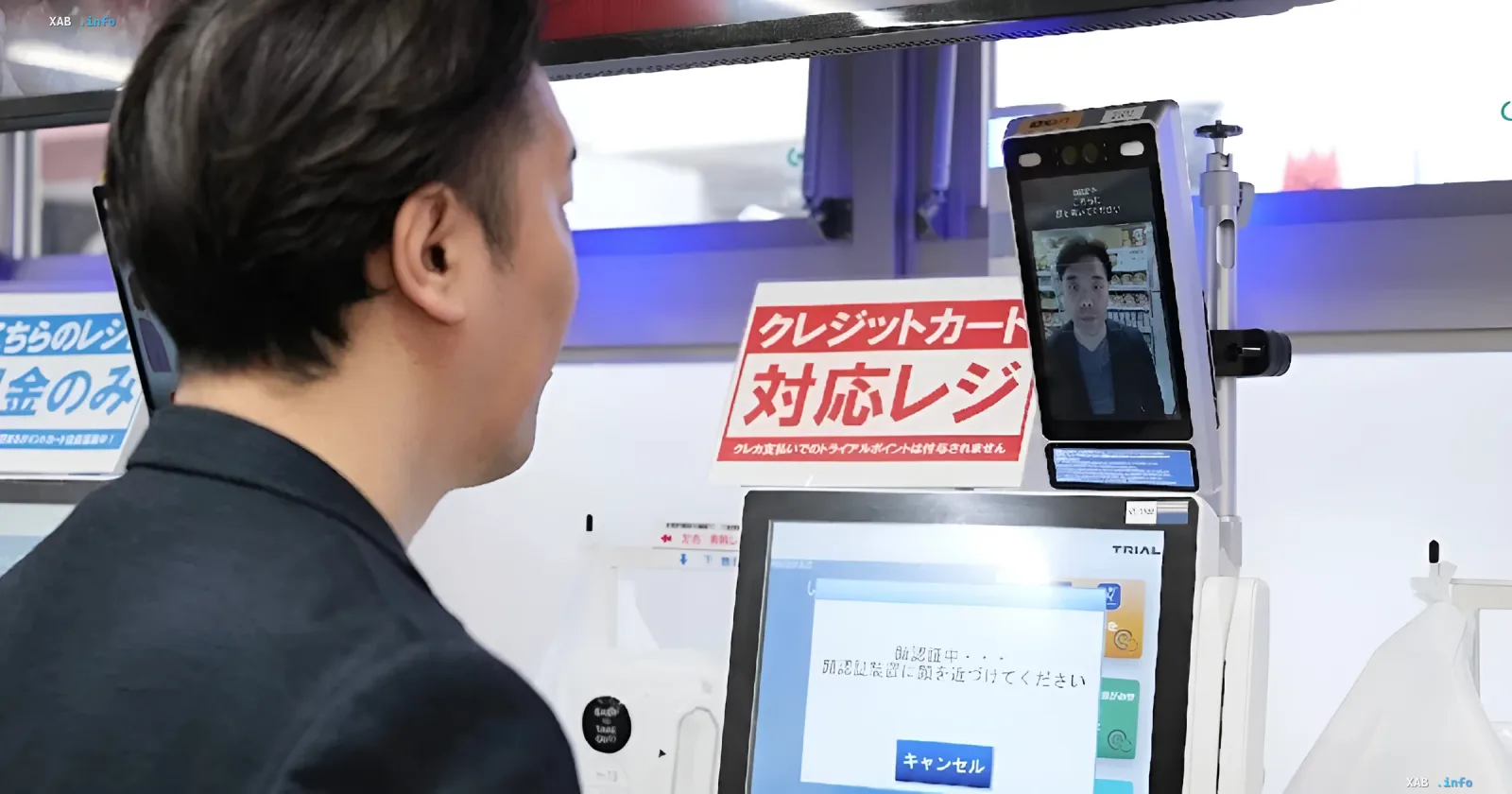
One of the most visible applications is cashless checkout in stores. Trial Holdings, which operates a chain of discount stores, together with Japan's NEC Corporation, has rolled out a facial-recognition-based payment service in 15 stores in Tokyo and Fukuoka Prefecture. According to reports, it is one of the world's leading biometric systems: it features high accuracy, fast data processing, and the ability to recognize people even when they are wearing masks. After pre-registration, a customer can pay for goods at a self-checkout terminal without cash or mobile payment systems — a process that previously required a card, wallet, or smartphone is reduced to a brief facial authentication step.
Transport and Entertainment on Biometrics
The technology is also being tested in the transport sector: Hitachi and Tobu Railway have installed facial-recognition turnstiles at Ikebukuro Station and at several other stations on the Tōjō Line. In the future, this method is planned to be extended to payments at commercial establishments, including convenience stores near railway stations. At Tokyo Dome, fans of the Yomiuri Giants can gain entry to games thanks to a Panasonic Connect system, after pre-registering their identification documents, and some stores at the stadium already accept cashless payments without bank cards. In this way, a user can perform a wide range of actions without pulling documents, cards, or a phone out of their pocket.
The Social Sector and Care for the Elderly
The value of the technology is not limited to helping people "avoid carrying a wallet." Facial recognition reduces waiting times, limits the use of paper tickets and documents, prevents unauthorized access, and lowers the risk of losing important items. A clear example is the Genki no Ie nursing home in the city of Kurashiki (Okayama Prefecture), where the technology is used to register visitors: this eases the workload on staff and makes visits by relatives of elderly residents more convenient. This case underscores that the technology only gains true value when it solves specific real-life tasks.
Market and Forecasts
According to Panasonic Connect, the development of AI is improving the accuracy of facial recognition systems and expanding the range of their applications. The market for such technologies in Japan is forecast to grow from 55.7 billion yen in 2025 to roughly 130 billion yen by 2030. This growth reflects the transition of biometrics from niche pilots to mass infrastructure in retail, transport, and services.
Privacy and Trust
However, the more convenient the technology becomes, the stronger the concerns about privacy. Unlike a password, which can be changed after a compromise, facial data is unique biometric information that is virtually impossible to replace. The greatest concern is the possibility of tracking users without a clear understanding of how their data is used. Therefore, beyond improving accuracy, businesses need to be transparent about how they collect, store, and apply biometric data, and to ensure that users have understanding and control over their own information.