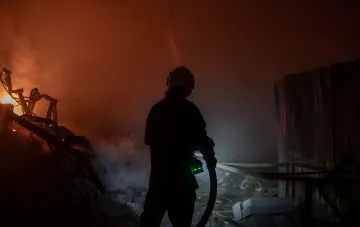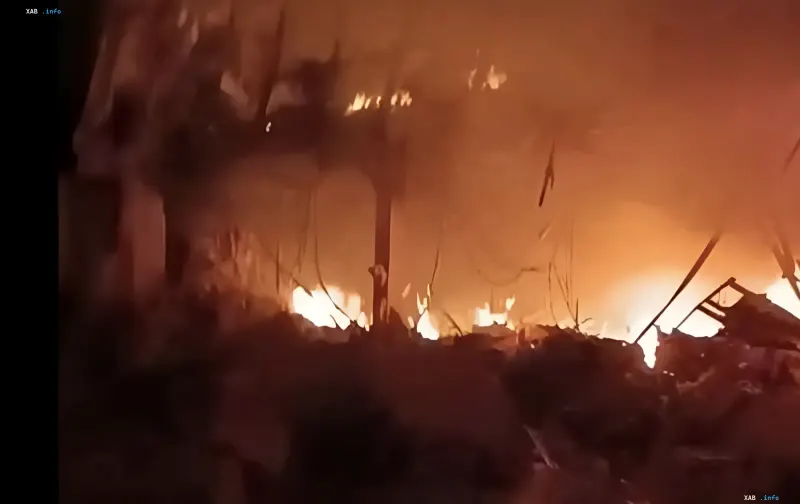
Russian forces launched a missile strike on the main distribution warehouse of the ice cream brand 'Faini Lyodi' in Kyiv on the night of August 21, 2026. This was reported by RBC-Ukraine citing an official statement from the company's press service published on the Threads social network. According to brand representatives, the attack resulted in the destruction of a significant portion of material assets and jeopardized the uninterrupted supply of consumers in the capital and the regions.
Missile strike on the main distribution center
As emphasized by 'Faini Lyodi', the destroyed facility was a key node in the company's logistics network: the distribution warehouse in Kyiv supplied not only the capital but also 12 other cities in Ukraine. Thus, the shutdown of a single center affected 13 sales points immediately. The company stated that tons of finished products, refrigeration and technological equipment, as well as transport located on the site, were destroyed as a result of the strike.
Scale of losses and logistical consequences
The press service of 'Faini Lyodi' stated that the company is already looking for alternative supply, storage, and logistics routes to minimize downtime. At the same time, management openly warned of possible disruptions in the availability and assortment of products in the coming weeks. The company separately noted that the main achievement in this situation was the surviving employees: their safety, according to the brand's assessment, is the main guarantee of the subsequent restoration of the warehouse and the resumption of the full cycle of operations.
Wave of attacks on warehouses: not just ice cream
The strike on 'Faini Lyodi' became part of a broader series of attacks on the warehouse and infrastructure base of the Kyiv region. According to RBC-Ukraine, on the same night, the Brovary district of Kyiv region came under fire, where the KLO network oil depot, previously damaged by destruction, suffered damage. In addition, the warehouse of 'Fory' (Fozzy Group) in Martusivka, Kyiv region, where fresh products were stored, was damaged by shelling. The brand Yves Rocher also published a statement that its warehouse, where products are stored, was significantly damaged as a result of a massive attack.
Contradictory data
When comparing publications, inconsistencies in chronology and the names of objects are found. First, in materials about the current night attack, the destruction of the automated warehouse complex of Rozetka in Brovary is mentioned; however, this event is dated August 5, 2026, and is associated with subsequent staff reductions — that is, it belongs to an earlier episode, not the night strike of August 21. Second, in one of the sources (unn.ua), the object in Martusivka is referred to as 'Fozzy Group', while in other publications it is called the 'Fory' warehouse. Differences in dates and naming formulations require cautious interpretation: some of the listed damages belong to different incidents in time, and the exact volumes of losses for each company have not passed independent verification at the time of publication.
Company position and restoration plans
'Faini Lyodi' have undertaken to restore the logistics chain in a short time by switching flows to alternative storage and transportation capacities. The company does not disclose exact figures of financial losses, limiting itself to stating the destruction of 'tons' of products and equipment. The priority named in the statement is personnel safety: surviving employees are considered the basis for launching restoration work and a gradual return to the full assortment in the affected regions.
Context: vulnerability of warehouse infrastructure
The series of strikes on distribution centers — from ice cream and fresh products to cosmetics and e-commerce — demonstrates the systemic vulnerability of Ukraine's warehouse infrastructure. The concentration of stocks in large logistics hubs near Kyiv makes them critically important, but at the same time predictable targets. For retailers and manufacturers, this means the need to diversify the warehouse network, distribute stocks across several regions, and create reserve logistics routes so that a single missile strike does not paralyze the supply of dozens of cities.