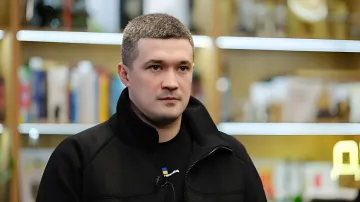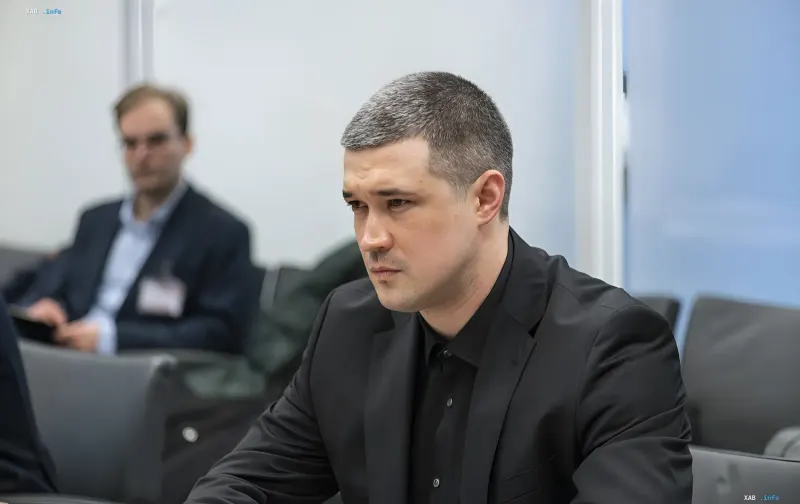
Former Ukrainian Defense Minister Mikhail Fedorov, in an interview with the British broadcaster BBC, made a sharp appeal to the incumbent President Volodymyr Zelensky, demanding that he publicly clarify exactly what he knew about possible corruption in his closest circle. The statement came against the backdrop of a new investigation by Ukraine's National Anti-Corruption Bureau, which on August 19, 2026, exposed a scheme to misappropriate more than three million dollars intended to post bail in the case of a former energy minister accused of money laundering.
"It Is His Duty to Tell Us All"
Fedorov emphasized that the question of the president's awareness is not speculative but represents a direct obligation of the head of state toward society. "Let him answer this question… I believe he is ready for such questions. It is his duty to tell us all whether he knew all of this or not… I do not want to make any assumptions," the former minister stated on BBC. According to him, it is the president, and not former allies or journalists, who must give society a clear answer about the extent of his knowledge of what was happening within his narrow circle of trusted people.
Personal Involvement Not Confirmed
At the same time, Fedorov made a fundamental caveat: he does not accuse Volodymyr Zelensky of personal involvement in the corruption schemes. The former minister specifically stressed that, to date, there is no evidence confirming the president's direct participation in the misappropriation or concealment of funds. "I do not want to make any assumptions," he repeated, underscoring the difference between political responsibility for one's entourage and criminal liability for specific actions. Thus, Fedorov places the burden of explanation on Zelensky himself, staying within the bounds of public statements and not formulating accusations.
Personal Experience of Cooperation
Separately, Fedorov spoke about his own experience working with Zelensky in the post of Defense Minister. According to him, throughout the entire period of cooperation, he never once received from the president any instructions that contradicted the law or his personal sense of honesty. "Throughout the entire time I worked with him, I never once received from him any instruction or task that would have contradicted the law or my sense of honesty. That is my personal experience of interacting with him," the former minister stated. This statement is important in the context that the corruption scheme exposed by NABU involved people who were part of the president's closest circle, but did not directly touch the defense sphere.
Chronology of the Corruption Scandal
The events that prompted Fedorov's appeal unfolded rapidly. On August 19, 2026, Ukraine's National Anti-Corruption Bureau reported the exposure of a scheme in which more than three million dollars had been misappropriated. According to the investigation, the funds were intended to post bail in the case of a former energy minister accused of money laundering. Among the possible suspects in the case, according to RBC-Ukraine sources, were the Deputy Head of the President's Office, Iryna Mudra, People's Deputy Vadym Stolyar, and former MP Maksym Nikityasy. On the same day, August 19, Volodymyr Zelensky signed a decree dismissing Iryna Mudra from her position as Deputy Head of the President's Office; the reason for the dismissal was not stated in the text of the decree. On August 21, Ukraine's Higher Anti-Corruption Court took Nikityasy into custody with the possibility of posting bail in the amount of 30 million hryvnia.
Political Context and Consequences
Fedorov's appearance on BBC comes at a moment when the anti-corruption investigation has already moved from the stage of investigative actions into the realm of public political discussion. The former minister's demand that the president personally explain his knowledge of what was happening effectively shifts the dispute from the legal field to the political one: even in the absence of direct evidence against Zelensky, the question of his awareness becomes a subject of public demand. The dismissal of Mudra without a stated reason and the arrest of Nikityasy with a large bail demonstrate that the institutional response to the scandal has already been set in motion; however, in Fedorov's view, this is insufficient without a public statement from the head of state himself.