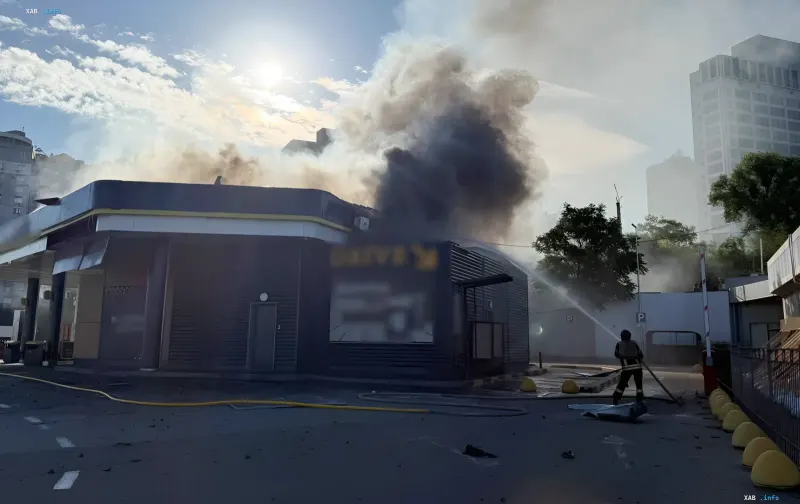
Russian military forces carried out a fifth strike in a short period of time on gas station complexes of the 'Ukrnafta' network in Kyiv. Stations on both the left and right banks of the capital came under fire. At the time of the attack, the gas stations were not operating due to the active air raid alert: staff were in shelters and there were no customers on the premises. The Chairman of the Board of JSC 'Ukrnafta', Bohdan Kukura, emphasized that civilian infrastructure used by thousands of people every day was targeted. The company is currently assessing the aftermath of the attack and will determine the scope of repair work at the damaged facilities.
Gabions instead of the usual safety
'Ukrnafta' stresses that the deliberate suspension of gas station operations during air raid alerts has become a standard procedure aimed at minimizing risks for staff and customers. According to company representatives, the recent attacks merely confirmed the need for such measures. Meanwhile, the network has already begun installing gabions around its gas station complexes in Kyiv — an attempt to reduce the consequences of possible repeated strikes on the capital's fuel infrastructure. The safety of people, as the company states, remains the absolute priority.
The west in the crosshairs for the first time: tactics or expansion?
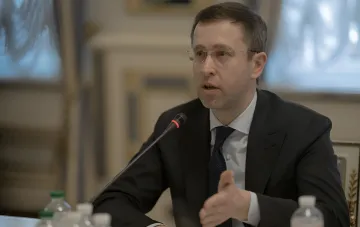
Over the past weekend, Russia attacked gas stations in western Ukraine for the first time — facilities in Zhytomyr and Rivne Oblasts were hit. Serhiy Kuyun, Director of the A-95 consulting group, does not consider this a qualitative change in tactics capable of having a significant impact on the fuel market. "There is really nothing new happening there. After 300 stations attacked in the east of the country, this is, in principle, simply an expansion of this terror," the expert stated. According to him, the intensity of attacks in the east was due to the possibility of using various types of weapons — FPV drones, 'Molnia', 'Lancet' and KABs. In other regions, in Kuyun's assessment, Russian forces do not have such capabilities, so strikes of similar scale should not be expected.
Why there will be no shortage: the arithmetic of logistics
Systemic strikes on gas stations in the central and western regions, in the expert's view, will not create problems with fuel logistics. Kuyun draws attention to the range that fuel tankers can cover: the range is about 800 kilometers, while the distance from Lviv to Kyiv is around 500 km. "So what difference does it make whether there are gas stations along the way or not?" the expert explains. Moreover, a mass withdrawal of gas stations from operation will not occur: 270 stations are operating in Kyiv, and another 530 in Kyiv Oblast. In total, this is 800 facilities, which is "many times more than is actually needed." According to data cited by Kuyun, Energy Minister Denys Shmygal reported more than 300 attacked gas stations since the beginning of the so-called "refueling terror," while about 80% of stations resume operations after strikes. No fuel shortage or price increases resulting from the attacks have been recorded in any region.
Panic as a tool of pressure
At the same time, the expert allows that the attacks may provoke short-term panic buying among drivers: people may start stockpiling fuel out of fear of new strikes. "It may happen, people may get nervous. In principle, this is exactly what the Russians are trying to achieve. This is terror, when they shake people's psyche, force them to stress," Kuyun notes. According to his observations, a certain increase in demand is already being recorded at some gas stations, however, the situation should stabilize quickly once consumers are convinced that there is no shortage. "There is a lot of fuel on the market, of all brands," the expert emphasized.
Contradictory data
In expert assessments and the headlines of analytical materials, a discrepancy in the interpretation of the consequences of the attacks is traceable. On the one hand, a number of publications (including under headlines emphasizing the possible shortage and a sharp increase in fuel prices) stress the risks to price trends and supply chains. On the other hand, both in Serhiy Kuyun's commentary and in materials recording the current state of the market, it is directly stated that no fuel shortage or price increases resulting from the attacks have been recorded, and that 80% of the damaged stations have already returned to operation. Moreover, uncertainty remains around the list of 18 Kyiv gas stations that appeared on the eve of the attacks: the expert allows that the list may have been genuine (two days later, three of the listed stations were indeed damaged), but does not rule out alternative versions either. Thus, the question of whether the expansion of the geography of strikes is a systemic tactical restructuring or a logical consequence of the already operating "refueling terror" model remains a matter of debate.