Court in Volgograd fines resident for video appeal about fuel shortage
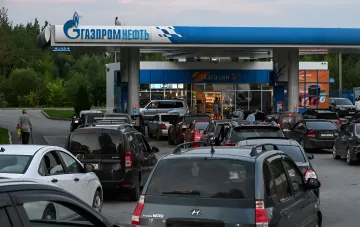
The Central District Court of Volgograd has ruled on the case of local resident Tatyana Smetanko, who was fined 10,000 rubles (approximately $118) for participating in a "mass event." The legal proceedings were triggered by events on July 16, 2026, when a group of five people recorded a video appeal to the head of the Investigative Committee of the Russian Federation, Alexander Bastrykin, at one of the gas stations. In the video, the citizens complained about an acute fuel shortage and pointed out the privileges of officials who, according to them, refuel their cars using fuel cards, while ordinary citizens face refusals to sell gasoline.
Police officers who arrived at the scene classified the video recording as the conduct of an unauthorized public event. Immediately after filming, all participants were detained. Tatyana Smetanko became one of those who faced administrative punishment. According to one of the participants in the action, law enforcement officers perceived their actions as a public speech, although in fact it was a recording of an appeal to the leadership of the law enforcement agencies.
Lawyer Alexey Sevastyanov: arrest for disobedience and a protocol for the action
One of the detainees was a local lawyer and jurist, Alexey Sevastyanov. His fate turned out to be even more difficult: he was sent to administrative arrest for 5 days on charges of "disobedience to the police." In addition, a similar protocol was drawn up against him for participating in a mass event. This highlights how harshly Russian authorities react to any form of public expression of dissatisfaction, even if it does not take the form of a rally or march.
Fuel crisis in Russia: consequences of strikes on refineries and "gray" schemes
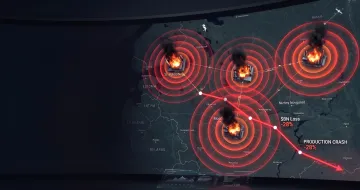
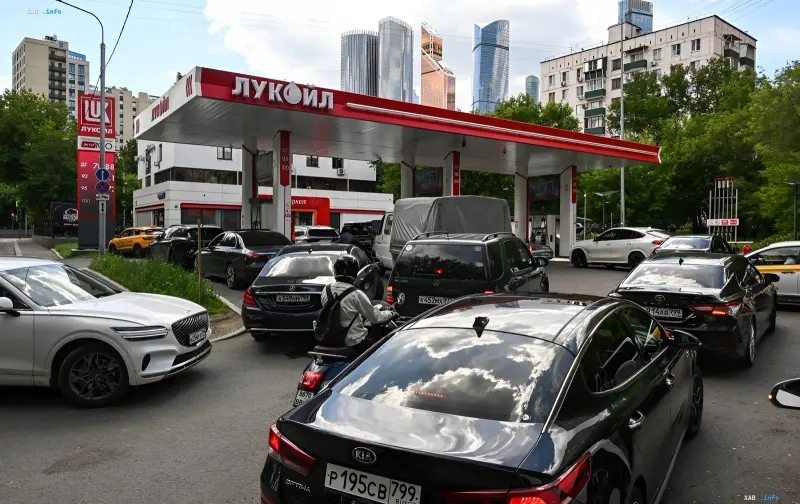
Against the backdrop of these events, the fuel shortage in Russia has flared up again. According to sources, in the aggressor country, authorities have already tightened control over the sale of gasoline at gas stations in 10 regions. Over the past few months, Ukrainian drone strikes have put out of operation up to 40% of Russia's oil refining capacity. As a result, about a third of the country's residents have faced a fuel shortage. The authorities are trying to compensate for losses by sending gasoline from Belarus to the domestic market, which was previously intended for Central Asian countries. However, even record volumes of such supplies have not been able to fully cover the deficit.
Contradictory data
There are discrepancies in the estimates of the scale of the fuel crisis. Official representatives of the Russian authorities claim that the situation is under control and the deficit is local. At the same time, independent sources and residents of the regions report a systematic lack of fuel, especially in large cities. There are also contradictions in the data on exactly how many refineries have been put out of operation: some sources cite a figure of 40%, others — about 30%. These discrepancies make it difficult to accurately assess the real situation in the country.
Political context: suppression of dissent against the backdrop of the crisis
The case of Tatyana Smetanko and Alexey Sevastyanov is just one example of how Russian authorities use administrative tools to suppress any manifestation of dissatisfaction. Even recording a video appeal to a high-ranking official can be classified as an "unauthorized action." This indicates that in conditions of economic crisis and growing social tension, the state seeks to maintain a monopoly on information and prevent public discussion of problems.