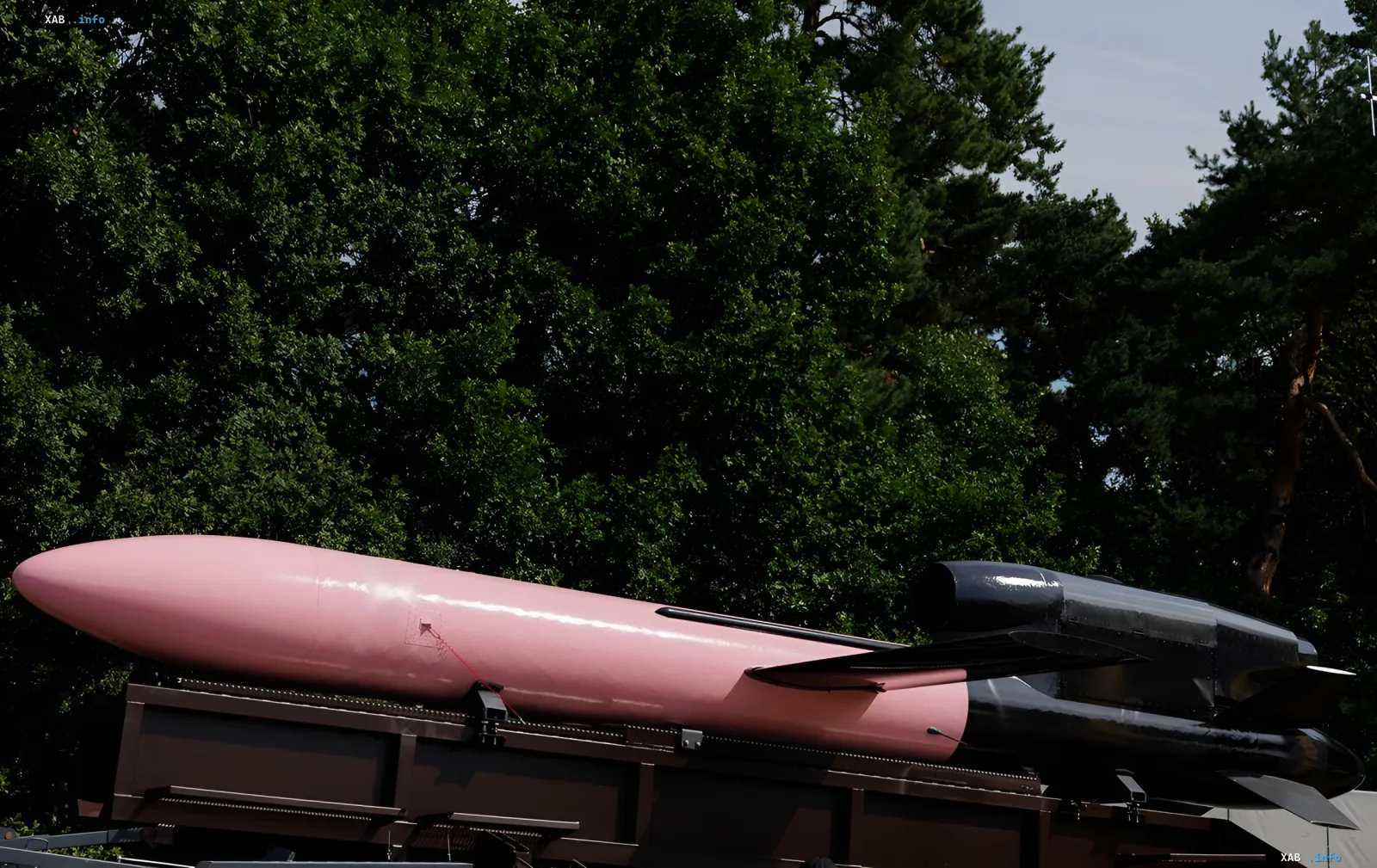
Ukrainian defense company Fire Point has made a significant step towards technological independence in the production of cruise missiles. The company's CEO, Irina Terekh, confirmed that engineers have developed their own turbojet engine, which in the future could become the power unit for the FP-5 'Flamingo' cruise missile.
This development was made possible thanks to cooperation with the same design bureau that once created the famous AI-25 engine. It was its AI-25TL modification that was first installed on the 'Flamingo' missiles. According to Terekh, during operation and modifications, the missile has already been equipped with five different types of engines, confirming the flexibility of the platform.
Harder than a missile: the challenges of creating an engine
Developing their own turbojet engine took Fire Point specialists more than six months. Terekh admitted that this process turned out to be technically more difficult than creating the missile itself. At the moment, the company is at the stage of assembling the first 10 prototypes of turbojet engines with a fan unit of its own production.
'Flamingo' was originally designed as a universal platform capable of integrating different types of power units. This allows for a significant expansion of the list of supported engines and adapting the missile for various tasks. According to the company's plan, testing of all samples should be completed and necessary improvements made by the end of the current year. The transition to serial production of the new engine is planned for next year.
Production plans and dependence on contracts
Despite technological breakthroughs, the company has faced challenges in organizing mass production. Previously announced plans to increase the production of 'Flamingo' missiles to seven units per day have not yet been implemented. Irina Terekh explained the situation, linking it to financial factors.
"Unfortunately, since Ukraine was waiting for funds from a loan from the European Union, the volume of orders did not correspond to the maximum production capacity, so the production volume was reduced," the CEO said.
Nevertheless, the company expects to return to plans for increasing volumes. This will likely happen by the end of this year or the beginning of the next, however, success directly depends on how new contracts will be received.
Other Fire Point developments
The development of a turbojet engine is only part of Fire Point's ambitious program. In July, the company presented anti-ballistic missiles FP-7.x, intended for the Freyja air defense system. It was previously reported about the successful testing of this missile, which demonstrated a speed of up to 2000 meters per second and performed a controlled flight. The developers' plans also include cooperation with the German company Diehl Defence on improving guidance systems.