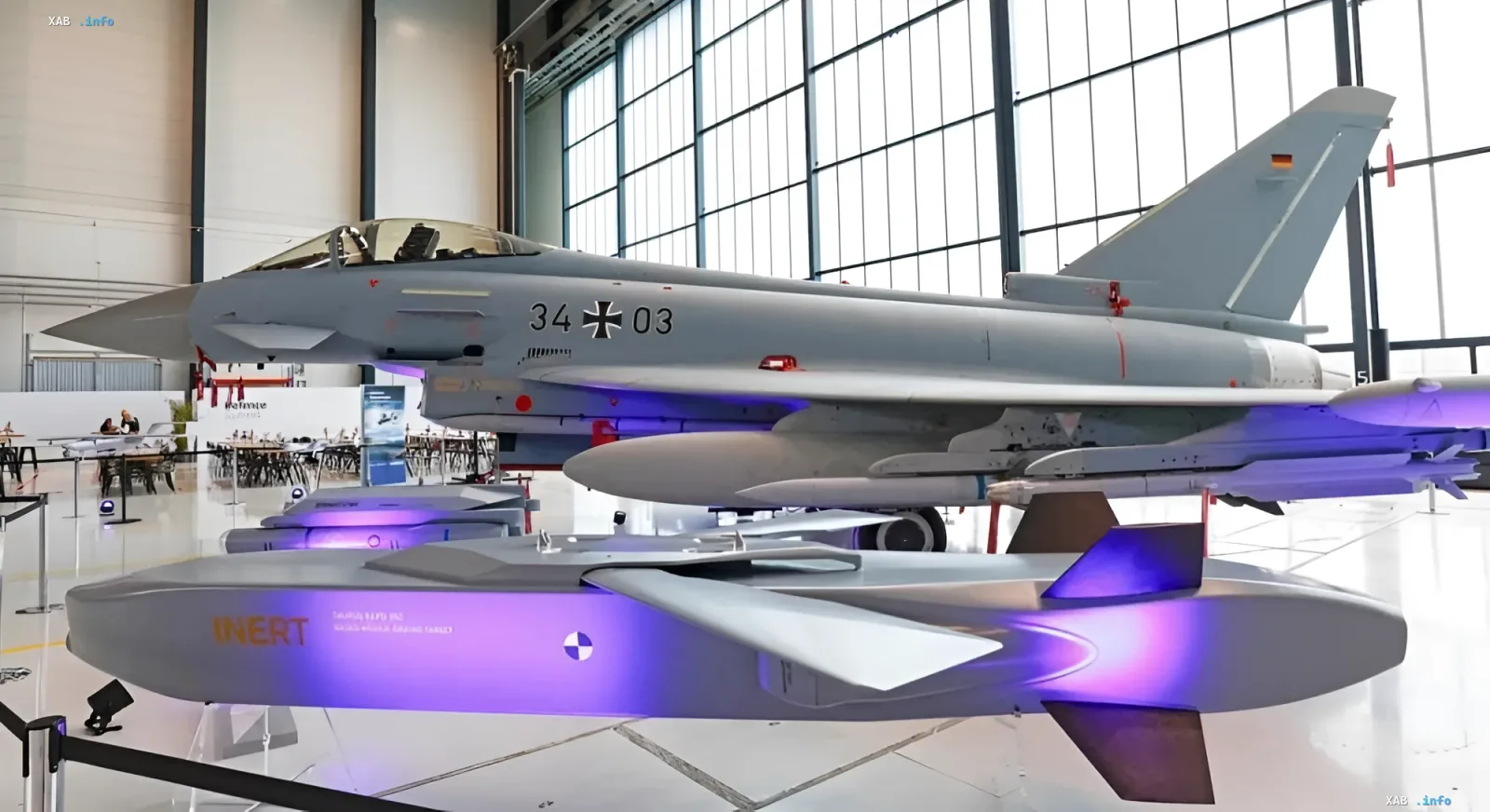
On July 14, the next-generation Eurofighter Tranche 4 fighter jet made its first appearance in the skies over the Manching airfield in Germany. This event marked a key milestone in the development of one of Europe's most ambitious aviation programs. The aircraft, manufactured by the Airbus Group, remained airborne for approximately one hour, successfully completing its initial tests.
The flight was conducted as part of the Quadriga program, initiated by the German Air Force. Specialists used the time in the air to check the performance of the engines, hydraulic and electrical systems, as well as flight control algorithms. The successful completion of the test confirmed the readiness of the equipment for further stages of certification.
Order Geography and Modernization Plans
Orders for the new modification have already been placed by three of the four countries participating in the Eurofighter consortium: Germany, Italy, and Spain. Each country pursues its own strategic goals when updating its fleet:
- Germany and Italy plan to replace aging Tranche 1 fighters with more advanced models.
- Spain has ordered 45 Tranche 4 aircraft to strengthen its combat air fleet.
- Italy will acquire 24 such fighters.
The United Kingdom has not yet ordered the new modification for its own needs, but supports the sale of 20 aircraft to Turkey. Deliveries under the Quadriga program will begin this year after completing standard certification. All 38 aircraft, including 30 single-seat and 8 two-seat machines, are expected to be delivered to the customer by 2030.
Technological Superiority: Next-Generation Radar
The main advantage of the Eurofighter Tranche 4 will be the installation of the Hensoldt ECRS onboard radar with an Active Electronically Scanned Array (AESA). According to media reports, this system will give the fighter a significant advantage over fourth-generation Russian aircraft, such as the Su-35S and Su-30SM.
The AESA radar is characterized by high reliability due to the absence of moving parts. It allows for more effective target recognition, engagement of multiple objects simultaneously, and possesses increased resistance to electronic jamming.
Increased detection range is critical for the use of long-range "air-to-air" missiles, such as the MBDA Meteor. It is assumed that when using this missile, the fighter will be able to engage targets at a distance of about 200 km.
Project Economics and Production Prospects
The Eurofighter Typhoon has traditionally been among the most expensive fighter jets in the world. The cost of one aircraft varies depending on the configuration and contract terms:
- According to WION, the base price is around $117 million.
- According to Reuters, the export price can exceed $300 million, including armaments, personnel training, and technical support.
Production is not limited to the current stage. The Airbus plant in Manching will also manufacture 20 Tranche 5 fighters ordered in 2025. Their deliveries will last until 2034, guaranteeing the relevance of the platform for decades to come. The Eurofighter Tranche 4 is positioned as one of the most powerful and advanced fourth-generation fighters in the world.