The Ministry of Education and Science of Ukraine has determined the theme of the first school lesson for the 2026/27 academic year. On September 1, all students in grades 1–12 across the country will take part in an All-Ukrainian lesson titled "Language of Dignity: Seeing the Person Through Words." The initiative is aimed at helping children develop skills of mutual respect, acceptance of diversity, and barrier-free communication. As emphasized by the Ministry of Education, school does not merely transmit knowledge but also instills values and models of interaction that students carry into adult life.
Not a lecture, but a 'constructor' for the teacher
Unlike the traditional lesson format, "Language of Dignity" is designed as a flexible constructor containing a variety of tasks, questions, and practical situations. Students will be able to understand why certain statements stigmatize or exclude a person from society and how to build communication in a different way. The materials include ready-made presentations, stories for discussion, trigger questions to start a conversation with children, interactive quizzes, and project-based assignments. A separate block is devoted to ethical and barrier-free communication.
Adaptation to age and class needs
The key advantage of the new format is the full autonomy of the teacher. Teachers can independently choose the format suitable for a specific class, change the sequence of tasks, and adapt the content to the age and needs of the students. The constructor is designed for the full range — from the first to the twelfth grade — allowing younger students to work with simple situations and older students with more complex cases of interpersonal interaction. All materials for conducting the lesson are available online, eliminating the need for additional printing and logistics.
Cultural context and symbolism of the first day
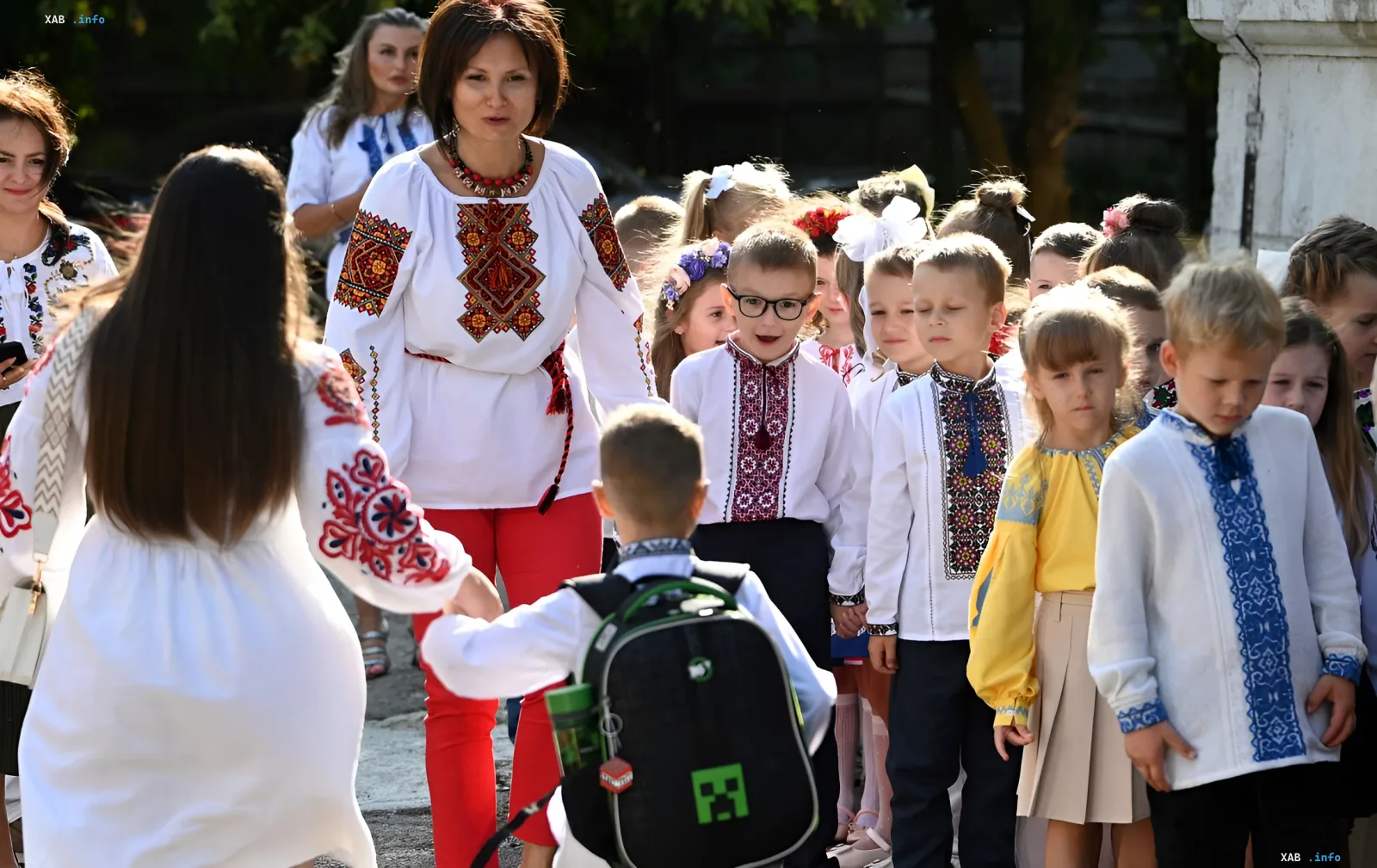
Traditionally, the first day of the school year in Ukraine is accompanied by ceremonial events in which students and teachers wear elements of national clothing — vyshyvankas (embroidered shirts) and traditional ornaments. Photographs from schools show children in white shirts with characteristic ornamental embroidery, underscoring the connection between the educational process and cultural identity. The choice of "Language of Dignity" as the first lesson is symbolic: it sets the tone for the entire academic year, reminding us that respect for the dignity of another person is a fundamental principle on which any society is built.
Practical significance for schools
The Ministry of Education emphasizes that mutual respect, acceptance of diversity, and attention to the dignity of another person should become habitual from the schoolbench onward. The lesson does not assume a single script or a mandatory "correct answer": its goal is to initiate a dialogue. Teachers receive tools for discussing complex topics — from bullying and stigmatization to inclusive language — without pressure or formalism. This allows schools, regardless of region and level of resource provision, to conduct the first lesson at a uniform quality level.