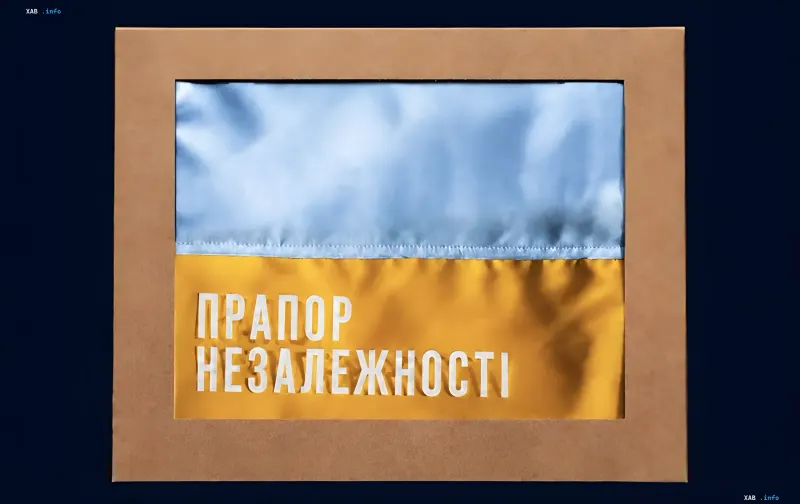
On August 18, 2026, Ukraine marks a significant milestone in its history — the 35th anniversary of the declaration of independence. In this commemorative year, the public organization Ukraine WOW, in collaboration with the 'Come Back Alive' foundation and with the support of the Verkhovna Rada of Ukraine, implemented a unique project connecting historical heritage with modern challenges. They recreated 1,000 copies of the legendary flag that was brought into the parliamentary session hall on August 24, 1991, becoming a symbol of the birth of an independent state.
Historical Context: How the Flag That Changed the Country's Fate Appeared
On August 24, 1991, at 21:04, a group of People's Deputies led by Vyacheslav Chornovil and Ivan Zayets brought a large blue-and-yellow flag into the session hall of the Verkhovna Rada. This moment was captured in documentary footage and became one of the most recognizable images in Ukrainian history. The flag had a non-standard size — 7 meters and 34 centimeters in length. This was the amount of fabric activists managed to find at a time when displaying Ukrainian symbolism could lead to persecution by the KGB.
According to Ivan Zayets, one of the deputies who brought the flag in, they initially planned to use a different symbol — the one that was on a tank during the coup in Moscow. However, among the many blue-and-yellow flags on the square, the deputies saw a large blue-and-yellow flag that people were holding in their hands. "I felt great pride because I had the opportunity to be among the founders of the state. Such things happen, perhaps, once in a thousand years," he recalls.
Recreating the Flag: Scale and Details of the Project
In 2026, the historical flag was recreated. A total of 1,000 copies were made, each with its own unique number. To create these copies, 26 kilometers of fabric were used, and more than 2,000 hours of work were invested. Each copy was created by four people, emphasizing the significance and meticulousness of the process.
Each flag comes with a postcard bearing the personal signature of Ivan Zayets, who was among the deputies who brought the original flag into parliament. This gives each copy unique historical value and a connection to the events of 1991.
Charitable Contribution: How to Get a Copy of the Flag
To receive a copy of the flag, one must make a charitable contribution of 40,000 hryvnias. All funds raised will be used to purchase ground robotic complexes for the Armed Forces of Ukraine. These systems can be used to evacuate the wounded and deliver necessary supplies — medicines, food, and ammunition — to dangerous areas of the front.
According to Oleksandr Karpenko, Deputy Director of the 'Come Back Alive' foundation, one ground robotic complex can transport up to 500 kg of cargo without direct risk to soldiers. Thus, the historical flag, which 35 years ago witnessed the declaration of Ukraine's independence, has received a new mission — to help Ukrainian soldiers in their fight for freedom.
Contradictory Data
While the project to recreate the flag and the charitable campaign has received widespread support and recognition, there are some disagreements regarding the accuracy of certain historical details. Some sources suggest that the size of the flag may have been slightly different, and the number of participants in its creation may vary. However, most experts and project participants confirm the main facts outlined above.
The Flag's History During the War
The history of this flag continued during the full-scale Russian invasion. According to Ruslan Stefanchuk, the Chairman of the Verkhovna Rada of Ukraine, on February 24, 2022, the flag had to be evacuated from parliament for the first time in modern history. Until early April, it was kept in Stefanchuk's backpack. When Russian troops retreated beyond the Kyiv region, the flag was returned to the Verkhovna Rada.
Now, its exact copies will have another mission — to help Ukrainian soldiers. The 'Come Back Alive' foundation will direct charitable contributions towards purchasing ground robotic complexes for the Armed Forces. Thus, the historical flag, which 35 years ago witnessed the declaration of Ukraine's independence, has received a new purpose — to assist Ukrainian soldiers in their struggle for freedom.
Conclusion: A Symbol of the Past and Future
Thus, the historical flag, which 35 years ago witnessed the declaration of Ukraine's independence, has acquired a new purpose. Its copies can now become a symbol not only of the memory of 1991 but also of support for those who are currently defending Ukraine's independence. The project to recreate the flag and the charitable campaign demonstrates how historical symbols can be used to solve modern tasks and support those fighting for the freedom and independence of their country.