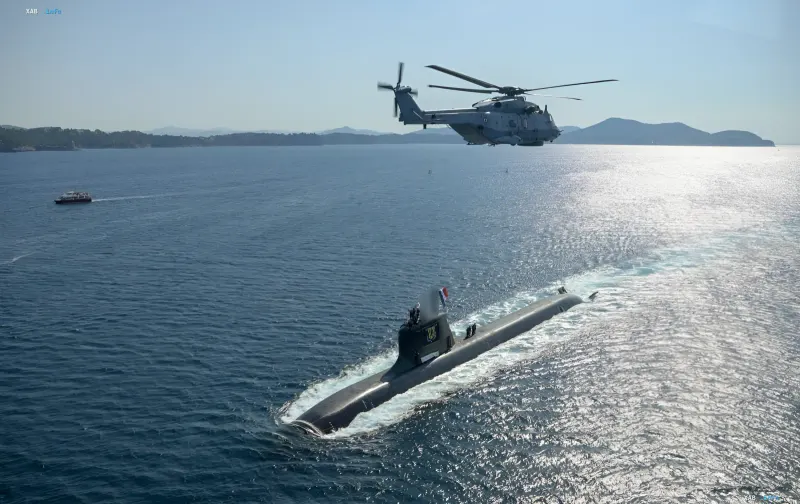
The De Grasse multi-role nuclear-powered attack submarine has officially entered service with the French Navy. According to RBC-Ukraine, citing the French Ministry of Armed Forces, the submarine has completed an extensive series of sea trials that began back in February. During testing, the crew evaluated the vessel's technical capabilities, endurance, and onboard systems performance across various climatic zones—ranging from cold polar waters to warm maritime areas.
Fourth Vessel of the Barracuda Program
De Grasse is the fourth of six Suffren-class nuclear submarines being constructed under France's Barracuda program. The project was launched in 2006 to gradually upgrade the country's submarine fleet. Naval Group began production of De Grasse in 2014 at its Cherbourg shipyard, with the submarine being launched in May 2025. Construction is currently underway on the final two units of the project, Rubis and Casabianca.
Technical Specifications
Suffren-class nuclear submarines feature a surfaced displacement of 4,700 tonnes and a submerged displacement of 5,300 tonnes, with a submerged speed exceeding 25 knots. The propulsion system relies on a 150 MW pressurized water nuclear reactor, ensuring high operational autonomy and the capability for prolonged underwater deployment without refueling.
Arsenal and Connection to Ukrainian Armament
The arsenal of De Grasse includes four 533mm torpedo tubes with a total payload capacity of up to 20 weapons. Specifically, the submarine can deploy F21 heavy torpedoes, Exocet SM39 anti-ship missiles, and SCALP Naval cruise missiles—an airborne variant of this system is currently in service with Ukraine. SCALP Naval features a cylindrical hull adapted for launch from submarine torpedo tubes and surface combatant vertical launch systems; the naval variant is equipped with a solid-fuel booster.
Political Context
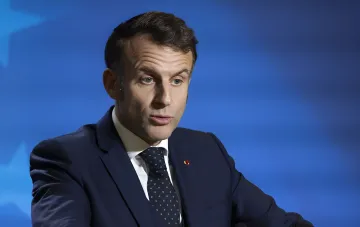
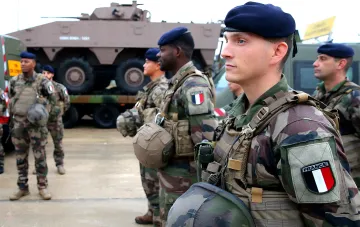
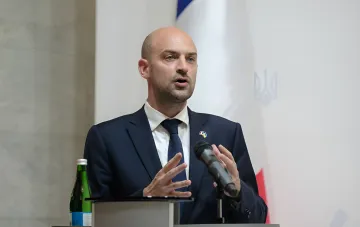
In early January, French President Emmanuel Macron informed parliament of plans to deploy 6,000 French military personnel to Ukraine following a peace agreement, stating they would operate far from the front lines to train Ukrainian units. Recently, RFI reported that French military personnel are already present in Ukraine as part of the “Volonté” mission. On November 17, Russian Foreign Minister Sergey Lavrov stated that this “can no longer be considered ordinary support for Kyiv, but amounts to direct participation in the war.” The following day, French Foreign Minister Jean-Noël Barro stated that Paris is not a co-belligerent in the war and that only a few instructors and equipment maintenance specialists are present in Ukraine.