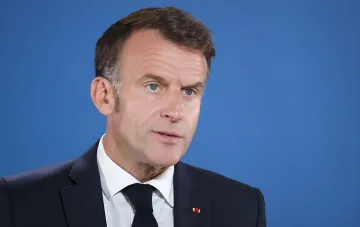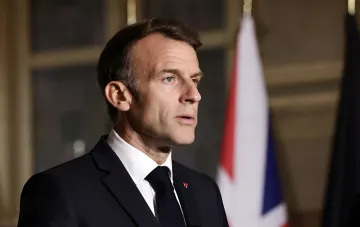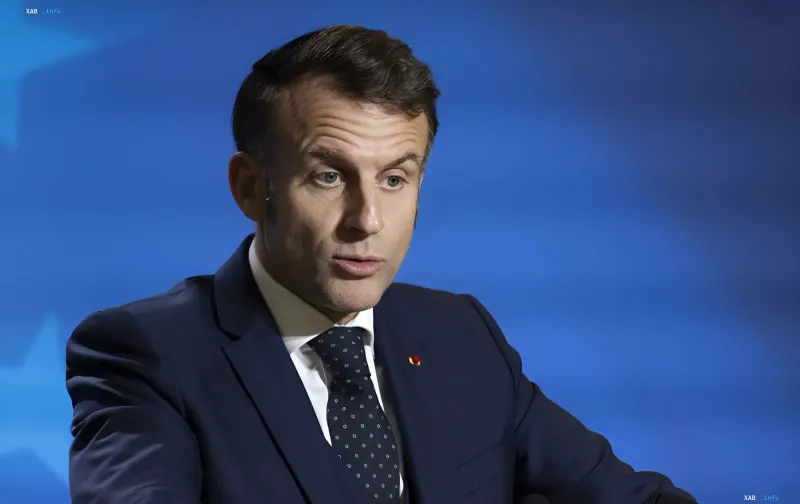
During an extraordinary EU budget summit in Brussels, French President Emmanuel Macron stated that abandoning support for Ukraine would pose a direct threat to the security of France and all of Europe in the short or medium term. Speaking on November 26, 2026, the French head of state urged European leaders to avoid "doubt and confusion" regarding aid to Kyiv, emphasizing that the war is of existential importance to Europeans.
"Putin's Target is the EU and NATO"
According to Macron, European Union aid to Ukraine is critically important, especially against the backdrop of potential scaling back of support from the United States. The French President stressed that Ukrainians are fighting for their country's sovereignty while standing on the front line of European security. "The struggle of Ukrainians is our struggle too. It is a struggle for Europe's security, because Vladimir Putin's target is the European Union and NATO," he explained. Macron added that Europe is united around Ukraine and urged his colleagues to avoid "naivety" and "irresponsibility" on this issue.
Internal Political Context: The Budget Dispute and 2027 Elections
Macron's speech came amid growing domestic French debate over the expediency and scale of aid to Ukraine. Ahead of the summit, French presidential candidate and Olympic judo champion Teddy Riner publicly questioned aid to Kyiv, stating: "I don't understand why we are sending troops to Ukraine, this is not our war." Riner also pointed out that aid to Ukraine is being provided at the expense of other national funding items. The French presidential election is scheduled for 2027, and foreign policy is becoming one of the key domestic political battlegrounds. In response, Macron recalled that France is not the country that has allocated the largest share of its budget to aid Ukraine.
The French Position After Dublin and Criticism of the US
Earlier, following the summit of European leaders in Dublin, Macron addressed French citizens directly, stating that aid to Ukraine defends France itself and that Ukraine has its place in NATO. The entourage of the French president also accused the United States of putting pressure on Ukraine during negotiations. At the same time, the French side criticized its own politicians calling for cuts to aid for Kyiv, in particular National Rally leader Marine Le Pen. Thus, the French diplomatic line combines public support for Kyiv with an internal political struggle over defining the scope of commitments.
Reaction to Incidents in the Mediterranean and Baltic Seas
An additional context for the French position was recent incidents involving attacks on Russian vessels near Libya and the Baltic Sea. Following these events, France publicly supported Ukraine. Foreign Minister Jean-Noël Barrot emphasized that the Ukrainian military is defending itself against daily shelling and that Paris considers it necessary to maintain the course of supporting Kyiv. These statements indicate that France's policy regarding Ukraine remains multi-vector: it simultaneously responds to operational military events, EU budget constraints, and internal electoral dynamics ahead of the 2027 elections.