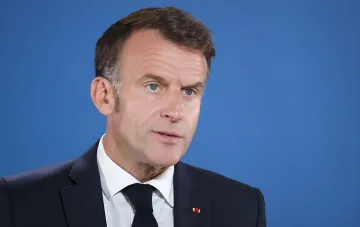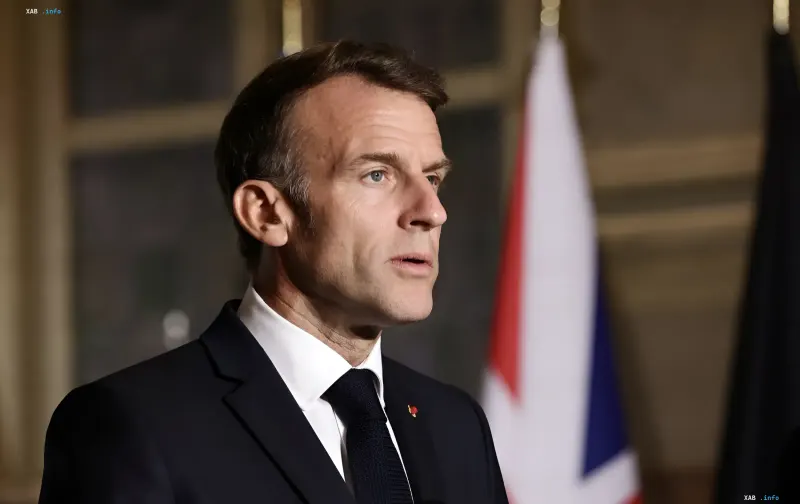
French President Emmanuel Macron addressed his compatriots following the summits of European leaders in Dublin, where Ukraine became the central topic of discussion. According to him, supporting Kyiv is not only a matter of solidarity but also a direct defense of France's national interests: events in Ukraine, the head of state emphasized, directly concern every French citizen, and if Russia forcefully imposes its will on a European country, the entire Europe will weaken. This is why Ukraine was at the center of attention at the ninth European Political Community summit and the informal European Council held in Dublin.
First priority — helping Ukraine survive the winter
The main priority, according to Macron, is helping Ukraine through the winter period. He referred to recent contacts with American envoys, from which, he said, it follows that Vladimir Putin does not want negotiations, and the Russian army is not advancing, but rather retreating and suffering significant losses. In this logic, in the French president's view, Moscow is betting on strikes against civilian infrastructure and trying to plunge Ukraine into darkness this winter. Europe, Macron stated, must not allow this, maintaining financial support and helping to protect power plants and energy grids.
«Recipe for the next war»: warning against resource cuts
Separately, Macron warned against attempts to cut aid to Kyiv. «Those who want to cut Ukraine's resources are essentially trying to force it into an unjust peace. This is the spirit of defeat. This is the recipe for the next war», he said in an address published on social network X. Thus, the French leader linked the reduction of support with the risk of a new conflict and positioned winter aid as an element of the continent's long-term security.
Second priority — a fair and lasting peace
As a second priority, Macron named working toward a fair and lasting peace, which, he said, Europe must fully join. At the European Political Community summit, according to his data, 42 countries at France's initiative approved the right to European security principles. The president also recalled the work of the «Coalition of the Willing», which is preparing security guarantees for Ukraine and multinational forces to be deployed after a ceasefire: training of allies continues in Poland, and on Thursday, coalition participants are gathering in Berlin.
Context: Abu Dhabi, Moscow, and the return of the NATO topic
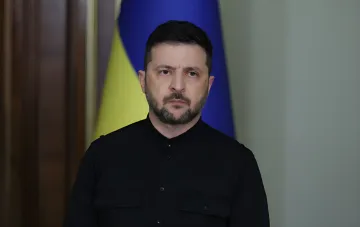
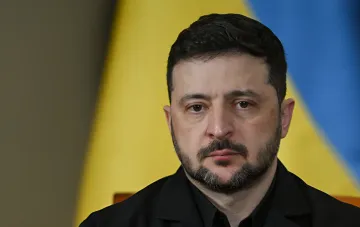
The Dublin summits took place immediately after trilateral negotiations in Abu Dhabi, where, according to RBC-Ukraine sources, Russia refused to discuss a ceasefire; following this, US President's envoys Witkoff and Kushner met with Putin in Moscow. Ahead of the summits, Volodymyr Zelenskyy urged Europe to decide on a representative for peace negotiations by the end of November. The topic of Ukraine's NATO membership was raised again during the talks: Zelenskyy shared that Americans asked for the first time whether Kyiv would agree to leave Donbas in exchange for joining the alliance, after which he emphasized that Ukraine does not give away its lands.