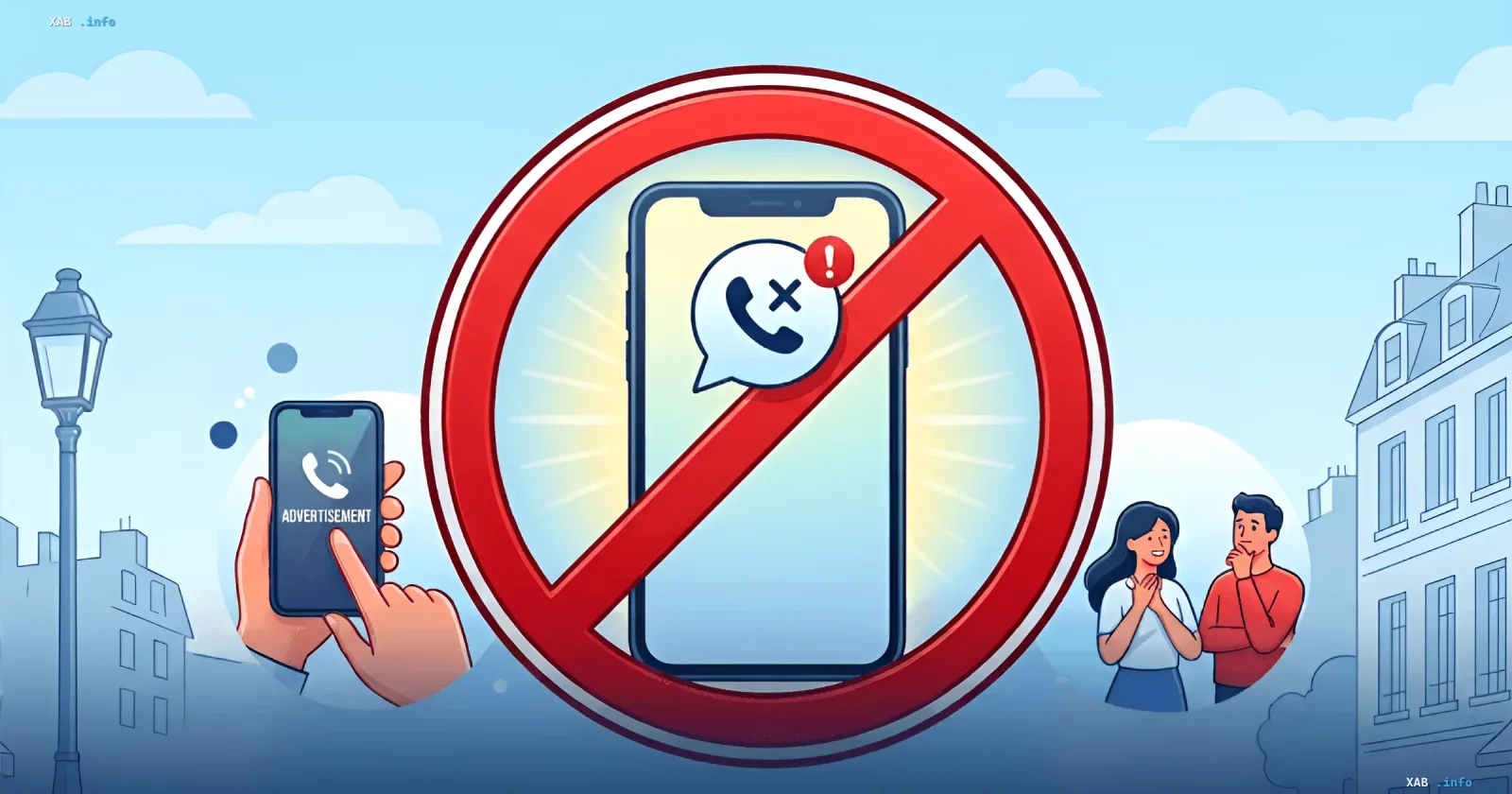
Paris, August 9, 2026 — France is making a radical shift in personal data protection policy, introducing a complete ban on marketing calls without prior consumer consent starting August 11, 2026. This decision marks the culmination of years of efforts to combat telephone spam, which, according to government estimates, annoys 75% of the country's population. The new law shifts French regulation from an "opt-out" model to a strict "opt-in" model, establishing unprecedented fines for violators.
New Paradigm: From "Opt-Out" to "Opt-In"
Before the new rules took effect on August 11, 2026, French consumers could rely on the national Do Not Call registry (Bloctel). However, statistics showed that the mechanism was not working effectively enough: many companies ignored the lists, and citizens continued to receive dozens of unwanted calls weekly. The new regulation fundamentally changes the rules of the game: now, the burden of proving the legitimacy of a call falls on the company. A marketing call is permitted only if the consumer has explicitly expressed consent to receive such communications.
Consent can be obtained in various formats: during a purchase, by filling out a form on a website, or in a store. The law guarantees the consumer the right to withdraw this consent at any time without giving reasons. This decision places France in the same category as countries like Germany and the Netherlands, where similar norms have been in place for over a decade.
Exceptions and Technical Details
Legislators have provided two key exceptions to avoid paralyzing business operations. First, calls are permitted if they relate to the execution or management of an already signed contract. This includes technical support issues, notifications about order status, or resolving problems that arose during service delivery. Second, companies may call clients if they have prior consent obtained during previous interactions.
It is important to note that the new rules do not cancel previously existing restrictions. In particular, the ban on using mobile numbers starting with 06 or 07 for advertising calls remains, as do restrictions on call times and the ban on calling on weekends for certain sectors, such as energy-efficient home renovation or professional training.
Severe Sanctions for Violators
The French government has prepared strict measures to ensure compliance with the new norms. Individuals engaged in illegal telemarketing can be fined up to €75,000 for each violation. For enterprises, the fine can reach €375,000. These amounts are among the highest in Europe and are intended to serve as a serious deterrent for unscrupulous operators.
International Context and Comparison
The introduction of new rules in France is taking place against the backdrop of global tightening of telemarketing regulation. In Germany, a similar mechanism has been in place since 2009, while the Netherlands recently expanded its rules, requiring companies to obtain prior consent even when calling existing clients to promote special offers. Meanwhile, the USA, Canada, and the UK still primarily use Do Not Call lists and impose strict sanctions on enterprises that violate the rules.
Contradictory Data
While the main provisions of the law are clearly defined, there are some disagreements regarding the implementation timeline and technical details. Some sources indicate that the transition period for businesses may be extended to give companies time to adapt their systems. Other experts suggest that the new rules could be applied retroactively to existing customer databases, which would cause additional disputes. Furthermore, there are questions about exactly how calls coming from abroad will be monitored and what mechanisms will be used to block them.
Overall, the new rules, which come into force on August 11, 2026, mark an important step in protecting consumer rights and data privacy. They will not only improve the quality of life for French citizens but could also serve as an example for other countries fighting the problem of telephone spam.