On November 5, France found itself at the epicenter of a nationwide wave of protests: strikes and street marches against the high cost of living and for wage increases took place in dozens of cities simultaneously. According to the French Interior Ministry, about 575,000 people took part, while the General Confederation of Labor (CGT) union counted almost 1.6 million participants in 207 cities. To maintain order, authorities deployed 70,000 police and gendarmes nationwide, and in Paris, the union procession moved from the Place de la République along Boulevard Voltaire to the Place de la Nation.
Course of the marches and clashes in the capital
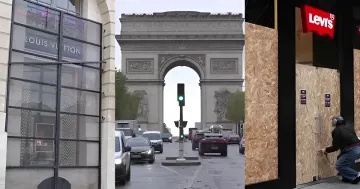
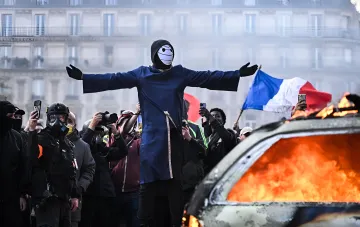
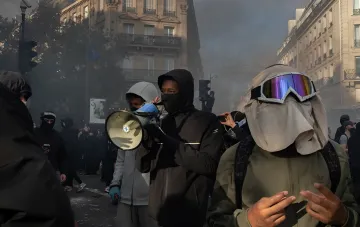
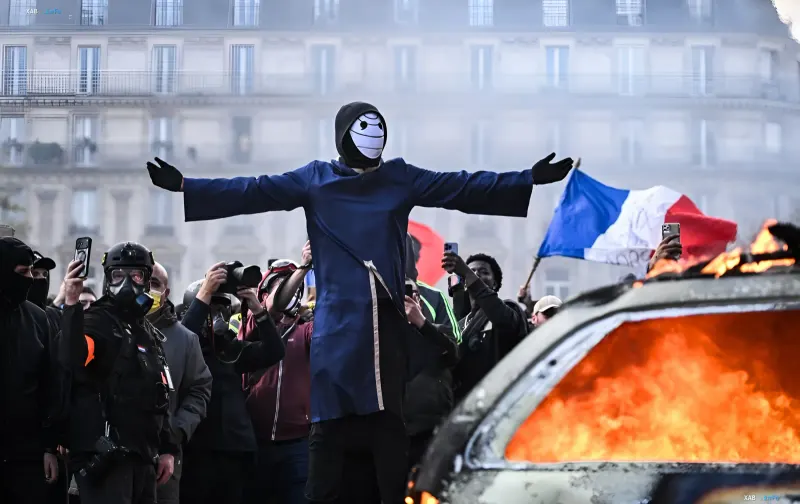
In Paris, the protest did not pass without incidents: protesters damaged property along the route, and a fire broke out near the Place de la Nation — footage from the scene shows flames shooting from the window of a burning car and smoke over the crowd. Police used tear gas to extinguish the fire and push back the crowd. By evening, law enforcement had detained 448 people, 53 officers had been injured, and the fire services had completed 86 missions. The Interior Ministry noted specifically that in Rennes, Marseille, Nantes, Lyon, Bordeaux, and Strasbourg, risk groups consisting of radical and far-left activists had formed.
Scope of the strike: transport, schools, medicine
Railway workers, hospital and postal staff, as well as about 16% of teachers, joined the strike. According to government data, almost 10% of public sector employees, 4.6% of local government staff, and about 4% of hospital workers were on strike. In education, the picture was contradictory: 81 out of 3,700 high schools were officially blocked, while a student association reported that classes were suspended in a thousand educational institutions.
Response of the authorities and the "social conference"
French Prime Minister Sébastien Lecornu announced that on Monday, November 9, he would convene representatives of trade unions and employers for a "social conference" to discuss wages and purchasing power. The Minister of Labor and Solidarity has been instructed to finish preliminary consultations by Sunday. CGT leader Sophie Binet stated: "Today the question is not whether we will win, but how much we will win."
Context: a week of protests and union demands
The November 5 action was a continuation of a series of protests against the high cost of living that took place on October 17, 24, and 31; according to the Interior Ministry, the October 17 march drew 550,000 people, and on October 31, 565 people were detained by evening in Paris, Marseille, and other cities. Unions are demanding higher wages, improved training and public service conditions, stronger social protections, and tax reform.