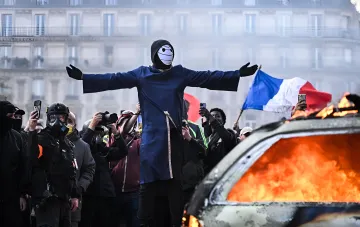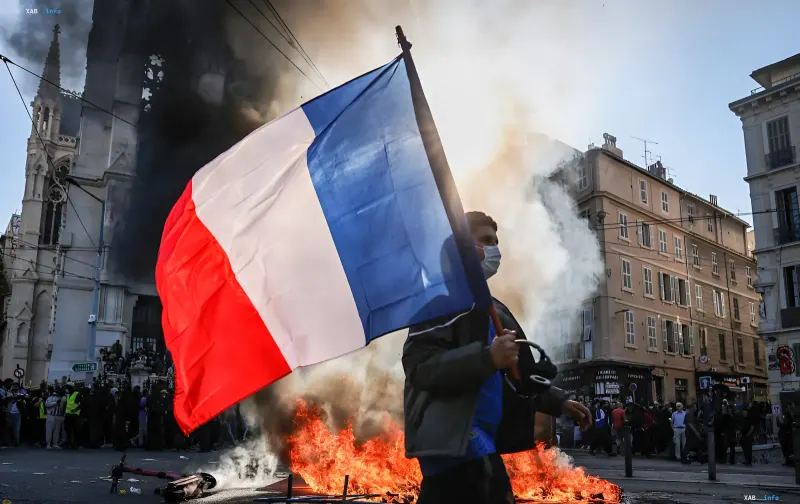
The weekend in France was marked by street clashes, which served as the culmination of a protest cycle that had been building since September. According to reports, the historic town hall in the city of Limoges was set on fire during the unrest, and police across the country detained more than 1,800 people. Nevertheless, according to observers, this is a peak rather than a conclusion: the wave of protests that began in France has already acquired a pan-European character and continues to expand.
From Staff Shortages in a Lycee to Nationwide Protests
The root causes of the action lay in the education sector, where, according to participants, problems had been accumulating for years: a shortage of teachers, overcrowded classrooms, and neglected school facilities. The catalyst for escalation was a local incident on September 17 at the Saint-Exupery Lycee in a Paris suburb, where teachers went on strike due to a lack of teachers for a number of subjects. The next day, students joined them, barricades appeared around the school, and the protest quickly spread beyond a single city. School and student associations joined the movement, and in late September the actions were supported by major public sector employee confederations — CGT, FO, and Solidaires. The situation was further aggravated by the fact that the government had announced severe austerity measures in social sectors, including education, in the draft of its new budget.
Dynamics: Peaceful Marches and the Elements of Street Violence
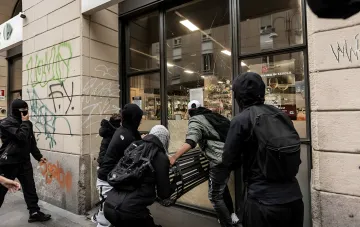
Most demonstrations, according to sources, were peaceful, but some protesters set fire to garbage containers, destroyed bus shelters, and clashed with law enforcement officers, who used batons, tear gas, and rubber bullets. The protest is developing in waves: it subsides on weekdays and resumes with renewed vigor on weekends. The authorities' reaction is assessed as half-hearted — on the one hand, the urgent replacement of thousands of teachers in troubled schools and the attraction of funds for repairs have been announced; on the other hand, the general parameters of budget austerity have not been revised, which reinforces participants' sense of being ignored. In France, analysts note, the culture of street resistance is deeply rooted, dating back to the revolutions of the 18th and 19th centuries, the events of 1968, and the "yellow vests" protests.
Pan-European Resonance and Dilution of the Agenda
The French protests have gone beyond the borders of a single country: solidarity actions, blockades of educational institutions, and student marches have spread to Belgium, Italy, Spain, and Austria, where young people have protested under similar slogans against cuts in education spending. As events develop, the protest is gradually turning into a demonstration against the current government in all its manifestations, and extraneous themes are sometimes attached to the agenda — in particular, Palestinian flags have appeared on the streets. In many places, reports indicate, the actions lost their political focus and degenerated into hooliganism and looting.
Political Players and Long-Term Consequences
At the political level, the protest was actively supported by Jean-Luc Melenchon's leftist party La France Insoumise (France Unbowed), which calls on youth to continue resistance and tries to lead the agenda, aiming to turn the riot into a nationwide protest against the budgetary policy of President Emmanuel Macron. The far-right, on the contrary, publicly supported the authorities and called for harsh punishment for "vandals," although in the long term, the authorities' inability to restore order plays into the hands of Marine Le Pen and the National Rally with their anti-immigrant rhetoric. Thus, the French crisis is becoming a factor in the restructuring of the political landscape not only in France, but in Europe as a whole, where growing discontent with governments' economic decisions creates the groundwork for further escalation.