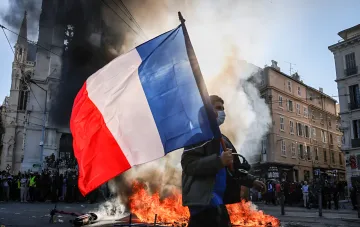
In France, protests have been part of political culture for centuries: from the revolution of 1789–1799 and the revolutions of 1830 and 1848 through the Paris Commune of 1871 and the student riots of 1968 to the "Yellow Vests" of 2018–2019. According to Volodymyr Kurenny, Deputy General Director of RBC-Ukraine, current street actions differ noticeably from previous manifestations of public disobedience and require a separate analysis — including from the perspective of lessons for Ukraine.
History That Does Not Repeat in Its Former Form
The author of the column notes that social discontent is a common feature of all historical protests in France: the actions typically had clear demands and goals, and even if they were not fully achieved, it was possible to find a compromise and temporarily stabilize the situation. The current wave, he says, begins with student demonstrations but quickly expands to the point where formulating a single list of protesters' demands becomes extremely difficult.
Who Takes to the Streets
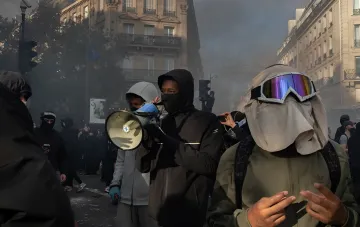
The second difference is the composition of the participants. Youth dominate the protests, including school-aged individuals: police report that children aged 12–13 participate in certain actions. The third factor is the national makeup of the demonstrators. According to eyewitnesses, the majority of protesters are French people of Asian and African descent, children of immigrants, while "native French" constitute a minority. The backbone of the participants, the author emphasizes, is the youth of French suburbs populated by former migrants.
Radicalization and Street Violence
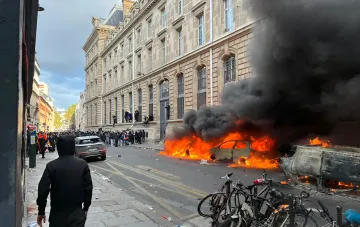
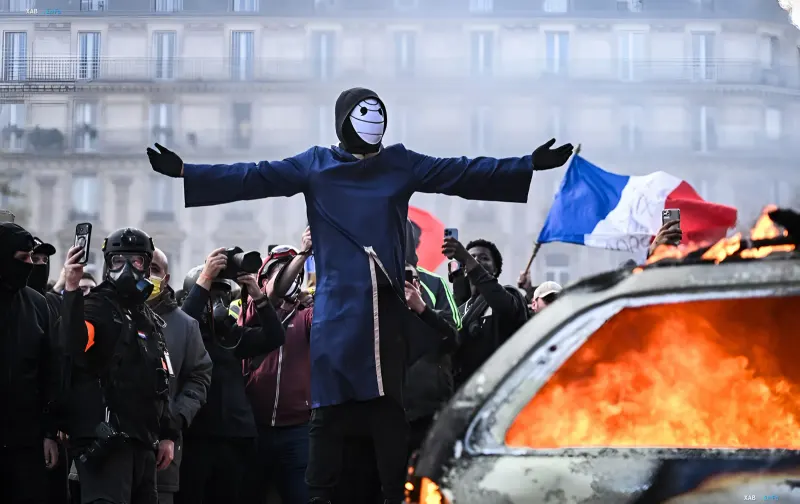
The fourth difference is the ultra-radicalism of the participants, radically left-wing slogans, and readiness to violate the law and street order. While previously left-wing youth directed their anger mainly against the representative offices of major transnational brands (Louis Vuitton, Gucci, Prada, Hermès), now, according to Kurenny, all shops, cafes, and cars have been declared "enemies": the radical crowd burns everything in its path, and the next day new items from Dior and Hermès appear on classified ads platforms. This, according to the author, indicates a further radicalization of the left-wing street, fueled by radical politicians, including ultra-left presidential candidate J.-L. Mélenchon.
State Reaction and Political Consequences
The French state, in the author's opinion, proved unprepared for such a scale of protests and violence, which, he notes, "does not flatter" the final period of E. Macron's presidency. Many French people were outraged that while shops, cars, schools, and prefectures were burning on the streets of Paris and other cities, the president and his wife attended a Celine Dion concert. The next action is scheduled for November 5, which, according to the author, many Parisians await with apprehension. Ultra-right forces are also political winners, using the riots to speculate about the "danger of migrants" and the need to "return France to the French."
Lessons for Ukraine
Ukrainians living in Paris whom the author managed to speak with express despair: having seen the Orange Revolution and the Revolution of Dignity with their culture of coexistence with urban infrastructure, they did not expect such vandalism in one of Europe's leading democracies. The column emphasizes that the weakness of multiculturalism policy — the non-assimilation of young people from other continents — is becoming a fact that "can be seen on the streets of Paris, Bordeaux, Lyon, Marseille," and that the country has already suffered millions of euros in losses, with the process, according to the author, far from over.