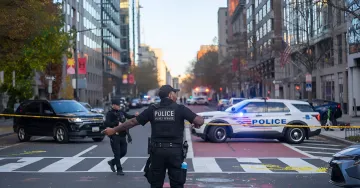
On the night of October 31, 2026, France is deploying approximately 70,000 police officers and gendarmes onto the streets—the largest deployment of law enforcement forces during the entire wave of nationwide protests, which are now entering their third consecutive weekend and coinciding with Halloween. This was announced by Interior Minister Laurent Nuñez, who assessed the threat level to public order as “very high” and confirmed that “all forces are mobilized to ensure the most decisive response to any acts of hooliganism,” as reported by Reuters.
Halloween Masks and the Concealment Ban
The authorities are paying particular attention to the risk that provocateurs might use Halloween masks to conceal their identities. According to Nuñez, the police have been granted the authority to ban face coverings in the event of a threat to public order—a measure that was previously applied selectively in France and could now be extended nationwide within a single evening. According to security officials, this is precisely the factor that makes the current weekend the most unpredictable of the entire protest period.
Paris March Route Changed at the Last Minute
In Paris, the trajectory of the main march was altered mere hours before it started. On the morning of October 31, the country's highest administrative court overturned the permit for the column to move from Place de la Bastille to Place de la Nation in the center of the capital. The reason was an appeal by the police prefecture, which cited the risk of mass riots. As a result, demonstrators were assigned a peripheral eastern route—from Porte de Bagnolet to Porte de Charenton. Simultaneously, about 40 Paris metro stations are closed or operating with boarding restrictions, and a nighttime curfew has been introduced in several districts.
From Student Protests to Yellow Vests
The unrest itself began in late September with actions by schoolchildren and students unhappy with the state of educational institutions, overcrowded classrooms, and what they consider an unfair university admissions system. Gradually, trade unions and participants of the Yellow Vests—a movement that emerged in 2018 in protest against the rising cost of living and fuel policies—joined the movement. The protesters' demands have expanded to general issues of quality of life and the standard of public services, turning local student protests into a nationwide crisis.
Budgetary Context and the Blow to Retail
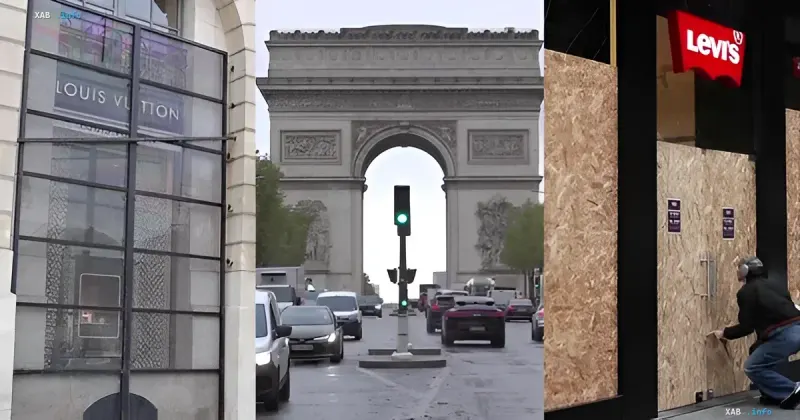
The protests are unfolding against the backdrop of Emmanuel Macron's government preparing to discuss the 2027 budget: public debt is approaching 120% of GDP, borrowing costs are rising, and Paris is forced to tightly control spending amid persisting social inequality. The economic consequences are already tangible: shops in Paris and other cities are fortifying their storefronts with boards and plywood, and according to Alain Di Crescenzo, president of the French Chamber of Commerce, “trade in central districts is practically paralyzed.” The Chamber estimates the losses of retail chains since the beginning of the unrest at more than 1 billion euros (about 1.1 billion US dollars).