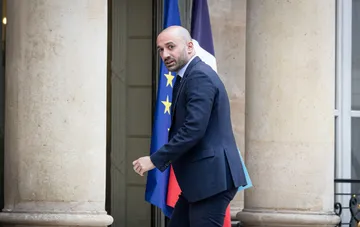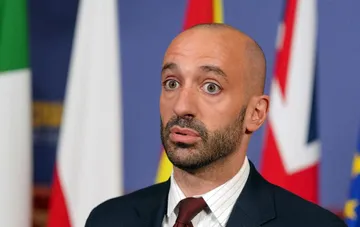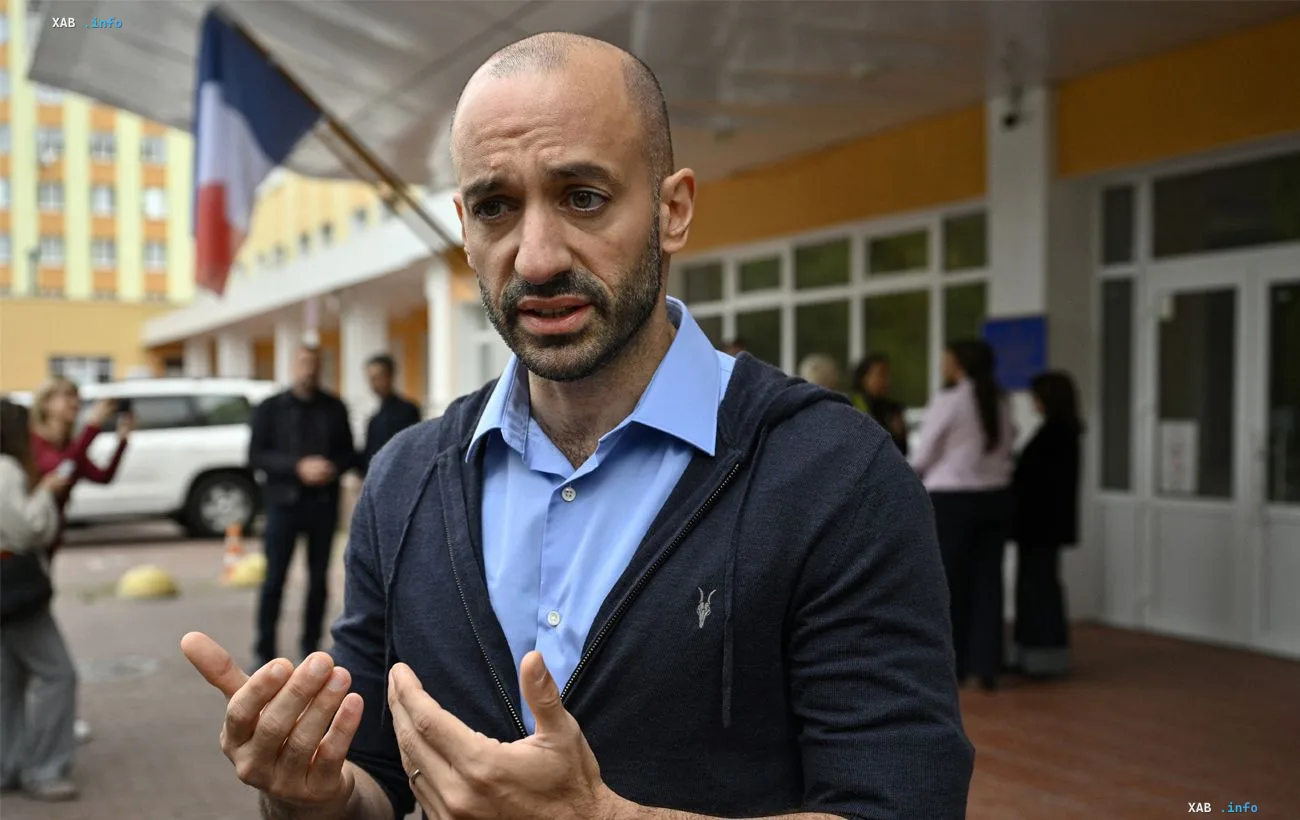
France's Minister Delegate for European Affairs, Benjamin Addad, told RBC-Ukraine in an interview that the majority of French people support Ukraine and that this support is not tied to the person of the incumbent President Emmanuel Macron. In his words, public opinion polls have confirmed, right from the start of the conflict, a sustained interest of French society in Ukraine's fate, which means that Paris's friendship and solidarity with Kyiv will endure even after a change of power at the Élysée Palace.
Public opinion: not a political choice, but a societal consensus
Addad emphasized that over the past four and a half years, the French have been actively following what is happening in Ukraine: they watch TV programs, read publications, express their support and, as he admitted "frankly," sometimes ask the government to "do more." In his assessment, this is not a temporary mobilization but a stable position that all available sociological polls record. The Minister Delegate drew attention to the fact that support for Ukraine in society does not depend on party affiliation: it is backed by voters of both left-wing and right-wing forces.
Municipal partnership as a "living" foundation
Addad placed a separate emphasis on the level of local ties. He pointed to "a number of partnership examples" between Ukrainian authorities and French local bodies — municipalities and regions representing various political parties. According to the Minister Delegate, it is precisely this "bottom-up" architecture of connections that makes the support structural and resilient to changes in the federal government. "This really struck me," he noted, referring to the depth and breadth of bilateral contacts at the subnational level.
European context: France is not alone
Addad broadened the frame of his observations beyond France, stating that a similar situation persists "in the overwhelming majority of European countries." He expressed confidence that friendship with Ukraine and support for Kyiv will continue at the continental level, even if the political landscape changes in individual states. Thus, the French official effectively recorded a consensus that, in his view, takes the Ukrainian question beyond the domestic political cycles of individual EU countries.
Military support: radars, interceptors and air defense
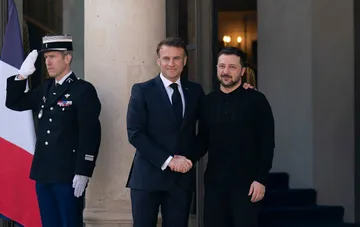
Addad's remarks came against the backdrop of concrete steps taken by Paris in the military sphere. Earlier, as RBC-Ukraine reported, President Macron officially confirmed that France had signed a contract to supply Ukraine with radars and would transfer interceptor missiles to further strengthen the air defense system. These decisions continued a course that Paris has been building since the start of the full-scale invasion and which, in the Minister Delegate's assessment, will not be halted by a change of head of state.
Talks with Trump: an energy ceasefire in focus
Beyond the military component, the center of Paris's diplomatic activity has been Macron's talks with US President Donald Trump. According to RFI data from September 22, 2026, the leaders discussed, among other things, the possibility of a moratorium on strikes against energy infrastructure — so-called "energy ceasefire" between Ukraine and Russia. Macron also confirmed at these talks France's readiness to step up support for Kyiv. The totality of these signals, in Addad's logic, forms a multi-level system of commitments — from public opinion to specific arms contracts — which, he is convinced, will ensure the continuity of the course.