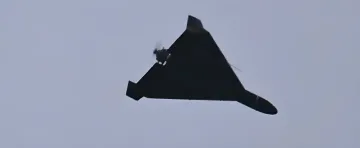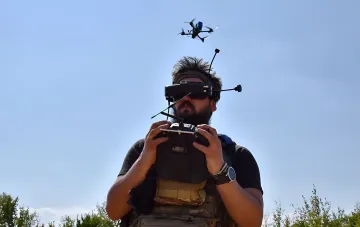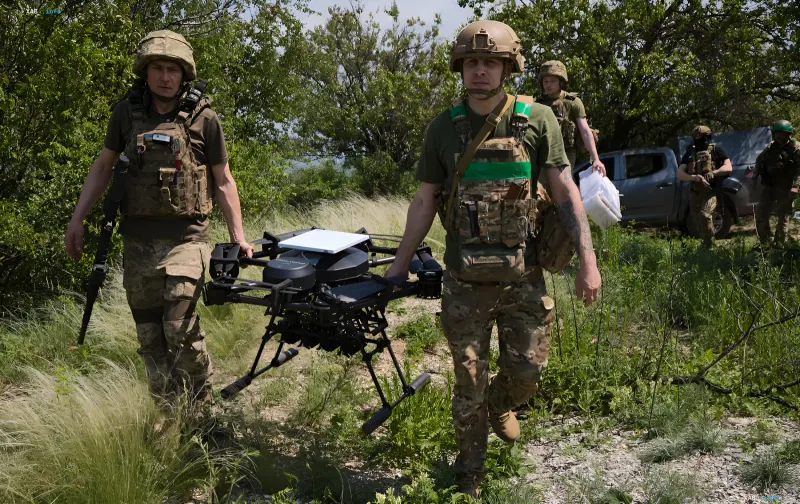
The war in Ukraine has entered a new phase where technology plays a key role. Ukrainian medium-range combat drones have begun operations that military experts call "free hunting." Now, Russian supply routes, previously considered safe, are under threat hundreds of kilometers from the front line.
According to Business Insider data cited by RBC-Ukraine, the new tactic makes the rear communications of the occupying forces vulnerable. This radically changes the logistical situation for the Russian army.
Technological breakthrough: from Starlink to "chaos" in the rear
The key factor in success was the integration of satellite internet. Dmytro Zhluktenko, a former drone operator and analyst for the combat experience of the 413th Unmanned Systems Regiment of RAID (callsign "Libre"), revealed details of the new scheme. Operators install Starlink terminals on drones, ensuring stable communication over huge distances.
"This allows us to deploy drones to critical highways where free hunting begins," Zhluktenko said. According to him, operators create chaos up to 100 kilometers deep in the enemy's rear. Due to the congestion of roads with military vehicles, finding a target becomes elementary.
Although this does not guarantee a 100% hit, mere presence in this zone becomes deadly for Russian troops.
The weak link in Russia's defense
New drones are filling the tactical gap, striking targets in the range of 20 to 300 kilometers from the front line. This zone contains warehouses, transport hubs, and command posts; disrupting their operations paralyzes the supply of forward units.
According to the analyst, Russia lacks a powerful defense system specifically in this "medium zone." The occupiers cannot transfer a significant amount of air defense assets there, as they are already under pressure on other fronts. Western military experts note that Ukrainian attack campaigns have already significantly depleted the Russian air defense system.
Even if Russia attempts to deploy interceptor drones, protecting such a vast territory would require colossal resources. "We are simply expanding the danger zone for them," Zhluktenko summarizes.
New attack vectors: sea and air
Ukrainian units continue to expand the capabilities of unmanned systems in various spheres. A striking example was the event on July 20, when marines used FPV drones launched from unmanned Barracuda boats for the first time. The attack was directed at the positions of the occupiers in the area of Zelenopillya (Iron Port) in the Kherson region.
Although one of the boats was destroyed by "Lancet" munitions, the rest successfully completed the mission, striking enemy logistics and equipment.
Aviation technologies are developing in parallel. The Ministry of Defense of Ukraine reported tests of a new class of guided munitions called Firefly. These munitions are dropped from bomber drones from altitudes of up to 800 meters. Their main advantage is the ability to independently correct their flight trajectory, maintaining high accuracy even against active enemy electronic warfare.