
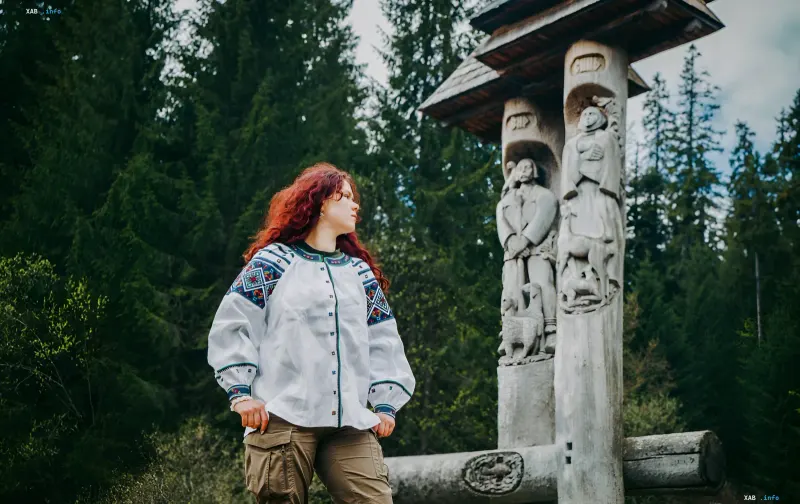
In February 2022, Maria Kravchuk was in Vienna. She had flown to Austria just a few days before the full-scale invasion began. According to the plan, she was supposed to return to Kyiv on the very day the war started. Instead of the road home, she faced months of forced stay abroad, volunteering, and the agonizing feeling that it wasn't enough.
"It wasn't enough for me to just sort humanitarian aid. I wanted to be home. I wanted to contribute to making this war end sooner," the girl recalls.
Choosing a Path: Psychologist or Combat Medic
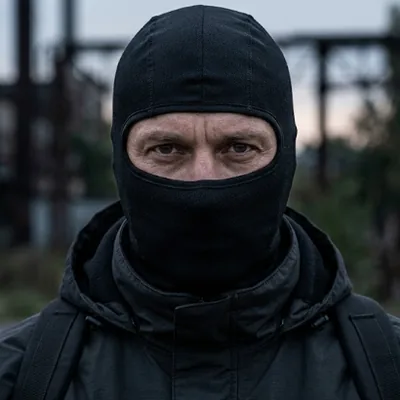
Maria returned to Ukraine and joined the army at the age of 22. By education, she is a licensed clinical psychologist and a reserve lieutenant. However, fate decided otherwise: she chose the path of a combat medic. Today, her callsign is 'Lita', in honor of the summer solstice, when she and her loved one held a symbolic wedding ceremony.
Over the years of the war, Maria has gone through all stages of evacuating the wounded: she worked on CASEVACs and MEDEVACs, at stabilization points, in an ambulance, and served as a crew commander.
Working on the Edge of Life and Death
Among the many lives saved, there are stories that remain in memory forever. One of them is the case of a patient whose leg was amputated above the knee. The man was in hemorrhagic shock and had lain with a tourniquet for more than 12 hours. He was evacuated in an extremely critical condition.
"We received the patient almost unconscious. Then it turned out that a pneumothorax was also developing slowly. We worked with the wounded, stabilized him, and administered pain relief. And it is very pleasant to see how a person who was factually between life and death begins to speak, comes to life before your eyes, and their indicators improve," Maria says.
However, there are other stories that do not let go. One of the most severe categories of injuries, according to Maria, is cases where a person simultaneously loses their sight and hands. "My friend, a rehabilitation specialist, says that these are among the most difficult injuries to recover from. The person cannot see and cannot explore the world around them with their hands".
The Psychology of Rescue and Dark Humor
Despite her primary medical function, a significant part of Maria's service is psychological support. This is especially true for people with severe amputations or loss of sight.
"The most important thing is not to start pitying the person, and certainly not to cry. Instead, I tell them about friends who have already gone through rehabilitation, about people who returned to an active life after amputation. It is important to show the person that life has not ended," says 'Lita'.
Another tool that saves no less than medicine is humor. "Sometimes very stupid humor works best," she is convinced.
The Price of Burnout
Maria admits that over time, one gets used to the sight of severe injuries, blood, and resuscitation. But there are things one cannot get used to. "Other people's grief – that is heavy". She recalls an elderly woman who received the body of her deceased son. "We simply provided her with assistance due to a sharp rise in blood pressure. But I still remember her scream".
It is precisely such moments that often become the cause of emotional exhaustion. The work of a military medic has no schedule. Sometimes the day passes calmly, and sometimes one has to work without sleep for more than a day.
"The main problem is burnout. It is an irregular schedule. You can work with patients non-stop for a day and a half. Over time, the body begins to switch off even the instinct of self-preservation," Maria warns.
She recalls one of the rotations in the Kherson region, when she realized she was so exhausted that she stopped reacting to danger. Grad rockets were hitting them, a body without a head lay nearby, but she was so tired that she didn't even try to hide. It was then that Maria understood that help is needed not only for the wounded but also for the medics themselves. In 2024, she became a participant in the Repower psychological recovery program, which took place in Sweden.