The market for utility vehicles has undergone colossal changes over the last decade. If twenty years ago a pickup was perceived exclusively as a tool for farmers, builders, and foresters, intended for hauling heavy cargo, today the situation has changed radically. Body-on-frame pickups have confidently formed their own segment, shedding the image of rugged workhorses, and have transformed into all-around vehicles. In 2026, choosing a pickup is no longer just a matter of utility, but a search for a balance between comfort, off-road capability, and technology.
Comfort evolution: from "bouncing" to SUV-level
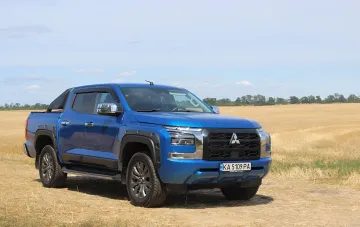
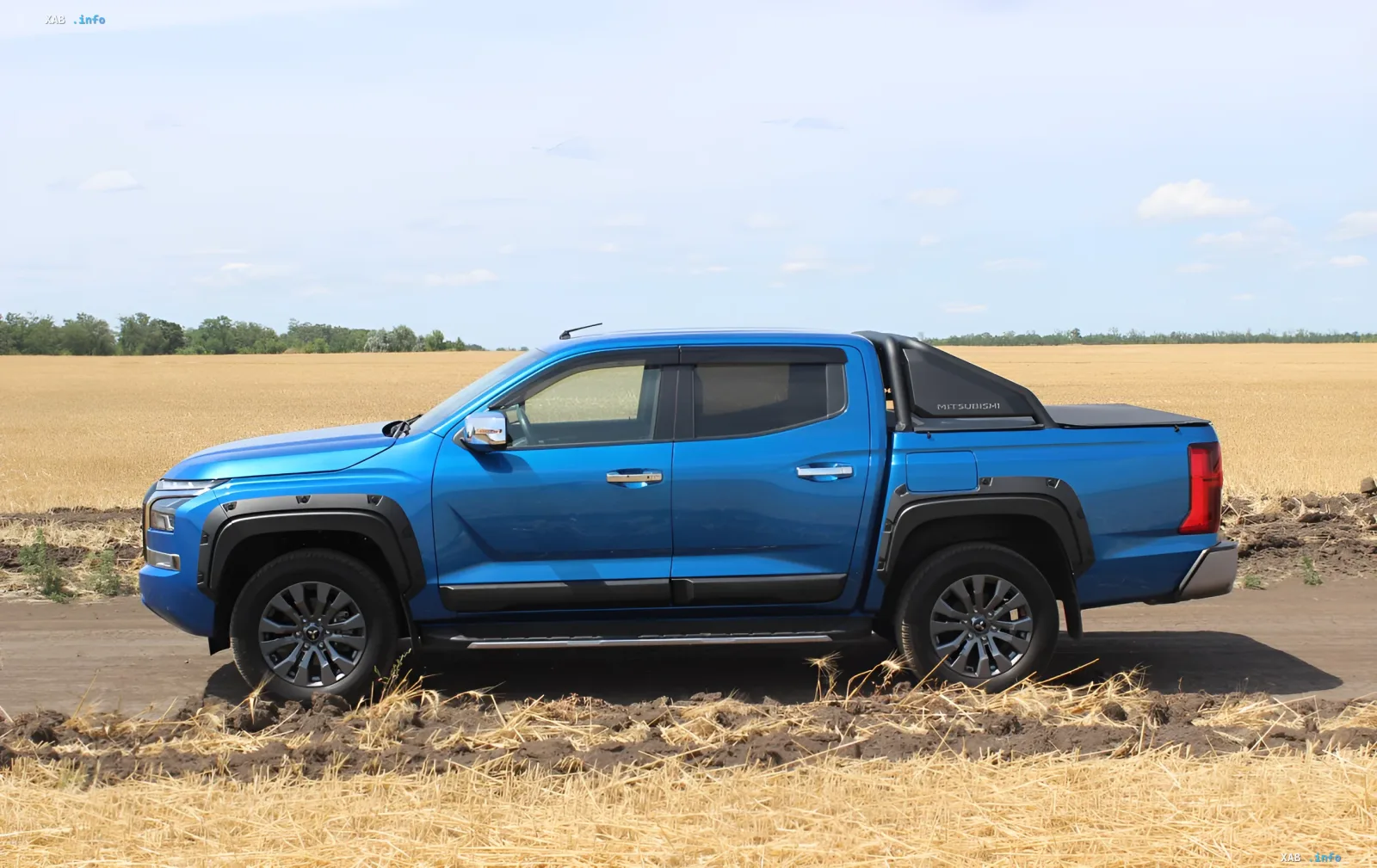
Historically, comfort in body-on-frame pickups was a secondary factor. A stiff suspension, tuned for hauling tons of cargo, turned a ride over bumps into a trial, and the interior differed little from a truck cab. However, modern engineers have learned to tame the rigid chassis suspension. Today's models, such as the sixth-generation Mitsubishi L200, demonstrate a comfort level comparable to full-fledged SUVs.
Engineers have significantly improved sound and vibration insulation, made steering more precise, and introduced advanced electronics capable of managing all-wheel drive more effectively than an experienced driver. The result is vehicles that feel equally confident on both the highway and off-road. The era when you had to load the bed with sandbags to soften the suspension has finally gone into the past.
Mitsubishi L200: the benchmark for reliability and off-road performance
For most citizens of Ukraine, the Mitsubishi L200 remains the embodiment of the pickup image. This model has shaped the culture of using body-on-frame vehicles in the country. The modern "L200" offers one of the best balances between comfort, off-road capability, and reliability. The model's main feature remains the Super Select 4WD system — one of the best in its class, allowing constant use of the 4x4 mode even on asphalt, unlike competitors with hard-locking systems.
The L200's off-road arsenal includes a low-range transfer case, a rear differential lock, and seven electronic driving modes. Officially available for Ukraine is a 2.4-liter turbo-diesel engine with 204 hp, which provides confident torque from low RPMs. Despite not being the cheapest pickup, its chassis durability (up to 150,000 km without serious intervention) makes it a cost-effective ownership in the long term.
Toyota Hilux: the global standard for durability
The Toyota Hilux is a "classic" of world renown, known on all continents since the 1960s. The model's family traits across all generations are infallibility, durability, and a variety of trim levels. The current generation Hilux offers an interior that is by no means utilitarian, with rich appointments and stylish design. The Ukrainian specification includes two diesel engines — 150 and 204 hp.
Hilux handling retains some "truck-like" characteristics, especially on unpaved roads, and the heavy steering can be noticeable in the city. However, when it comes to serious off-roading, long suspension travel is added to a classic mechanical transfer case and a suite of modern electronics to help overcome difficult terrain. It is a vehicle that remains true to its roots but does not refuse modern conveniences.
Contradictory data
When choosing between modern pickups, disagreements often arise regarding their intended purpose. On one hand, manufacturers position these vehicles as universal means of transport capable of replacing a family crossover. On the other hand, experts and experienced users note that pickups still retain a certain "roughness" in behavior on uneven roads and specific steering responses that may be unfamiliar to drivers switching from passenger cars.
Furthermore, there are differences in approaches to the all-wheel-drive system. While the Mitsubishi L200 offers permanent all-wheel drive on asphalt, many competitors, including some versions of the Toyota Hilux, use modes with hard-locking front engagement, which may be less convenient for daily city use. These nuances require a thorough test drive before purchase.
How not to make a mistake when choosing in 2026
When choosing a body-on-frame pickup today, it is important to consider not only its payload capacity but also the level of comfort and the presence of modern driver assistance systems. If you need a vehicle for work on a construction site or in the field, pay attention to chassis durability and simplicity of construction. If the pickup is planned for use as the main family vehicle, priority should be given to sound insulation, suspension softness, and interior equipment richness.
Ultimately, modern pickups are vehicles that blur the lines between utility and comfort. They are capable of driving where roads end, while providing a level of convenience familiar to premium SUVs. The choice depends on your specific needs and budget, but one thing is certain: the pickup is no longer just a workhorse.