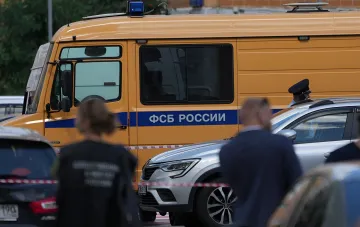
On November 11, 2026, Poland's Independence Day, Russia's Federal Security Service (FSB) published a statement announcing the detention of two individuals on suspicion of espionage for Polish intelligence services. According to the FSB, the detainees were operating in the Kaliningrad Oblast and gathering information about military facilities, servicemen, and the socio-economic situation in the region. That same day, a sharp response came from Warsaw: Jacek Dobrzyński, the spokesperson for Poland's minister-coordinator of special services, wrote on social media platform X that the Russian security service's statement was "yet another provocation and an act of disinformation" timed to coincide with the national holiday.
What the FSB Specifically Claims
In a statement by the FSB's Public Relations Center (PRC), the detainees are referred to as "agents of Polish special services in the Kaliningrad Oblast." According to the text, they collected and transferred information about Russian Defense Ministry personnel and facilities, as well as "data on the socio-economic situation in the Kaliningrad Oblast, migration, and social policy in the region." Criminal cases for espionage have been initiated against both, and they have been placed in pre-trial detention. Simultaneously, the FSB reported that seven Polish citizens and three Russian citizens have been issued official warnings regarding contacts with Polish special services; the specified Polish citizens have been banned from entering Russia "for a long period." Furthermore, in 2026, Russian visas were revoked for 14 Polish citizens "for aiding Polish special services," with six of them facing an additional entry ban.
Warsaw's Reaction: "Do Not Play Into Russian Propaganda's Hands"
Jacek Dobrzyński, speaking out on Wednesday, November 11, on social media platform X, emphasized that on Independence Day he views the FSB statement "in particular, as another provocation and an act of disinformation." According to him, he does not comment on materials published online by Russian security services. "I urge everyone not to repeat this hostile narrative and not to play into the hands of Russian propaganda," Dobrzyński wrote. Thus, the Polish side chose neither to refute nor confirm specific details of the FSB statement, instead classifying it entirely as a form of informational pressure timed to the national holiday.
Context: A Series of Cases Involving "Espionage for Poland"
The statement of November 11 is not an isolated incident. In August 2026, the Moscow City Court sentenced a Russian citizen to 23 years in a penal colony on charges of espionage in Poland's interests. According to the investigation, the man traveled to Poland in 2022, where he contacted a military intelligence representative and transferred data regarding weapons used by Russia in the war against Ukraine. In the summer of 2024, he went on a business trip to Uzbekistan, where, according to the court, he was kidnapped and brought to Russia. The combination of visa revocations, warnings, and sentences forms a consistent practice that the Polish side consistently classifies as an instrument of political pressure.
Significance of the Date and Information Context
Timing the statement to November 11—the day Poland marks the anniversary of the restoration of its statehood in 1918—amplifies the resonance in Polish society and media. For the Russian side, publication on this day can be viewed as a demonstration of "counterintelligence work" amid strained relations; for Warsaw, as confirmation of a course toward informational impact on a date sensitive to national self-awareness. In conditions where both sides avoid direct diplomatic contacts along special service lines, such statements become one of the few public channels through which Moscow and Warsaw transmit their positions to each other and to an international audience.