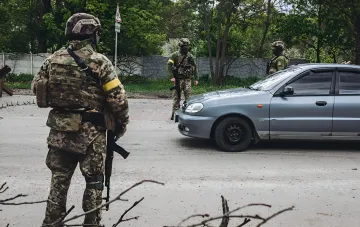
August 15, 2026 — Amidst the ongoing war, Ukraine's fuel infrastructure continues to face unprecedented pressure. According to Deputy Minister of Finance Svitlana Vorobey, 100% of stationary gas stations have been destroyed in several frontline communities in the Sumy and Chernihiv regions. In response, the Ministry of Finance, together with the tax service and business representatives, is preparing a bill to legalize mobile gas stations. However, experts warn: in the face of the threat from FPV drones, mobile refueling points could become deadly targets.
Legislative Response to Infrastructure Destruction
The fuel situation in frontline zones has reached a critical point. Some operators refuse to rebuild destroyed stations, as they repeatedly become targets for Russian strikes. In response, the government is initiating the creation of a legal framework for mobile refueling complexes. The goal of the bill is to legalize fuel sales in communities where stationary gas stations have been destroyed or their operation poses a threat to human life.
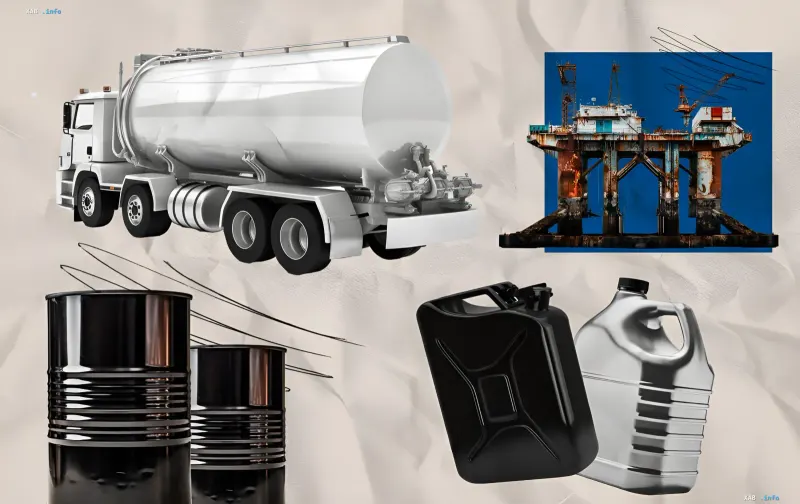
Ukrnafta is already preparing to work in this new format. The company has small-capacity tanker trucks that can be converted into mobile gas stations if necessary and plans to expand such a fleet. However, for these complexes to function fully, significant legislative changes are required, which are currently under development.
Contradictory Data
There is a significant gap between the government's optimistic plans and security realities on the ground. On one hand, legislators and businesses see mobile gas stations as a solution to the fuel shortage. On the other hand, fuel expert Dmytro Leushkin (co-founder of the Prime group of companies) points out the fatal flaw of this approach in zones of active FPV drone operations.
"The main problem in Kharkiv, Zaporizhzhia, and Sumy is the flying FPV drones controlled by an operator. So when a mobile gas station is standing—regardless of where exactly, under bushes or in trees—I wonder who will work at this mobile gas station and wait for it to be hit," Leushkin stated in a comment to RBC-Ukraine. The expert believes that in zones of regular drone attacks, it is impossible to deploy a stationary refueling point due to a lack of personnel willing to risk their lives.
Alternative: Fuel Delivery via 'Glovo' Model
For territories with high FPV drone activity, the expert proposes an alternative scenario—targeted fuel delivery. According to Leushkin, the most effective solution would be to use ordinary passenger cars, indistinguishable from civilian vehicles, to deliver fuel directly to the consumer.
"To make this work on the principle of, for example, Glovo," the expert explained. This approach minimizes risks, as the vehicles do not stand still but are in constant motion, making them difficult to detect and hit by drones. In less dangerous areas, where the use of protective nets or other camouflage measures is possible, mobile gas stations can be deployed quickly and effectively.
Risks of the Spontaneous Market and Labor Shortage
The absence of legal refueling points does not mean the complete disappearance of fuel, but it leads to the growth of the shadow economy. Leushkin warns: if the legal market cannot meet demand, it will be partially replaced by spontaneous trade. People will buy fuel in safe zones and resell it in frontline areas, profiting from the price difference.
The problem with this scenario is the lack of control: the state will not know who is selling fuel, whether taxes are paid, or what the quality is. Furthermore, there is a risk that owners of destroyed gas stations will not want to return to work in dangerous areas. "And if they don't want to do this because it's not interesting to them? It's additional expenses, people have died there, they don't want to do it anymore," the expert noted.
Legislative Flexibility as the Key to Success
The expert emphasizes that the future mechanism must be maximally flexible and account for changing security situations. "If the law specifies how it should be, and then the danger increases even more, then the bill needs to be made in a way that accounts for this. Drones are becoming longer-range, faster, and this can change," Leushkin explained. He proposes to simplify access to fuel operations for such territories as much as possible—similar to the temporary rules that were in effect at the beginning of the war.